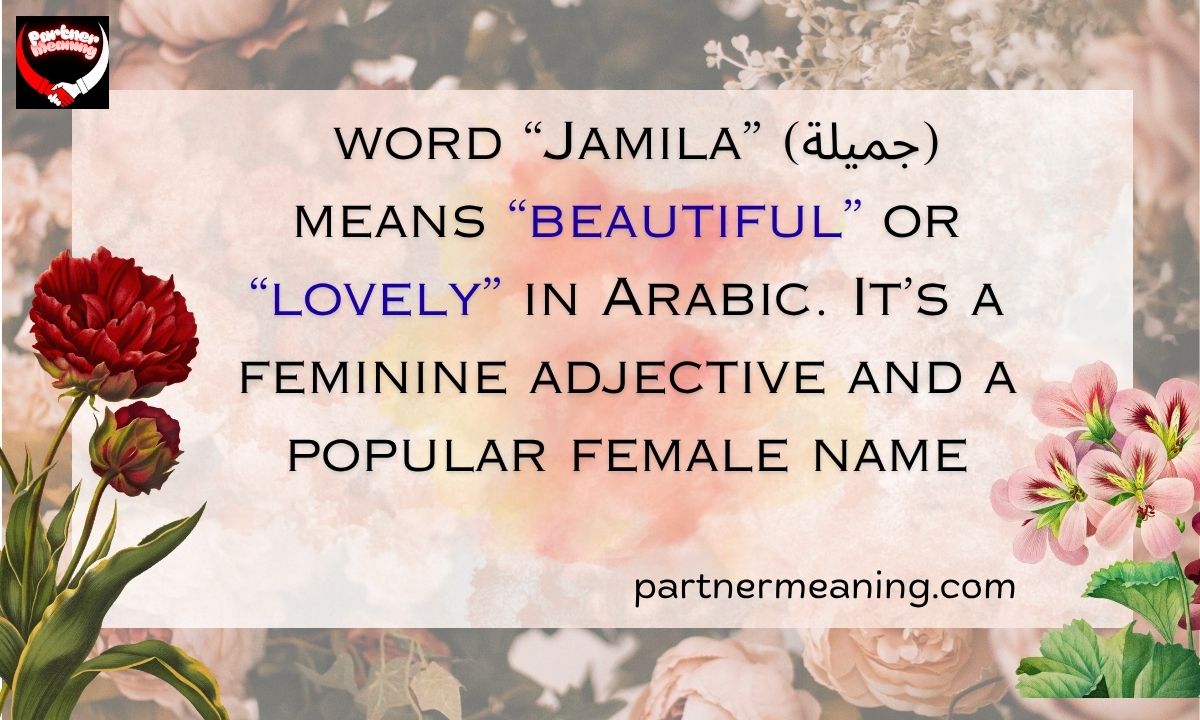
The Arabic word Jamila (جميلة) carries a deep sense of grace and charm. It’s a name that reflects feminine beauty, loved across many cultures and languages. Simple yet timeless, Jamila continues to inspire hearts with its elegant sound and meaning.
Meaning of the Word Jamila in Arabic
The word Jamila (جميلة) in Arabic is deeply tied to beauty, charm, and kindness. It’s more than a description—it’s a reflection of inner and outer grace. Arabs often use it to describe people, objects, and even emotions that bring peace or joy.
In daily conversation, calling someone “Jamila” is both a compliment and a sign of respect. It acknowledges their appearance and the warmth they bring through personality. The tone of this word always carries a touch of softness and admiration. You’ll often hear:
هي فتاة جميلة – She is a beautiful girl.
السماء جميلة الليلة – The sky is beautiful tonight.
Such phrases show how Jamila captures the Arabic sense of elegance and balance in language.
Origin and Linguistic Root of Jamila
The origin of Jamila comes from the Arabic root ج-م-ل (J-M-L), which forms many words related to beauty and perfection. The same root gives us jamāl (جمال) meaning “beauty,” and Jamil (جميل) meaning “handsome.” This linguistic link shows how beauty is woven into the Arabic language.
This root carries spiritual and moral value too. In Islamic tradition, Allah is described as beautiful and loves beauty, showing how Jamila connects to deeper virtues like purity and goodness.
Some related Arabic words include:
- Jamāl (جمال): Beauty
- Jameel (جميل): Handsome or beautiful (masculine)
- Ajmal (أجمل): More beautiful
All share a harmony of meaning that reflects the richness of the Arabic root system.
Pronunciation and English Translation of Jamila
The correct pronunciation of Jamila is jah-mee-lah, with the stress on the “mee.” In Arabic, it’s written as جميلة, and sounds gentle yet confident. The rhythm of the word itself gives a feeling of calm and elegance.
In English, Jamila translates to “beautiful,” “lovely,” or “graceful.” The word is often used in poetry and songs for its lyrical sound and emotional tone. It’s not only a name but also an adjective used to describe beauty in all forms.
For example:
هذه صورة جميلة – This is a beautiful picture.
كلماتها جميلة جداً – Her words are very beautiful.
Every use of Jamila brings warmth and admiration to the sentence.
The Feminine Form of Jamil – Jamila Explained
Jamila is the feminine form of Jamil (جميل), which is used for males. Arabic assigns gender to adjectives, so Jamila naturally applies to feminine nouns. This distinction shows how Arabic captures both linguistic precision and cultural respect for gender expression.
Both words share the same root and essence, representing harmony, dignity, and beauty. They differ only in grammatical form, not in meaning. Together, they show how Arabic values balance and equality in describing beauty.
Common examples include:
هو جميل في أخلاقه – He is beautiful in his manners.
هي جميلة في روحها – She is beautiful in her soul.
These expressions reveal how Jamil and Jamila go beyond looks—they honor character and inner beauty too.
Cultural and Islamic Significance of the Name Jamila
The name Jamila (جميلة) holds a special place in Muslim culture. It reflects the Islamic value of recognizing beauty not only in appearance but also in behavior and faith. In Arabic societies, beauty is linked with modesty, kindness, and the purity of the heart.
In Islam, beauty is seen as a blessing from Allah. The Prophet Muhammad ﷺ said, “Indeed, Allah is beautiful and loves beauty.” This saying shows how Jamila represents both physical elegance and spiritual goodness.
Many Muslim families choose the name Jamila because it carries virtue, gentleness, and grace. It’s a name that connects personal identity with divine appreciation for beauty and character.
Examples of the Word Jamila in Arabic Sentences
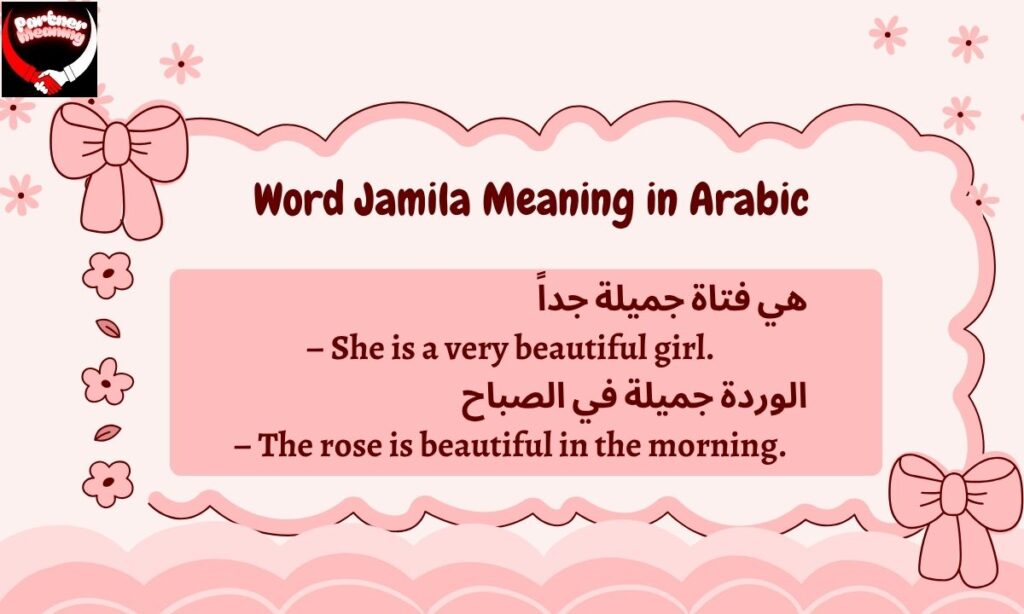
The word Jamila appears frequently in daily conversation, describing people, nature, and emotions. It adds warmth and admiration to speech, making it one of the most expressive words in Arabic. Here are some examples:
هي فتاة جميلة جداً – She is a very beautiful girl.
الوردة جميلة في الصباح – The rose is beautiful in the morning.
ابتسامتها جميلة وتمنح السعادة – Her smile is beautiful and brings happiness.
Writers and poets also use Jamila to describe scenes of peace or love. It’s a word that blends emotion and expression, often found in Arabic songs and poetry.
Popularity of the Name Jamila Worldwide
The name Jamila has spread far beyond Arabic-speaking countries. It is loved for its gentle pronunciation and universal meaning. Muslim communities around the world continue to use it, appreciating its balance of simplicity and beauty.
In the United States, the name appeared in the top 1,000 baby names between 1974 and 1995, reaching its peak in 1977. Its appeal grew as cultures embraced Arabic and African names for their rich meanings.
Today, Jamila remains common in regions such as:
- The Middle East and North Africa
- South Asia (Pakistan, India, Bangladesh)
- Europe (especially among Bosnian and Turkish Muslims)
- The Americas and Africa
Common Variations and Spellings of Jamila
Because of different pronunciations and languages, Jamila has many variations. All carry the same sense of beauty and grace, though spellings may change with culture. Here are some common forms:
- Cemile – Turkish
- Cəmilə – Azerbaijani
- Djamila / Djemila – Algerian Arabic
- Gamila – Egyptian Arabic
- Džemila – Bosnian
- Jameela, Jemila, Yamila, Jamillah – English and Spanish variations
Each version keeps the same emotional essence, showing how beauty transcends language and connects different cultures through one timeless word.
Common Mistakes and Misunderstandings
A common mistake learners make is confusing Jamila (جميلة) with Jamil (جميل). While both mean “beautiful,” Jamil is masculine and Jamila is feminine. Mixing them changes the meaning of a sentence.
Another error occurs in transliteration, where spellings like Jameelah or Jamilla appear. All are acceptable, but they reflect pronunciation differences across regions.
Example:
- هي جميلة – She is beautiful.
- هو جميل – He is handsome.
Using them correctly helps maintain both accuracy and respect in Arabic communication.
Why Learning the Word Jamila Matters
Understanding Jamila helps learners appreciate how Arabic expresses beauty and emotion. It’s a common word in daily conversation, poetry, and Islamic names. Knowing it enriches both vocabulary and cultural awareness.
When you use Jamila, you’re not just describing beauty—you’re embracing an important part of Arabic identity. It helps you connect with speakers and understand how deeply beauty is valued in their culture.
In short, learning Jamila builds confidence in Arabic expression and opens the door to appreciating the art, faith, and heritage behind every beautiful word.
Conclusion
The word Jamila (جميلة) beautifully captures the essence of elegance, grace, and purity in Arabic language and culture. It reflects both outer charm and inner goodness, values cherished in Islam and daily life. Across generations and nations, Jamila remains a timeless expression of beauty that connects hearts through its gentle and meaningful sound.
Frequently Asked Questions
What does Jamila mean in Arabic?
Jamila means “beautiful” or “lovely” in Arabic.
Is Jamila mentioned in the Quran?
The name itself isn’t directly mentioned, but its root J-M-L appears in references to beauty and goodness.
What is the masculine form of Jamila?
The masculine form is Jamil (جميل), meaning “handsome” or “beautiful.”
How do you pronounce Jamila correctly?
It’s pronounced jah-mee-lah, with stress on the second syllable.
What are the different spellings of Jamila?
Common versions include Jameela, Djamila, Gamila, Jemila, and Yamila, depending on language and region.

Hayyat is a passionate writer and researcher who loves exploring the beauty and depth of Arabic language and culture. With a special interest in Arabic names, Qur’anic words, and Islamic heritage, Hayyat aims to share meaningful insights with readers who appreciate names with purpose and history.