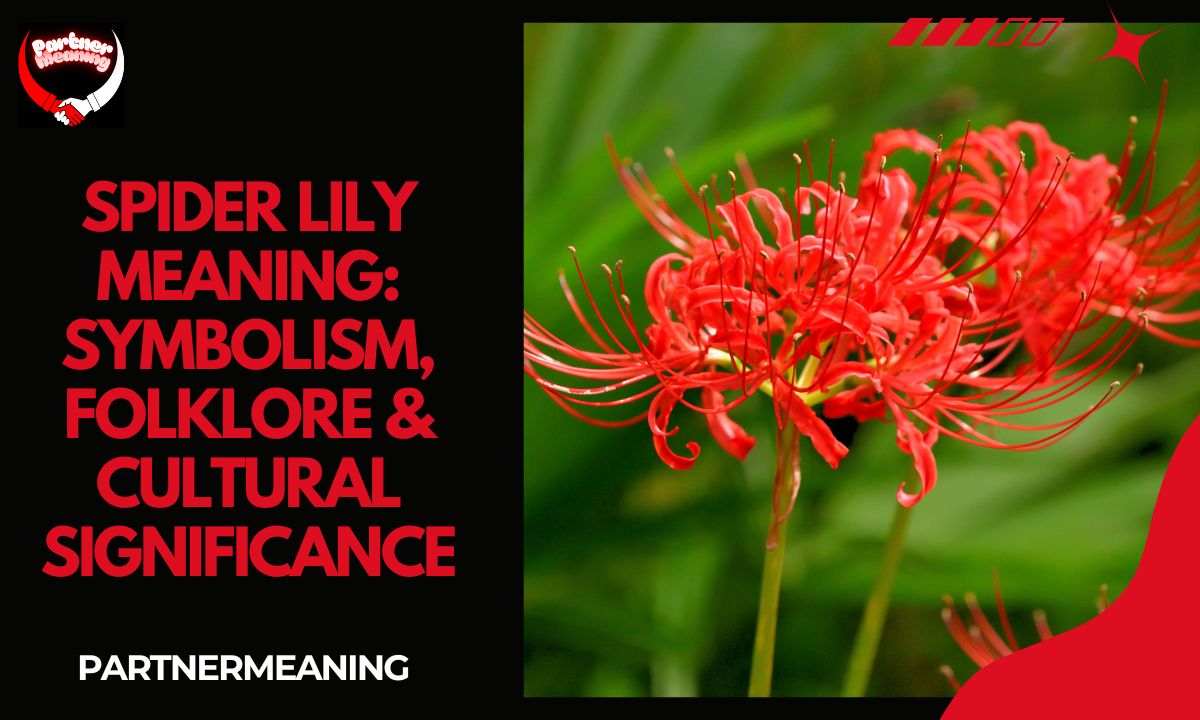
The spider lily is more than a striking flower; it carries deep symbolism across cultures. Its vivid red blooms are often linked to death, farewells, and remembrance, making it a poignant symbol in gardens and ceremonies alike.
In East Asia, this flower appears in graveyards, temples, and festivals, representing spiritual transitions and the cycle of life and death. Beyond its somber associations, it also conveys passion, love, and rebirth, bridging beauty with meaning.
What is a Spider Lily?
“A flower that blooms to remind us of life’s fleeting moments.”
The spider lily is a bulbous perennial with red, spidery petals. It blooms in late summer or early autumn. These flowers often appear before the leaves grow.
Scientific Name and Varieties
Lycoris radiata is the scientific name of the red spider lily. It has multiple varieties, including the diploid and triploid forms. Diploids reproduce by seeds, while triploids reproduce via bulbs.
The triploid variety is common in Japan and the United States. Its flowers are genetically uniform and bloom annually. This plant is also called the hurricane lily or equinoctial lily, reflecting its seasonal bloom.
Appearance and Blooming Season
Spider lilies have long, thin petals that curve backward like spider legs. Their stamens stretch out elegantly. Each stem can bear 4–6 flowers that bloom vibrantly in red.
Leaves appear after flowering, usually in autumn. Stems reach 30–70 cm, and blooms last about two weeks. The timing often coincides with rainy seasons or equinoxes, adding to their mystical reputation.
Native Regions and Habitat
Spider lilies are native to China, Japan, Korea, and Nepal. They have spread to the United States and other regions as ornamental plants.
They thrive in temperate climates with seasonal changes. Well-drained soil, sun or partial shade, and minimal disturbance allow the bulbs to flourish. Their naturalization in some areas demonstrates their adaptability.
Symbolism of Spider Lilies
“Every bloom is a reminder of love, loss, and renewal.”
Spider lilies are deeply symbolic, especially in East Asian cultures. They represent life’s impermanence and the transitions between worlds.
Death and Mourning
In Japanese culture, spider lilies are linked to death and funerals. They bloom near graveyards to honor the deceased.
The flower is also associated with the afterlife. Legends describe it as guiding souls across spiritual rivers. Its bright red color resembles blood, strengthening its connection to mortality.
Farewell and Separation
The spider lily also symbolizes goodbyes and separation. It often grows along paths where people part permanently.
Folklore claims that departing lovers or family members are marked by its bloom. The flower serves as a visual metaphor for transitions and endings in life.
Rebirth and Renewal
Despite somber meanings, spider lilies also represent rebirth and new beginnings. Their annual cycle reflects death and renewal in nature.
Many Buddhist traditions connect the flower with reincarnation. It is seen as a reminder that endings are often the start of something new.
Love and Passion
The red spider lily’s color conveys intense emotions. It is tied to romantic longing and emotional bonds.
In some stories, the flower represents eternal love, even after separation or death. Its beauty and passion make it a poetic symbol in literature and art.
Spider Lily Meaning in Culture
“A flower that speaks the language of the soul.”
Spider lilies have rich cultural significance across Asia. Their meaning is woven into spiritual practices, art, and festivals.
Japan: Higanbana and Spiritual Meaning
In Japan, the red spider lily is called higanbana, meaning “flower of the other shore.” It is tied to the Higan festival, honoring ancestors.
These flowers often bloom along roads and rice fields, symbolizing the path between life and death. They are also linked to Buddhist beliefs of guiding souls to reincarnation.
China: Remembrance and Ancestral Connection
In China, spider lilies are associated with memory and the afterlife. They are seen as flowers connecting the living and deceased.
Ancient poems often depict the flower as a symbol of autumn and reflection. It is planted near ancestral sites to honor and remember loved ones.
Korea: Honor and Memory
During Korea’s Chuseok festival, spider lilies are used to decorate graves. They symbolize love, respect, and remembrance for ancestors.
Their bright red hue represents passion and honor, making them an important part of cultural ceremonies. Families use them to signify continuity and family bonds.
Western Interpretation
In Western contexts, spider lilies are less tied to death. They are appreciated for ornamental beauty and dramatic visual appeal.
The flower’s mystery and striking red color make it symbolic of passion, curiosity, and exotic elegance. It is often used in gardens and floral designs for aesthetic impact.
Spider Lily Meaning: Folklore & Myths
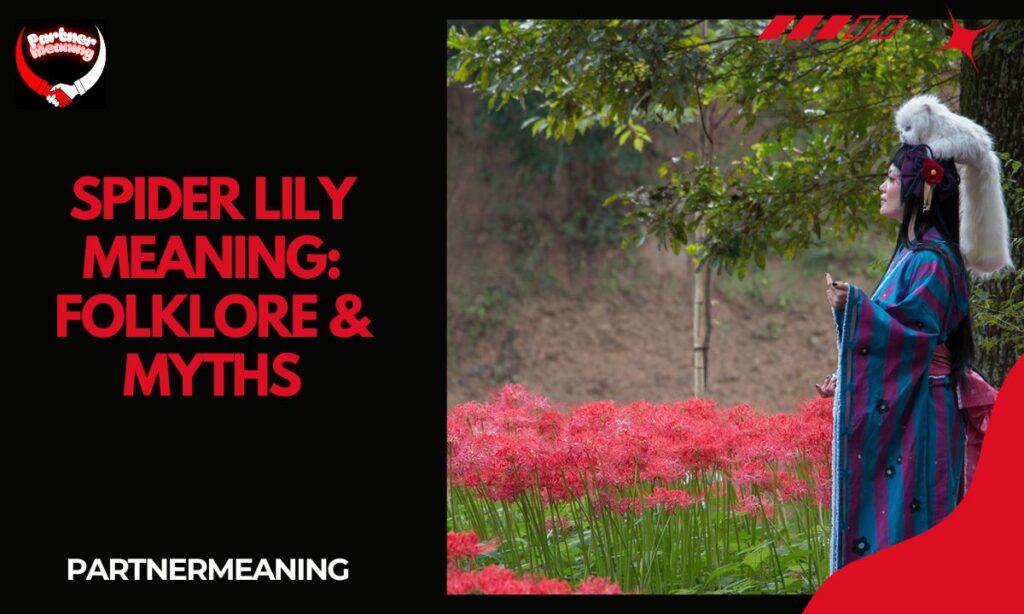
The spider lily is a striking flower with vivid red petals. Its appearance is dramatic and unforgettable. Beyond beauty, it carries deep cultural and symbolic meanings.
From graveyards in Japan to ancient Chinese myths, spider lilies represent transitions. They speak of life, death, love, and renewal. People admire them for both aesthetic beauty and spiritual significance.
“A flower that blooms to guide souls and tell stories of the past.”
Spider lilies have inspired legends for centuries. They appear in stories of life, death, and separation. Their blooms often signal a moment of change or farewell.
Japanese Legends and Hell Flowers
In Japan, the red spider lily is called higanbana, meaning “flower of the other shore.” It is closely associated with death and the afterlife. These flowers are often planted near graveyards or temples.
Legends suggest they grow in hell and guide spirits across the Sanzu River. Farmers also planted them near rice fields to keep animals away. Beyond superstition, the flower symbolizes the transient nature of life, reminding people to honor ancestors and embrace impermanence.
Chinese Tales and Eternal Separation
In China, spider lilies are called Manjusaka, linked to a story of two elves. The elves were separated by the gods for eternity. One guarded the leaves, the other the flowers.
The story explains why leaves and flowers never appear together. Spider lilies thus symbolize eternal separation, longing, and unfulfilled reunion. Ancient Chinese literature frequently features this flower to represent loss, memory, and spiritual connection.
Anime and Pop Culture Symbolism
Spider lilies are a recurring motif in anime and modern media. In shows like Demon Slayer and Tokyo Ghoul, the flowers foreshadow death or transformation.
Their appearance is rarely coincidental. The flowers evoke melancholy, beauty, and impermanence. Creators use them to convey emotions like loss, passion, and change. Their symbolic presence enhances storytelling and visual impact.
Types and Colors of Spider Lilies
“Not all spider lilies tell the same story; colors speak different emotions.”
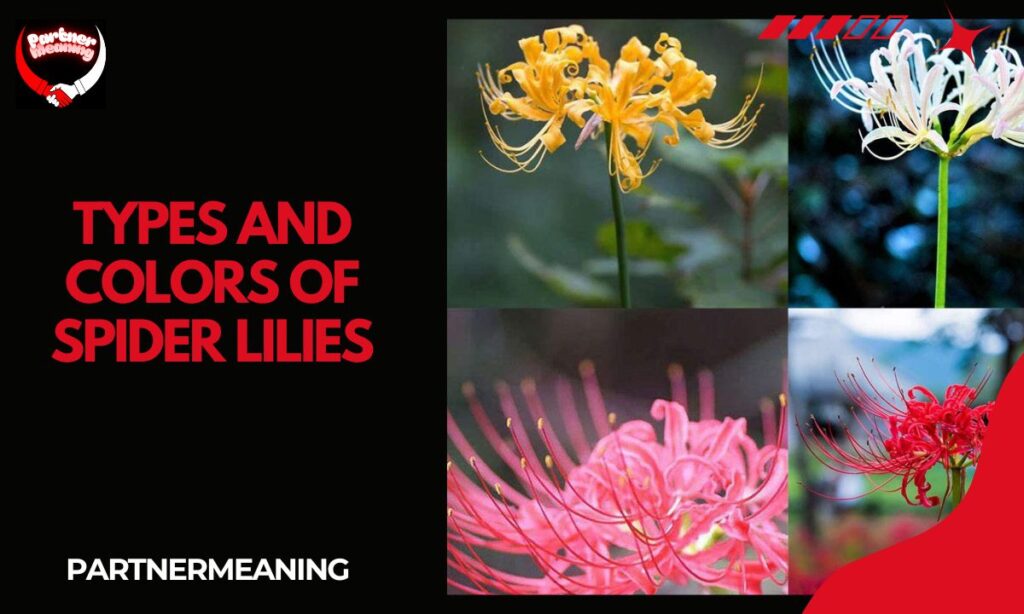
Spider lilies come in various colors, each carrying distinct meanings. Red is most associated with death, love, and passion.
Red Spider Lily
The red spider lily is the most iconic variety. Its blooms signal farewell, finality, and emotional intensity. It often grows near cemeteries and temples.
Its striking color resembles blood, symbolizing life, death, and sacrifice. In folklore, it guides spirits and marks paths of separation. Red spider lilies are used in memorials, rituals, and cultural storytelling.
White, Yellow, Pink, and Fictional Blue Varieties
- White Spider Lily: Represents purity, new beginnings, and spiritual growth.
- Yellow Spider Lily: Symbolizes happiness, wisdom, and gratitude.
- Pink Spider Lily: Conveys love, beauty, and femininity.
- Blue Spider Lily: Rare or fictional, representing truth, calmness, and inspiration.
These varieties appear in gardens and fictional media. Each color emphasizes a different aspect of life, from celebration to reflection.
Cultivation and Care
“The magic of spider lilies lies in their delicate balance with nature.”
Spider lilies are relatively easy to grow with proper conditions. They prefer well-drained soil and minimal disturbance.
Planting Tips and Soil Requirements
- Plant bulbs 8–10 inches deep and 6–12 inches apart.
- Use sandy, fertile soil with good drainage.
- Full sun or partial shade is ideal.
- Avoid disturbing bulbs once planted; they bloom best when left undisturbed.
Proper planting ensures vibrant blooms each year. They naturally adapt to seasonal rainfall and temperature changes.
Blooming and Seasonal Care
Spider lilies bloom in late summer or early autumn, often before leaves appear. The stems rise 30–70 cm, with 4–6 flowers per stalk.
Leaves appear after flowering and persist through winter. The cycle reflects death and rebirth, a core aspect of their symbolism. Regular watering and mulching in colder regions help maintain plant health.
Toxicity and Medicinal Uses
Spider lily bulbs contain lycorine, a toxic alkaloid. Ingesting bulbs can cause vomiting, diarrhea, or more severe reactions.
However, the plant also produces galantamine, used in treating Alzheimer’s disease. Some studies suggest potential anticancer properties, but research is ongoing. Always handle with care and keep away from pets and children.
Occasions and Uses
“A flower of remembrance, reflection, and beauty.”
Spider lilies are valued for both symbolism and aesthetic appeal. They are prominent in memorials, gardens, and ceremonial events.
Funerals and Memorials
Red spider lilies are common in Japanese and Korean funerals. They honor the deceased and symbolize farewell and remembrance.
Families often plant them near graves or temples. Their presence conveys respect, love, and spiritual guidance. The blooms reflect the cycle of life and death visually and emotionally.
Garden Decoration and Ornamental Uses
Spider lilies are admired in autumnal gardens. Their bold red or white blooms provide vivid color when other flowers fade.
They are planted along pathways, water edges, and ornamental borders. In addition to beauty, their symbolism adds emotional and cultural depth to landscapes.
Symbolic Gifts
Spider lilies make meaningful gifts for spiritual, artistic, or commemorative purposes.
- Red: Love, farewell, passion
- White: Purity, peace
- Pink: Affection, admiration
- Yellow: Friendship, gratitude
Gifting these flowers conveys emotional messages words cannot express.
Quick Facts About Spider Lilies
“Every detail of the spider lily tells a story.”
These facts provide a snapshot of this extraordinary flower.
Bloom Time and Lifespan
Spider lilies bloom in late summer to early autumn. Blooms last about two weeks. After flowering, leaves appear and persist through winter.
Height and Flower Structure
Stems rise 30–70 cm, supporting 4–6 spidery flowers per stalk. Petals curve backward, while stamens stretch outward, creating a delicate web-like design.
Leaves and Dormancy
Leaves appear after flowers fade and persist through colder months. Dormancy occurs in summer, allowing bulbs to store energy for next season.
Frequently Asked Questions
Are spider lilies poisonous?
Yes, bulbs contain toxic lycorine; ingestion can be harmful.
Why are spider lilies associated with death?
They bloom near graves and are tied to mourning and afterlife traditions.
Can spider lilies bloom more than once a year?
No, they typically bloom once annually in late summer or early autumn.
How should I care for spider lilies?
Plant in well-drained soil, provide sunlight, and leave bulbs undisturbed.
Can spider lilies grow outside Asia?
Yes, in temperate regions, they thrive with proper soil and climate conditions.
What does a red spider lily symbolize in relationships?
It represents passion, love, farewells, and emotional intensity.
Why are spider lilies planted near graves?
They honor the deceased, guide spirits, and deter animals with their toxicity.
How do spider lilies appear in anime and pop culture?
They foreshadow death or change and symbolize emotionally significant transitions.
Conclusion
Spider lilies are more than ornamental flowers. They connect life, death, and emotional experiences. Their blooms carry deep cultural, spiritual, and artistic significance. From ancient myths to modern media, spider lilies remind us of impermanence, love, and renewal.

Hayyat is a passionate writer and researcher who loves exploring the beauty and depth of Arabic language and culture. With a special interest in Arabic names, Qur’anic words, and Islamic heritage, Hayyat aims to share meaningful insights with readers who appreciate names with purpose and history.