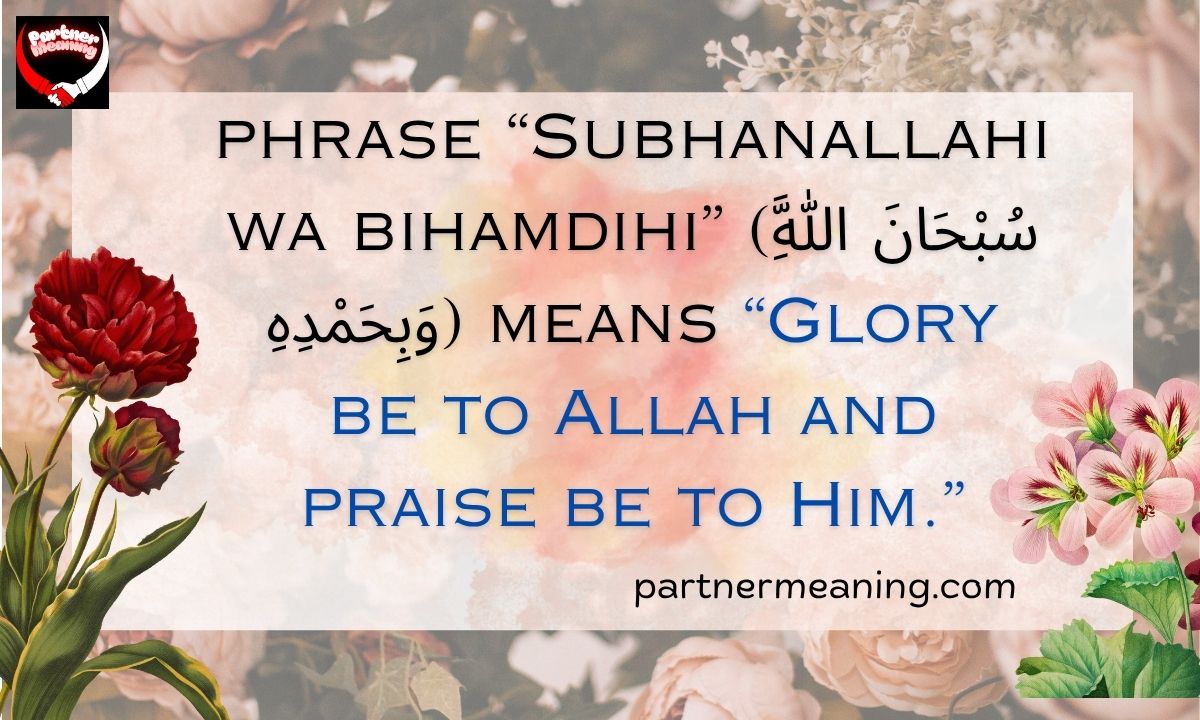
A few words, endless rewards. The phrase Subhanallahi Wa Bihamdihi Subhanallahil Azeem carries deep spiritual power and reminds us of Allah’s greatness. It’s a simple dhikr that fills the heart with peace, gratitude, and faith — light on the tongue but heavy on the scales.
What Does Subhanallahi Wa Bihamdihi Subhanallahil Azeem Mean?
The phrase “Subhanallahi Wa Bihamdihi Subhanallahil Azeem” (سُبْحَانَ اللّٰهِ وَبِحَمْدِهِ سُبْحَانَ اللّٰهِ الْعَظِيمِ) is a beautiful dhikr (remembrance) often recited by Muslims. It praises Allah’s perfection and expresses deep gratitude. The first part, Subhanallahi Wa Bihamdihi, glorifies Allah while thanking Him. The second part, Subhanallahil Azeem, magnifies His greatness and majesty beyond all limits.
This phrase reflects Tawheed (oneness of Allah), reminding believers that nothing is equal to Him. It’s a short yet powerful declaration of faith used in daily prayers and moments of reflection. Muslims around the world recite it to keep their hearts connected to Allah (ﷻ).
It’s often called a comprehensive dhikr, as it combines both Tasbeeh (glorification) and Tahmeed (praise) in one statement. That’s why Prophet Muhammad ﷺ emphasized its recitation frequently for both spiritual and eternal rewards.
When a Muslim says this dhikr, they acknowledge that Allah is free from all imperfections and deserves all praise and honor. It purifies the tongue, heart, and soul while deepening one’s relationship with the Creator.
Arabic Text and Transliteration
Here’s how the phrase is written and pronounced:
| Arabic Text | Transliteration |
| سُبْحَانَ اللّٰهِ وَبِحَمْدِهِ سُبْحَانَ اللّٰهِ الْعَظِيمِ | Subhanallahi wa bihamdihi, Subhanallahil Azeem |
In Arabic, “Subhan” (سُبْحَانَ) means to declare Allah’s purity and freedom from any imperfection. The phrase beautifully combines praise (حمد) and glorification (تسبيح), creating a complete form of remembrance.
It’s usually recited softly after Salah (prayer) or during times of reflection. The pronunciation should be clear: Sub-haan-allahi wa bi-hamdihi, Sub-haan-allahil Azeem. Avoid mispronunciations like “Atheem,” as the correct word is Azeem (عظيم) with a strong “Z” sound.
Many Muslims write or display this dhikr in Arabic calligraphy at home or in mosques as a reminder of constant remembrance (Dhikrullah). The beauty of its sound and meaning inspires peace in the heart.
Subhanallahi Wa Bihamdihi Subhanallahil Azeem Translation in English
The phrase translates to:
“Glory be to Allah and praise Him; Glory be to Allah, the Almighty.”
This translation captures the essence of Tasbeeh (glory) and Hamd (praise). It reflects complete devotion and submission to Allah’s greatness. The believer acknowledges that Allah alone is free from any flaw, and every form of beauty and perfection belongs to Him.
Each time this dhikr is recited, it expresses love, gratitude, and humility before Allah. The words carry a message of balance — glorifying Allah while thanking Him for His endless blessings.
This translation also reminds Muslims of their duty to constantly remember Allah (ذكر الله) in all aspects of life. Whether in happiness, sadness, or silence, saying these words brings peace and divine connection.
In essence, it’s not just a translation — it’s a spiritual statement that nurtures the soul and strengthens faith.
Linguistic Meaning and Root Words
Each word in this dhikr has a deep linguistic origin in Arabic:
- Subhan (سُبْحَانَ) – Root: S-B-H (س ب ح), meaning to glorify, to declare purity, or to move away from any imperfection.
- Hamd (حَمْد) – Root: H-M-D (ح م د), meaning to praise, thank, and appreciate goodness.
- Azeem (عَظِيم) – Root: A-Z-M (ع ظ م), meaning mighty, great, or majestic.
These root words reflect both beauty and balance in Arabic expression. “Subhan” signifies Allah’s transcendence, while “Hamd” expresses human gratitude. Together, they highlight the relationship between Creator and creation.
In Arabic grammar, the phrase is in the nominative case (marfū‘), used independently for praise. This grammatical style gives the phrase a tone of eternal reverence and timeless beauty.
Thus, the structure itself mirrors the meaning — pure, perfect, and elevated — just as Allah is above all imperfection.
Spiritual Significance in Islam
This dhikr holds a special place in Islamic spirituality. It represents Tazkiyah (purification of the soul) and deep remembrance of Allah. Prophet Muhammad ﷺ taught that these words are beloved to Allah and carry immense reward.
It helps cleanse the heart from ghaflah (heedlessness) and fills it with ikhlas (sincerity). When recited regularly, it nurtures humility and constant awareness of Allah’s presence.
Many scholars describe this dhikr as a key to tranquility (sakeenah), especially during stress or sadness. Its repetition brings peace, forgiveness, and spiritual strength. Muslims often recite it:
- After daily prayers
- In the morning and evening adhkar
- During moments of reflection or hardship
- To seek forgiveness and peace of mind
Quran and Hadith References

Although not directly in the Qur’an, the phrase is strongly supported by authentic Hadith. Prophet Muhammad ﷺ said:
“Two phrases are light on the tongue, heavy on the scales, and beloved to the Most Merciful: Subhanallahi wa bihamdihi, Subhanallahil Azeem.”
(Sahih Bukhari & Muslim)
This Hadith highlights how Allah values sincerity and remembrance. Simple words, when spoken with faith, carry eternal rewards.
In the Qur’an, many verses command Tasbeeh (glorification) and Hamd (praise) of Allah. For example:
“So glorify the praises of your Lord and be of those who prostrate.” (Surah Al-Hijr 15:98)
Together, these references show that constant remembrance (Dhikrullah) is a key part of faith and spiritual success.
Benefits of Reciting This Dhikr
Reciting Subhanallahi Wa Bihamdihi Subhanallahil Azeem brings countless blessings in this world and the next. Some of its major benefits include:
- Forgiveness of sins – The Prophet ﷺ said that whoever recites it a hundred times a day will have their sins forgiven.
- Spiritual peace – It soothes the heart and brings serenity during difficult times.
- Reward in the Hereafter – Every recitation increases your good deeds on the Day of Judgment.
- Strengthens Iman (faith) – Keeps your heart attached to Allah and away from worldly distractions.
- Brings Allah’s mercy and blessings into your daily life.
Regular recitation of this dhikr is a form of daily purification, strengthening one’s connection with Allah.
It’s simple, beautiful, and filled with reward — a true reminder of how light words can carry eternal weight when spoken with a sincere heart.
Best Time to Recite Subhanallahi Wa Bihamdihi Subhanallahil Azeem
There is no fixed time to recite Subhanallahi Wa Bihamdihi Subhanallahil Azeem (سُبْحَانَ اللّٰهِ وَبِحَمْدِهِ سُبْحَانَ اللّٰهِ الْعَظِيمِ), but certain moments bring greater rewards. The Prophet ﷺ encouraged morning and evening adhkar (أذكار الصباح والمساء) for maximum blessings. These are peaceful times when the heart is most connected to Allah.
It is also recommended after Salah (prayer). Many Muslims recite it thirty-three times, along with Alhamdulillah and Allahu Akbar, as part of post-prayer remembrance. It helps in maintaining spiritual focus throughout the day.
During Tahajjud (تهجد) or the last third of the night, this dhikr carries immense power. The night is calm, and sincere remembrance then draws Allah’s mercy and forgiveness closer.
You can also say it at any time — while walking, working, or resting. Dhikr is not limited by time or place; it’s about a heart that remembers Allah (قلب ذاكر) in every moment.
Pronunciation Guide for Beginners
Pronouncing this dhikr correctly adds both beauty and meaning to your recitation. Below is a simple guide for clarity and accuracy:
| Arabic Text | Transliteration | Phonetic Pronunciation |
| سُبْحَانَ اللّٰهِ وَبِحَمْدِهِ | Subhanallahi wa bihamdihi | Sub-haan-allahi wa bi-ham-de-hi |
| سُبْحَانَ اللّٰهِ الْعَظِيمِ | Subhanallahil Azeem | Sub-haan-allahil Aa-zeem |
When saying “Subhanallah”, emphasize the “ha” sound (ح) softly — it’s from the throat, not harsh. The “Azeem (عظيم)” starts with the deep Arabic letter ‘Ayn (ع), not a plain “A”.
Beginners can practice slowly, repeating each part until the pronunciation feels natural. Listening to Qaris (reciters) online helps to master the flow and tone.
Recite with calmness and khushu’ (خشوع) — inner humility. The goal is not speed but heartfelt remembrance. Even one sincere recitation can outweigh countless rushed words.
Extended Forms and Their Rewards
There are several extended versions of this dhikr that combine additional words of praise. Each form carries unique barakah (بركة) and reward. Some common extended forms include:
- سُبْحَانَ اللّٰهِ وَبِحَمْدِهِ عَدَدَ خَلْقِهِ – Subhanallahi wa bihamdihi ‘adada khalqihi – “Glory be to Allah and praise Him, as many times as the number of His creations.”
- سُبْحَانَ اللّٰهِ وَبِحَمْدِهِ زِنَةَ عَرْشِهِ – …zinata ‘arshihi – “Equal to the weight of His Throne.”
- سُبْحَانَ اللّٰهِ وَبِحَمْدِهِ رِضَا نَفْسِهِ – …rida nafsihi – “According to the pleasure of His Self.”
Each variation deepens the praise (تسبيح) and reflects how infinite Allah’s greatness truly is. The Prophet ﷺ said such forms multiply the reward beyond human understanding.
Reciting these longer forms during quiet reflection or dua strengthens your connection with Allah. It’s not about quantity but presence and sincerity while remembering Him.
Importance of Consistent Dhikr in Daily Life
Dhikr (ذكر) means constant remembrance of Allah. It’s a simple act that brings peace, protection, and forgiveness. Reciting Subhanallahi Wa Bihamdihi Subhanallahil Azeem daily keeps the heart alive and humble before the Creator.
Regular dhikr protects one from waswas (وسوسة) — negative whispers of Shaytan — and keeps faith steady. It fills the day with spiritual light, even in busy moments.
Prophet Muhammad ﷺ said: “Keep your tongue moist with the remembrance of Allah.” This means dhikr should become a daily habit, not an occasional act. To stay consistent, you can:
- Set aside time after Fajr and Maghrib for dhikr.
- Recite while doing daily tasks — driving, cooking, or walking.
- Teach your family and children to repeat it together.
- Keep a dhikr counter or use digital tasbeeh apps for motivation.
Consistency turns dhikr from mere words into a way of life (أسلوب حياة) — one that keeps your heart glowing with faith and closeness to Allah.
Frequently Asked Questions
What is the meaning of Subhanallahi wa bihamdihi in Arabic?
It means “Glory be to Allah and praise be to Him” — expressing both tasbih (تسبيح) and hamd (حمد) together.
What happens if I say Subhanallahi wa bihamdihi 100 times?
All sins are forgiven, even if they are as much as the foam of the sea, according to an authentic hadith.
Is Subhanallahi wa bihamdihi Subhanallahil Azeem mentioned in the Quran?
It’s not directly in the Quran but strongly recommended in Hadith by Prophet Muhammad ﷺ.
When should we recite Subhanallahi wa bihamdihi Subhanallahil Azeem?
You can recite it anytime, especially morning, evening, and after Salah for more blessings.
H3: What is the difference between Subhanallah and Alhamdulillah?
Subhanallah means Glory be to Allah, while Alhamdulillah means Praise be to Allah — both express gratitude differently.
How to pronounce Subhanallahil Azeem correctly?
Say Sub-haan-allahil Aa-zeem, with a deep ‘Ayn (ع) sound and soft ha (ح) from the throat.
Can non-Arabs recite Subhanallahi wa bihamdihi?
Yes, anyone can recite it — Islam encourages dhikr for all believers, regardless of language or origin.
Conclusion
The phrase Subhanallahi Wa Bihamdihi Subhanallahil Azeem is more than words; it’s a reflection of faith, gratitude, and love for Allah. Regular remembrance purifies the heart, brings peace to the soul, and earns immense reward. Keep your tongue moist with dhikr, and your heart will always stay connected to Allah (اللّٰه).

Hayyat is a passionate writer and researcher who loves exploring the beauty and depth of Arabic language and culture. With a special interest in Arabic names, Qur’anic words, and Islamic heritage, Hayyat aims to share meaningful insights with readers who appreciate names with purpose and history.