Samara is a name that carries depth, elegance, and cultural charm in Arabic heritage. Loved for its soft sound and timeless appeal, it continues to stand out among modern Arabic names.
Rooted in ancient language and poetic tradition, Samara reflects beauty, strength, and connection—qualities that have kept it cherished across generations.
What Does Samara Mean in Arabic?
The name سَمَارَة (Samara) holds a deep and poetic place in Arabic culture. It is often described as a name filled with warmth, companionship, and light. In everyday Arabic, people say:
“سَمَرَ القومُ ليلًا” – The people conversed through the night, reflecting the same essence that Samara carries: togetherness beneath the stars.
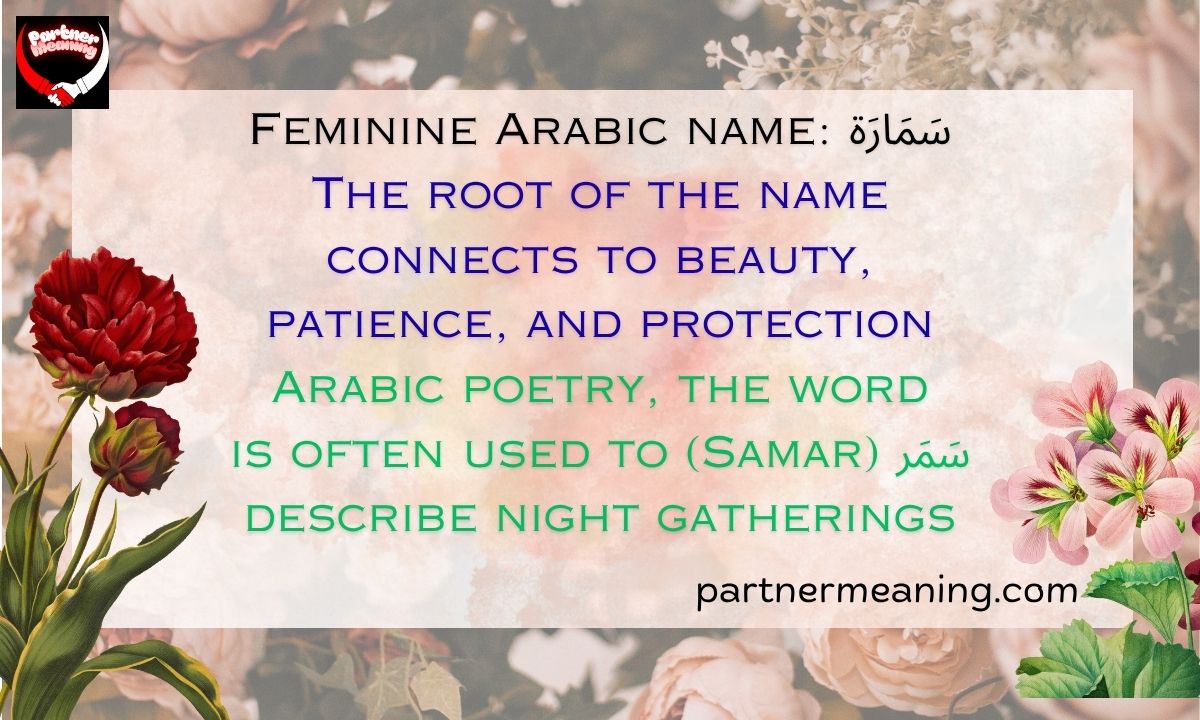
The root of the name connects to beauty, patience, and protection, making it more than just a name — it is a reflection of character and presence. When someone hears “Samara,” it evokes the image of a person who brings comfort and peace to those around her. The tone of the name feels calm and musical when spoken in Arabic, with a soft rhythm between each syllable.
In Arabic poetry, the word سَمَر (Samar) is often used to describe night gatherings filled with laughter, music, and moonlight. From that poetic scene emerges the name Samara, meaning someone who belongs to that world of warmth and storytelling. It’s not only a name — it’s an emotion, a sense of connection between friends and family.
Arabs often use this word in phrases like “سَمَرْنا تحتَ ضوءِ القمر” – We spent the night talking under the moonlight. This simple yet beautiful expression shows the intimate and cultural meaning behind Samara — a name that feels timeless and full of soul.
Linguistic Origin and Root of the Name Samara (سَمَارَة)
The name سَمَارَة (Samara) comes from the ancient Arabic triliteral root س-م-ر (S-M-R), a root rich with meanings tied to night, conversation, and companionship. In classical usage, Arabs said:
“سَمَرَ القومُ في الليلِ” – The people talked during the night.
This root connects Samara to the idea of talking softly in friendship, under calm skies.
From this same root come related words like سَمَر (Samar) meaning night talk, and سَمِير (Samir) meaning a companion in the evening. The feminine form سَمَارَة beautifully expresses one who brings warmth and protection at night. This linguistic link shows how Arabic names grow naturally from meaningful verbs and roots.
In Quranic Arabic, the same root appears in verses that describe people speaking at night or sharing quiet reflection. It highlights the social and emotional side of human connection. Linguists point out that this makes Samara a word with layers of emotional and spiritual depth, not merely a label.
To understand how this root expands, consider these related forms:
- سَمَرَ (samara) – to converse at night
- سَمْرَاء (samrāʼ) – dark or brown-complexioned woman
- سَمِير (samīr) – male companion in conversation
- سَمِيرَة (samīrah) – female companion
Each of these shows how the س-م-ر root carries beauty, intimacy, and warmth through different shades of meaning.
Spiritual and Quranic Connection of the Name Samara
The name سَمَارَة (Samara) carries a quiet spiritual elegance that goes beyond sound or language. It traces back to the same Arabic root س-م-ر (S-M-R) used in early Islamic texts to describe night-time gatherings where people spoke gently and shared wisdom. In Qur’anic Arabic, this root appears when describing groups who spoke together at night, showing reflection and awareness under the calm of darkness.
The spiritual sense of the word suggests companionship guided by peace, not distraction. Many scholars connect Samara with qualities such as kindness, serenity, and thoughtfulness—the way night brings reflection after the day’s noise. When Muslims hear this name, it reminds them of the beauty found in stillness and sincere conversation.
Classical commentators often explain that words from the root س-م-ر capture how light and talk continue after sunset, symbolizing a believer’s heart that stays awake to goodness. The idea is simple yet profound: conversation, friendship, and remembrance can all be acts of grace.
In modern Islamic culture, Samara is sometimes chosen for its link to companionship with faith. Parents see it as a name that encourages humility and peaceful strength, echoing the soft light of the moon that guides travelers through darkness.
Cultural and Symbolic Importance of Samara in Arabic Tradition
In Arab culture, the name سَمَارَة (Samara) carries a graceful connection to social life, storytelling, and beauty under the night sky. The word سَمَر (Samar) once referred to evening gatherings where people shared poems, music, and tales of wisdom. As Arabs said:
“سَمَرْنَا تَحْتَ ضَوْءِ القَمَرِ” – We talked under the light of the moon.
From this tradition, Samara came to symbolize friendship, trust, and warmth.
In many Arabic regions, a person called Samara is often imagined as a gentle listener—someone who brings calm, laughter, and understanding to others. The name connects with the hospitality of Arab culture, where conversation is seen as a bridge between hearts. The social meaning of Samara mirrors the value Arabs place on community and generosity.
The name also has a symbolic link with nature. In Arabic, Samara may describe the winged seed of trees, carried by the wind to new soil. This image gives the name a deeper meaning—growth, renewal, and spreading goodness wherever one goes. It’s a poetic reflection of how words and kindness travel far beyond their source.
In traditional Arabic poetry, Samara is sometimes used to describe a beloved companion under the stars or a memory that lingers through the night. The name blends emotion, sound, and heritage. It reminds people of old desert nights when the moonlight touched faces, and conversation was the only light that never faded.
Samara in Arabic Grammar and Language Usage
In Arabic grammar, the name سَمَارَة (Samara) is a feminine noun derived from the root س-م-ر (S-M-R). Grammatically, it follows the common pattern فَعَالَة (fa‘ālah), which often expresses a quality, role, or feminine form of a related verb. This structure gives the name a smooth, lyrical rhythm when spoken in Arabic.
Linguists explain that the verb سَمَرَ (samara) means to converse at night or to spend the evening in pleasant company. From this, the noun سَمَارَة naturally means a woman who engages in evening talk or brings warmth to conversation. Arabs would often use phrases like:
“تُحِبُّ سَمَارَةُ اللَّيْلَ وَالْقَمَرَ” – Samara loves the night and the moon,
highlighting both the poetic and grammatical connection between word and meaning.
In classical usage, Samara can function as both a proper noun and a common noun, depending on context. For example:
- When used as a name, it’s capitalized and specific: “This is Samara, my friend.”
- When used as a word, it could mean “night companionship” or “pleasant talk.”
This dual function makes it rich in linguistic texture, something unique to the Arabic language.
Arabic teachers often highlight سَمَارَة to show how Arabic creates feminine forms through pattern shifts. Other examples include:
- كَاتِب (kātib) → كَاتِبَة (kātibah) – writer / female writer
- نَاصِر (nāṣir) → نَاصِرَة (nāṣirah) – helper / female helper
Similarly, سَامِر (sāmir) → سَمَارَة (samārah) creates a feminine counterpart meaning female night companion.
Examples of “Samara” Used in Arabic Sentences
The name سَمَارَة (Samara) appears beautifully in many Arabic expressions and sentences, reflecting different shades of meaning — protection, friendship, and gentle spirit. Below are examples that show how it can be used naturally in both conversation and writing.
- سَمَارَةُ تُحِبُّ اللَّيْلَ وَالْقَمَرَ
Samara loves the night and the moon.
This sentence highlights the poetic connection between Samara and the beauty of the evening, symbolizing calmness and reflection. - سَمَارَةُ تَسْمَعُ أَصْدِقَاءَهَا بِاهْتِمَامٍ
Samara listens to her friends with care.
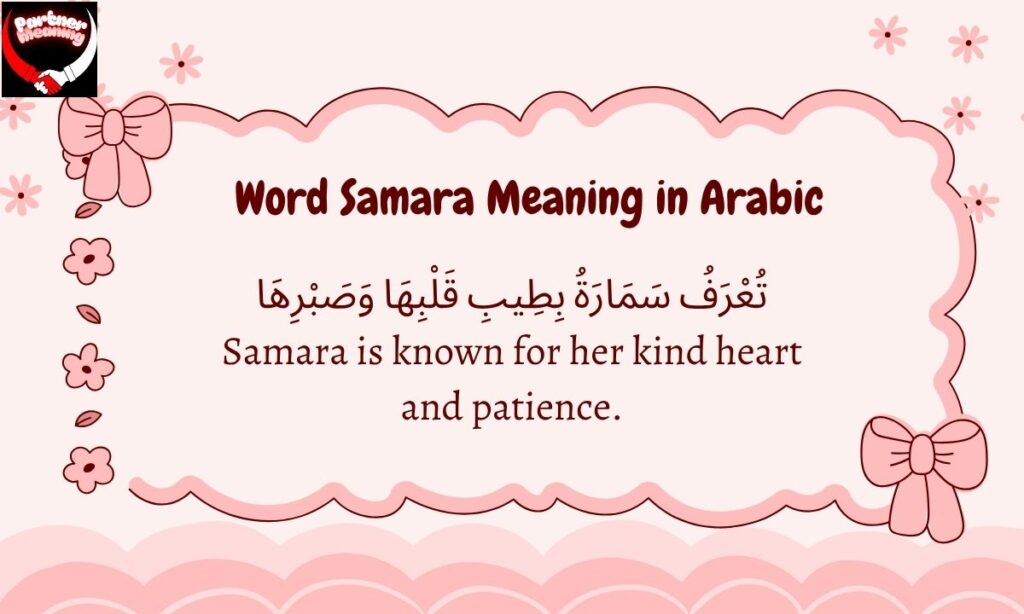
It reflects her gentle and understanding nature, a quality often associated with the name in Arabic culture. - تُعْرَفُ سَمَارَةُ بِطِيبِ قَلْبِهَا وَصَبْرِهَا
Samara is known for her kind heart and patience.
This shows the moral and emotional depth linked to the name, making it more than just a word — it’s a personality trait. - سَمَارَةُ تَحْمِي أُخْتَهَا الصَّغِيرَةَ مِنَ الْبَرْدِ
Samara protects her little sister from the cold.
This usage connects to the meaning of guardian or protector, one of the deeper interpretations of the name.
In poetic and literary Arabic, Samara can also appear in metaphorical phrases, such as:
- “ضَحِكَتْ سَمَارَةُ كَضَوْءِ النُّجُومِ.” – Samara smiled like the light of the stars.
- “سَمَارَةُ صَوْتُ اللَّيْلِ فِي قَلْبِ الصَّحْرَاءِ.” – Samara is the voice of the night in the heart of the desert.
These examples show how سَمَارَة is not just a name but a symbol of grace and poetry woven deeply into Arabic speech and art.
Common Misinterpretations and Similar Arabic Names
Many people confuse the name سَمَارَة (Samara) with other Arabic or non-Arabic names that sound similar but have different meanings. Understanding these differences helps preserve the true cultural and linguistic depth of the name.
Some mistakenly believe that Samara means “reward from God” or “guardian angel.” While beautiful, those meanings are not linguistically accurate in Arabic. The name comes from the root letters س–م–ر (S–M–R), which relate to nightly conversation and companionship under the moonlight.
سَمَرَ القومُ – The people talked together at night.
This is the origin of the poetic meaning attached to Samara.
Another common confusion is with سَمِيرَة (Samira) and سَمْرَة (Samra). Though related, each name carries its own shade of meaning:
- سَمِيرَة (Samira): means “a pleasant companion in evening talk.”
- سَمْرَة (Samra): means “brownish complexion” or “dark beauty.”
- سَمَارَة (Samara): means “one who engages in cheerful night conversation.”
These distinctions are subtle yet meaningful. Arabic names often reflect the time of day, nature, or personal virtues, giving each a unique charm.
Examples of Confusion in Modern Usage:
- Many English speakers pronounce Samara like Sah-mah-rah, which leans toward the Hebrew name Samara meaning protected by God.
- Others spell it Samera or Semera, blending it with Persian or Turkish influences.
- In Arabic culture, however, سَمَارَة keeps its root connection to سَمَرَ, preserving its authentic heritage.
In Arabic poetry and literature, misinterpretations are rare because context clarifies meaning. A poet might write:
“سَمَارَةُ لَيْسَتْ ظِلًّا فَقَطْ، بَلْ نُورُ لَيْلٍ يُحَدِّثُ الرُّوحَ.”
Samara is not just a shadow, but the night’s light that speaks to the soul.
This line shows how Samara transcends literal translation — it’s a symbol of warmth, conversation, and beauty that has survived centuries of cultural blending.
Why the Name Samara Remains Popular Among Arabic Girls
The name سَمَارَة (Samara) continues to be a beloved choice among Arabic-speaking families for its graceful sound, deep cultural meaning, and poetic roots. It embodies qualities like warmth, elegance, and connection, making it both traditional and timeless.
In Arabic culture, a name isn’t just a label — it reflects the spirit and story of a person. The name Samara comes from سَمَرَ, meaning to talk kindly at night, which connects it to friendship and comfort.
سَمَارَةُ تُذَكِّرُنَا بِأُنْسِ اللَّيْلِ وَجَمَالِ الْكَلَامِ
Samara reminds us of the warmth of the night and the beauty of words.
Why Parents Choose the Name Samara:
- It sounds soft and melodic, easy to pronounce across many cultures.
- It carries spiritual and emotional depth, linked to connection and care.
- It reflects traditional Arabic values while feeling modern.
- It symbolizes protection, beauty, and communication, traits admired in girls.
In modern societies, Samara bridges old and new. You’ll find this name in Arabic, Western, and South Asian communities, where its meaning still feels comforting and familiar. Even in regions where Arabic isn’t spoken, people appreciate its musical rhythm and positive aura.
وَإِذَا نُودِيَتْ سَمَارَةُ، أَتَى النُّورُ مَعَ اسْمِهَا
And when Samara is called, light comes with her name.
That poetic expression captures why the name endures — it carries a sense of peace and companionship. Whether in the Quranic echo of its root, or the emotional connection it sparks, Samara continues to shine among Arabic girls’ names.
In today’s world, parents often seek names that blend faith, meaning, and modern appeal. Samara fits all three perfectly. It’s more than just a word; it’s a reminder of language, heritage, and timeless beauty.
Conclusion
The name سَمَارَة (Samara) beautifully captures the essence of Arabic language and culture. It represents friendship, warmth, and gentle conversation under the night sky. Rooted in the Arabic triliteral root س–م–ر (S–M–R), it carries both poetic charm and timeless meaning. Whether chosen for its spiritual link, cultural depth, or soft rhythm, Samara remains a name that reflects light, grace, and heritage.
Frequently Asked Questions
What is the exact meaning of Samara in Arabic?
It means “one who engages in night conversation” or “a friendly companion under the moonlight.”
Is Samara mentioned in the Quran?
The root letters س–م–ر (S–M–R) appear in the Quran, but the name itself is not directly mentioned.
How do you pronounce Samara in Arabic?
It’s pronounced Sa-ma-ra (سَمَارَة), with the stress on the second syllable.
What is the difference between Samara, Samira, and Samra?
Samira (سَمِيرَة) means pleasant companion, Samra (سَمْرَاء) means brown or dark beauty, and Samara (سَمَارَة) means night conversationalist.
Is Samara a good name for a baby girl?
Yes, it’s a beautiful and meaningful Arabic name symbolizing kindness, companionship, and elegance.

Hayyat is a passionate writer and researcher who loves exploring the beauty and depth of Arabic language and culture. With a special interest in Arabic names, Qur’anic words, and Islamic heritage, Hayyat aims to share meaningful insights with readers who appreciate names with purpose and history.