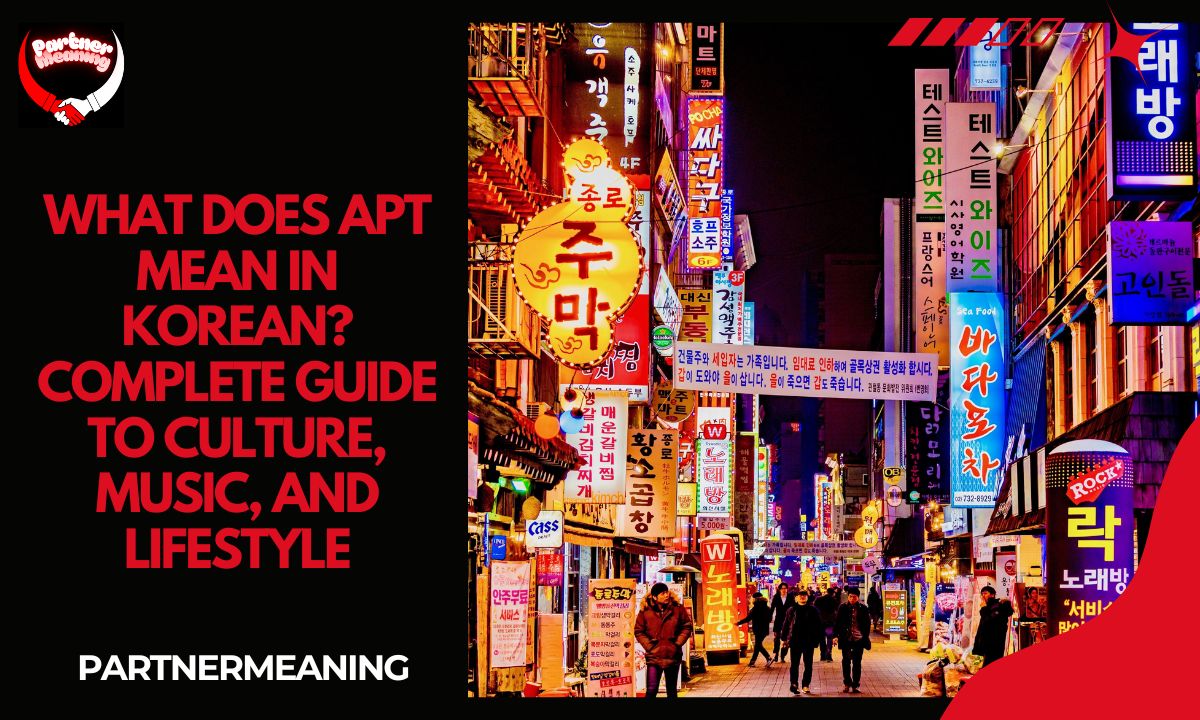
The word “Apt” in Korean culture is much more than a simple abbreviation. It represents modern apartment living, urban culture, and even pop-culture references, from K-dramas to K-pop songs. Whether you’re learning Korean, exploring South Korean real estate, or listening to Rosé and Bruno Mars’ 2024 hit “APT.”, understanding the term provides insight into lifestyle, community, and social status. This guide explores the literal meaning, cultural significance, pop culture references, and daily usage of Apt in Korea.
What “Apt” Literally Means in Korean
In Korea, “Apt” is short for “아파트 (apateu)”, a loanword from English meaning apartment. Unlike English, where “apt” is an adjective meaning suitable or intelligent, the Korean Apt is a noun. It denotes modern, high-rise residential buildings with multiple units, elevators, security systems, and shared facilities.
Koreans often shorten apateu to Apt in signs, text messages, and conversations. Living in an Apt is standard in urban areas like Seoul, Busan, and Incheon. The word is used in real estate ads, casual conversations, and even pop culture, symbolizing urban life.
How to Pronounce “Apt” in Korean
The Korean word 아파트 (apateu) is pronounced Ah-pah-teu.
- 아 (a) – “ah”
- 파 (pa) – “pah”
- 트 (teu) – soft “teu,” not a hard “t”
Koreans often write it as Apt in texts or building signs. For example, when someone says:
“I live in an Apt in Gangnam,”
They are referring to their apartment complex, not intelligence or skill.
The Cultural Significance of Apt in Korea

Korean apartments are more than housing—they are symbols of stability, success, and community.
🏙️ The Most Common Home Type
Around 60–70% of Koreans live in apartment complexes. Urban areas, with limited land, require high-rise buildings to accommodate growing populations. Apartments provide convenient living, safety, and social opportunities.
🏡 A Sign of Status and Stability
Owning an apartment is a major life milestone in Korea. It represents:
- Financial stability and wealth
- Family security
- Modern and convenient living
Real estate news, property prices, and dramas frequently reference apartments to highlight status and achievement.
💬 Community Life
Korean apartment complexes often include:
- Playgrounds for children
- Gyms, parks, and shared spaces
- Security personnel and CCTV
- Parking garages and convenience stores
Living in an Apt is a communal experience, creating social bonds and safety networks.
Apt vs Other Korean Housing Types
| Housing Type | Korean | Description | Example |
| Apartment | 아파트 (apateu) | Modern high-rise building with shared facilities | “I live in an Apt in Seoul.” |
| Villa | 빌라 (billa) | Smaller, low-rise apartment building | “Our villa has four floors.” |
| Officetel | 오피스텔 (opisutel) | Mixed residential and work building | “He bought an officetel near Gangnam.” |
| Hanok | 한옥 (hanok) | Traditional Korean house | “Her grandmother lives in a hanok.” |
Apts dominate urban living due to modern amenities and convenience. Villas and officetels are secondary housing options, while hanoks preserve traditional Korean culture.
History and Popularity of Apartments in Korea
Apt culture in Korea grew in the 1960s–70s. The government built large complexes to solve housing shortages after the Korean War. The first major complex, Mapo Apartments (1962), set the standard for high-rise apartment living.
Over the decades, apartments became symbols of urban modernization and social progress. Luxury brands like Hyundai Hillstate, Lotte Castle, and Raemian further popularized Apts with stylish designs, advanced technology, and comfort. Today, owning an apartment is a dream for many Koreans, representing wealth, independence, and status.
Apt in Korean Pop Culture

Apartments appear frequently in music, dramas, and everyday references.
🎶 In Music
K-pop and Korean songs often reference apartments as romantic or nostalgic spaces. Rosé’s 2024 song “APT.”, featuring Bruno Mars, is a prime example. The track combines English and Korean lyrics to depict flirtation, fun, and party culture in an apartment setting.
- Chorus: “Apartment, apartment” echoes the Korean drinking game chant.
- Korean phrases:
- 채영이가 좋아하는 랜덤 게임 – “Chaeyoung’s favorite random game”
- 건배, 건배 – “Cheers, cheers”
- 채영이가 좋아하는 랜덤 게임 – “Chaeyoung’s favorite random game”
The song celebrates apartment life while highlighting Rosé’s Korean identity.
📺 In Dramas
K-dramas often use apartments as backdrops for family life, romance, and social status. Examples include:
- Crash Landing on You – luxury apartment as a symbol of wealth
- Penthouse – apartments showing competition and ambition
Apartments in dramas reflect aspirations, relationships, and urban lifestyles.
APT. Song by Rosé & Bruno Mars
Rosé and Bruno Mars’ 2024 single “APT.” popularized the Korean word internationally. The song mixes English and Korean lyrics, telling a story of flirtation and fun in apartments.
- Chorus: Repeats “apartment, apartment” to mimic the Korean drinking game chant.
- Korean phrases:
- 채영이가 좋아하는 랜덤 게임 – “Chaeyoung’s favorite random game”
- 건배, 건배 – “Cheers, cheers”
- 채영이가 좋아하는 랜덤 게임 – “Chaeyoung’s favorite random game”
The track celebrates Rosé’s roots while making apartment life playful and musical.
The APT Drinking Game
The Korean drinking game APT (Apartment) inspired Rosé and Bruno Mars’ song. It’s fun, social, and interactive.
How to Play
- Players sit in a circle.
- Chant “apateu” and start with “Game start!”
- Stack hands in the center.
- The leader calls a number; players move hands from bottom to top while counting aloud.
- Whoever reaches the number last takes a shot.
Popular Variations
- Speed Round: Move hands quickly; slow players drink.
- Extra Gestures: Clap, wave, or wiggle fingers while counting.
- Korean Counting: Count numbers in Korean for a challenge.
- Upside-Down: Reverse hand order; follow new rules or drink.
The game adds social energy, which translated into the playful and flirty theme of the song.
Modern Trends: Smart and Eco-Friendly Apartments
Korean apartments now include high-tech and sustainable features:
- Digital door locks and security systems
- Smart lighting and automated heating
- Recycling and green rooftop gardens
- Integrated fitness and community spaces
These trends reflect urban convenience and lifestyle innovation, making apartments not just homes, but smart living environments.
How Apartments Reflect Lifestyle in Korea
- Buying an apartment is a sign of financial independence.
- Living in an Apt indicates modern, urban lifestyle.
- Apartments influence family life, education opportunities, and social reputation.
For many Koreans, an apartment is more than a residence; it defines their identity and aspirations.
Common Phrases With “Apt”
| Korean Phrase | Romanization | English Meaning |
| 아파트에 살아요 | Apateue sarayo | I live in an apartment |
| 아파트 값 | Apateu gap | Apartment price |
| 아파트 매매 | Apateu maemae | Apartment sale |
| 아파트 단지 | Apateu danji | Apartment complex |
| 새 아파트 | Sae apateu | New apartment |
These phrases are widely used in daily conversation, real estate ads, and casual discussions.
Frequently Asked Questions
Is “Apt” used in spoken Korean?
Yes, it’s commonly used, especially in urban areas like Seoul and Busan.
What’s the full word for “Apt”?
The full word is 아파트 (apateu), directly from the English “apartment.”
Do most Koreans live in Apts?
Yes, apartments are the dominant housing type in South Korea.
What’s the difference between an Apt and a Villa?
A Villa is smaller, low-rise, and less equipped. An Apt is high-rise, modern, and communal.
Can “Apt” ever mean “smart” in Korean?
No, the word only refers to apartment buildings.
Why are Apts so popular in Korea?
They represent convenience, community, security, and social status.
Conclusion
In Korea, “Apt” (아파트) means an apartment building, not “apt” as in suitable or intelligent. Apartments are central to urban life, reflecting modern culture, community, and social achievement.
From real estate and daily life to pop culture references like Rosé and Bruno Mars’ “APT.”, the term embodies living standards, lifestyle, and identity. Understanding Apt gives insight into how Koreans view home, status, and social connections, making it much more than just a building.

Hayyat is a passionate writer and researcher who loves exploring the beauty and depth of Arabic language and culture. With a special interest in Arabic names, Qur’anic words, and Islamic heritage, Hayyat aims to share meaningful insights with readers who appreciate names with purpose and history.