
In today’s fast-paced digital world, audiences crave more than simple information. They want depth, variety, and perspective in the stories they consume. “Your Topics | Multiple Stories” answers this need by turning a single idea into multiple engaging narratives that resonate widely.
This approach helps content creators, educators, and businesses connect deeply with different audience segments. By using diverse angles and formats, it enhances engagement, improves comprehension, and builds trust across platforms.
1. Introduction to Narrative Multiplicity
Understanding the Value of Multiple Stories
Multiple stories allow a topic to be seen from different angles. Audiences gain richer insights when perspectives are layered. Content creators can engage more deeply using this method. Traditional storytelling often misses nuances that multi-narrative approaches capture.
Diverse narratives create connections across cultures and experiences. By sharing stories from different viewpoints, we humanize complex topics. Readers feel included and validated in their understanding. This approach strengthens audience loyalty and engagement.
Multi-layered storytelling bridges gaps between abstract ideas and real-world impact. Complex issues like climate change or AI benefit from layered explanations. Each story adds dimension and clarity to the central message. Audiences can relate and act on insights effectively.
Storytelling frameworks like Your Topics Multiple Stories provide structure. They help organize multiple perspectives without confusing the audience. Creators can craft compelling narratives while maintaining clarity. This method fosters empathy, comprehension, and long-term retention.
Why Modern Audiences Crave Multi-Layered Narratives
Modern readers are no longer satisfied with simple narratives. They want context, examples, and varied perspectives. Single-angle content often feels shallow or incomplete. Complex storytelling satisfies the craving for depth and understanding.
Audiences now expect content tailored to different emotional and intellectual needs. Engagement rises when stories include personal, analytical, and societal viewpoints. Multi-narrative approaches give them the variety they seek. This drives higher retention and content sharing.
Digital platforms amplify the need for multi-layered narratives. Social media, blogs, and podcasts thrive on diverse storytelling. Viewers consume content differently, and a single story rarely reaches everyone. Content creators must adapt to these consumption patterns.
Diverse storytelling encourages curiosity and learning. Audiences explore new perspectives, cultures, and ideas. Exposure to multiple narratives promotes critical thinking. Ultimately, multi-layered stories create more informed and empathetic communities.
2. The Power of Perspectives
Cultural Narrative Divergence
Culture shapes how stories are told and received. Values, beliefs, and norms influence narrative choices. Different societies emphasize unique themes in their stories. Understanding context ensures narratives resonate globally.
Cultural perspectives bring richness to multi-narrative content. Audiences gain insight into traditions and lived experiences. This diversity prevents a single narrative from dominating. It also promotes inclusivity and mutual respect.
Storytelling examples vary widely across regions. Eastern folklore might focus on collective wisdom. Western media often prioritizes individual heroism. By integrating multiple cultural lenses, creators deepen engagement.
Narrative divergence strengthens content relevance. Brands and creators can tailor stories to specific audiences. Cultural awareness enhances relatability and emotional resonance. Multi-perspective content drives deeper connection with readers.
Emotional vs. Analytical Lenses
Emotional storytelling appeals to feelings and personal experience. Audiences empathize with characters and situations. This connection strengthens memory and retention. It also encourages sharing and discussion.
Analytical storytelling emphasizes facts, logic, and reasoning. Data-driven narratives build credibility and authority. Combining emotional and analytical lenses ensures balanced content. It appeals to multiple cognitive preferences.
In practice, topics like healthcare benefit from both lenses. Emotional stories highlight patient experiences. Analytical insights focus on treatment efficacy and outcomes. Together, they offer a comprehensive perspective.
Multi-lens storytelling improves audience understanding. It caters to varied learning styles. Viewers feel informed and engaged simultaneously. This method creates a richer, more memorable narrative experience.
3. Story Layering: Beyond the Surface
What is Story Layering?
Story layering is presenting multiple angles within a single topic. It blends perspectives, formats, and emotional tones. Layered stories create depth and engagement. This technique makes complex ideas easier to grasp.
Layering enhances comprehension by showing relationships between ideas. Audiences can see cause and effect more clearly. It allows for nuanced explanations without overwhelming readers. Content becomes both informative and relatable.
Different layers can include personal anecdotes, data, and cultural context. This mix engages diverse audience preferences. Multiple entry points make the content more accessible. Each layer contributes to a unified narrative.
The benefit of layering is long-term retention. Stories become memorable because they connect emotionally and intellectually. Audiences return for more insights. Layered narratives establish authority and trust for creators.
4. How Brands Are Leveraging “Your Topics | Multiple Stories”
The Netflix Effect
Netflix popularized non-linear storytelling in entertainment. Multiple plotlines run simultaneously, engaging diverse audiences. Complex series like Stranger Things show the power of intertwined narratives. Viewers experience deeper immersion and suspense.
This approach boosts binge-watching and platform loyalty. Audiences feel invested in different story arcs. Brands learn from this model to create content with layered perspectives. Entertainment success proves narrative multiplicity works.
Netflix also integrates cultural diversity in storylines. Stories reflect various values and backgrounds. Representation strengthens relatability across global audiences. Creators adopt similar strategies for marketing and education.
Lessons for content creators: multi-story approaches increase engagement. Brands use multiple narratives to show product impact. Emotional connection and analytical insight drive decision-making. The model transcends entertainment into business content.
Media Companies Adapting
Traditional media is shifting toward multi-perspective reporting. News outlets present stories from local, national, and global angles. Audience trust grows when diverse viewpoints are shared. Coverage becomes more comprehensive and nuanced.
Editorial teams incorporate user-generated content and expert interviews. This variety makes reporting richer and more credible. Digital platforms allow multiple formats—video, text, and interactive graphics. Multi-format storytelling improves accessibility.
Brands and media can highlight societal issues effectively. Stories from affected communities amplify impact. This method combines empathy with information. Audiences gain a 360-degree understanding of topics.
Adapting these techniques improves engagement and loyalty. Content that entertains, informs, and resonates spreads faster. Media companies strengthen authority using layered storytelling. The framework is now standard in modern communication.
5. Real-World Examples

Case Study 1: The Global Water Crisis
Environmental stories gain clarity through multiple perspectives. Scientists explain causes, governments show policies, and communities share struggles. This layering gives a complete picture of the crisis. Audiences understand both facts and human impact.
Economic perspectives highlight cost and infrastructure challenges. Cultural lenses reveal how water scarcity affects traditions and daily life. Layered storytelling ensures no viewpoint is ignored. Actionable insights emerge naturally.
Media coverage combines visuals, interviews, and statistics. This multi-format approach increases engagement. Viewers retain information more effectively. The crisis story becomes relatable and urgent.
Lessons learned show the power of Your Topics Multiple Stories. Complex issues are better explained with layered narratives. Creators can replicate this approach across topics. Impactful storytelling drives understanding and action.
Case Study 2: AI in Healthcare
Patient stories illustrate real-life outcomes of AI interventions. Doctor perspectives explain efficiency, accuracy, and workflow benefits. Ethical discussions address privacy and bias concerns. Together, they create a full narrative.
Visual content like infographics highlights data trends. Videos demonstrate technology applications. Podcasts share expert discussions and patient experiences. This multi-format coverage educates a broad audience.
AI narratives benefit from emotional and analytical lenses. Emotional stories show patient relief and satisfaction. Data-driven insights build trust and credibility. Layered storytelling ensures audiences see both impact and logic.
Healthcare communication thrives on multiple narratives. Stakeholders understand benefits and risks. Education and engagement improve. AI adoption becomes more informed and empathetic.
6. Building Your Own Narrative Ecosystem
Step 1: Choose a Core Topic
Start with a topic that resonates with your audience. It should be broad enough for multiple stories. Focus on relevance and interest. Clear objectives guide content creation.
Core topics anchor all narratives. They ensure consistency across formats. Every story links back to the main theme. This maintains clarity for the audience.
Examples include AI, sustainability, mental health, and remote work. Topics must have multiple angles. Relevance increases engagement and SEO value. Central themes unify diverse content.
Strong topics allow creativity. They encourage contributors to explore unique perspectives. Audience curiosity is satisfied through variety. The framework supports both clarity and depth.
Step 2: Identify Sub-Narratives
Brainstorm stories that branch from the core topic. Consider personal, professional, cultural, and analytical perspectives. This ensures diversity and richness. Every angle adds depth.
Sub-narratives provide entry points for different audience segments. Some stories focus on data, others on emotion. Variety ensures engagement across cognitive styles. Multiple lenses increase retention.
Map stories logically to avoid confusion. Use categories such as challenges, successes, lessons learned, and future trends. Structured planning makes content easier to follow. Clear labeling helps navigation.
Sub-narratives enhance SEO opportunities. Each story can target specific keywords. Search visibility improves organically. Content authority grows with layered narratives.
Step 3: Format Diversity
Use multiple formats to deliver stories. Blogs explain in depth. Videos visually demonstrate concepts. Podcasts create conversational engagement. Infographics simplify complex data.
Format variety appeals to different learning styles. Audiences can choose preferred consumption methods. Multi-format storytelling increases reach. Engagement metrics rise across platforms.
Repurpose content strategically. Convert a blog into a video or infographic. Adapt podcasts into written summaries. This efficiency maximizes impact with minimal extra effort.
Formats reinforce storytelling depth. Each medium highlights unique elements of a narrative. Combined formats create a richer experience. Audience understanding improves holistically.
Step 4: Create Narrative Bridges
Connect stories logically across angles and formats. Transitions guide the audience naturally. Bridges prevent fragmentation. Flow maintains interest.
Use linking strategies such as content hubs, internal links, and navigation menus. These help readers explore sub-narratives. A clear structure reinforces the main theme. Consistency reduces confusion.
Bridges also integrate emotional and analytical elements. One story introduces empathy. Another provides data context. Together, they reinforce the central message.
Well-constructed bridges enhance comprehension. Audiences see relationships between stories. Retention improves with guided exploration. This method elevates multi-narrative storytelling.
7. Practical Applications of Your Topics Multiple Stories
Education: Engaging Learners with Multi-Angle Stories
Teachers can use multiple stories to explain complex topics. Students benefit from seeing different perspectives. Case studies, anecdotes, and examples increase comprehension. Layered content keeps learners interested.
Interactive lessons allow learners to explore topics on their own. Multi-narrative approaches support diverse learning styles. Some students prefer visuals, others text or discussion. This flexibility enhances understanding and retention.
Historical events can be shown through multiple viewpoints. Leaders, citizens, and journalists each provide unique angles. Layered storytelling helps students analyze causes and effects. Critical thinking is strengthened with these narratives.
Educators can incorporate quizzes and interactive tools. They reinforce learning and measure understanding. Stories with depth encourage discussion and debate. Engaged learners are more likely to retain knowledge long-term.
Business Marketing: Showcasing Products Through Diverse Customer Journeys
Brands use multiple stories to show product benefits. Customer testimonials highlight real-life experiences. Case studies demonstrate practical applications. Layered narratives build trust and credibility.
Marketing campaigns can segment audiences effectively. Different angles appeal to distinct demographics. A product may be shown from a professional, personal, or technical perspective. This strategy increases engagement.
Social media storytelling enhances relatability. Short videos, infographics, and posts deliver multiple entry points. Multi-narrative campaigns encourage shares and interaction. Audience reach expands significantly.
Marketing metrics improve with layered content. Engagement, retention, and conversions all rise. SEO benefits come from diverse story angles. Brands establish authority through repeated, meaningful narratives.
Media & Publishing: Combining Investigative Journalism, Opinion Pieces, and User-Generated Stories
Media outlets leverage multiple perspectives to cover complex issues. Investigative reports, opinion columns, and community submissions offer depth. This diversity enriches content. Audiences receive a more complete picture.
Different formats make stories accessible. Videos, articles, and infographics cater to various preferences. Layered reporting strengthens credibility. Readers gain context, facts, and human perspectives.
Complex topics like climate change benefit from multi-angle coverage. Scientists, policymakers, and citizens contribute unique insights. This approach highlights connections and consequences. Stories become actionable and engaging.
Publishers can increase retention through story networks. Cross-linking narratives helps audiences explore content in depth. Trust builds through transparency and diversity. Content authority grows as multiple voices are presented.
Personal Storytelling: Structuring Anecdotes for Emotional Resonance
Personal stories create emotional connection. Audiences relate to human experiences and struggles. Layered anecdotes reveal resilience, growth, and creativity. Emotional resonance drives engagement.
Life lessons can be shared through multiple angles. Challenges, triumphs, and learning moments each tell a story. Layered narratives encourage reflection. Readers see inspiration and relatability.
Multi-format storytelling enhances impact. Written blogs, podcasts, and videos convey emotion differently. This ensures that personal insights reach varied audiences. Content becomes memorable.
Personal storytelling also aids in self-expression. Creators communicate values and beliefs effectively. Diverse stories build authenticity. Audiences feel a deeper connection to the message.
8. Examples of Topic and Story Breakdowns
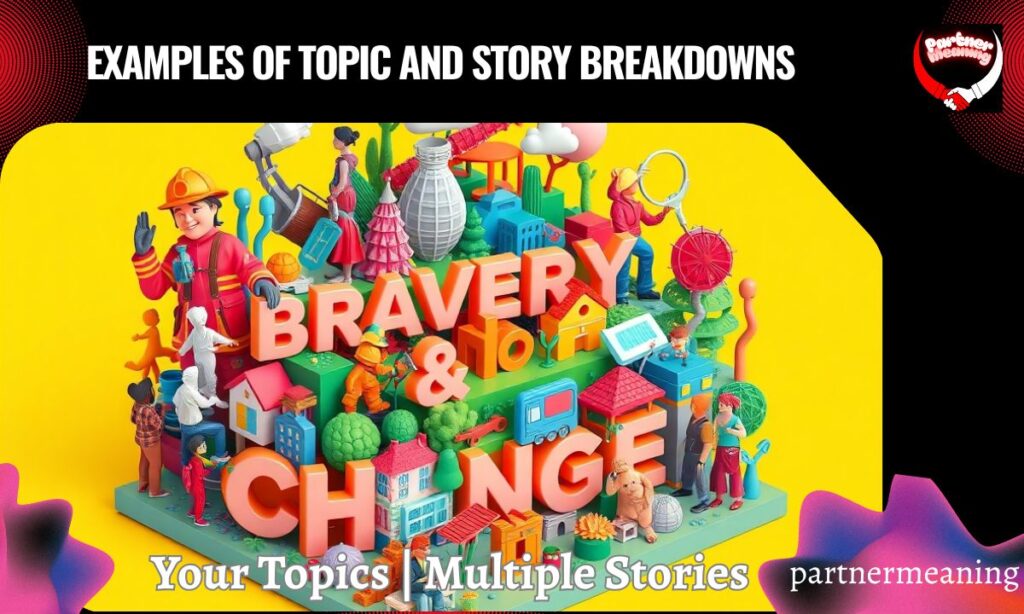
Bravery: Firefighter, Student, Entrepreneur Narratives
Firefighter saves lives during a blaze. Action, courage, and risk highlight heroism. Audiences experience suspense and admiration. This story inspires resilience and community service.
Student overcomes fear to speak out. Personal growth, determination, and advocacy show bravery in everyday life. Viewers see courage in small, meaningful acts. Stories motivate self-improvement.
Entrepreneur launches a business despite challenges. Risk-taking, innovation, and perseverance illustrate professional bravery. Audiences relate to ambition and vision. Layered narratives show practical and emotional courage.
Combining these stories demonstrates bravery from multiple angles. Audiences appreciate depth and variety. Lessons extend beyond individual acts. Story networks provide richer insights.
Change: Family Migration, Town Renewable Transition, Artist Evolution
Family migration explores adaptation and cultural adjustment. Emotional impact, challenges, and resilience provide learning opportunities. Readers empathize with displacement and growth. The story teaches human flexibility.
Town renewable transition shows collective societal change. Policy, community effort, and economic shifts highlight adaptation. Audiences see practical implications. Layered stories encourage sustainable thinking.
Artist evolution explores personal and creative transformation. Tech adoption, stylistic shifts, and audience response showcase flexibility. Viewers gain appreciation for innovation. Narratives highlight learning and adaptation.
Together, these stories demonstrate change at personal, societal, and professional levels. Layered perspectives deepen understanding. Complex topics are made relatable. Audience engagement rises with multi-angle storytelling.
9. Common Pitfalls and Solutions
Overloading Stories vs. Maintaining Clarity
Too many stories overwhelm readers. Solution: limit to 3–5 narratives per topic. Clarity ensures comprehension. Quality over quantity is key.
Redundancy and Theme Relevance
Repeated ideas weaken impact. Solution: ensure each story contributes a new angle. Maintain connection to the core topic. Diverse perspectives enhance richness.
Keeping the Final Message Consistent
Disconnected narratives confuse audiences. Solution: end each piece with a clear key takeaway. Reinforce the central theme. Consistency strengthens retention.
Balancing depth and accessibility
Over-complication can reduce understanding. Solution: simplify explanations without losing nuance. Use multiple formats to clarify. Engagement increases when content is digestible.
10. Tackling Challenges in Storytelling
Organizing Multiple Narratives
Structured outlines help manage complexity. Content maps track story progression. Planning prevents confusion. Logical organization ensures smooth flow.
Gathering Varied Perspectives
Interviews, research, and community input provide multiple angles. Diversity strengthens content richness. Varied sources enhance credibility. Audiences appreciate layered insight.
Logical Flow and Transition Strategies
Connectors like “similarly” or “another perspective” guide readers. Bridges link stories naturally. Transitions maintain continuity. This reduces cognitive load.
Ensuring Consistency with Editing
Editorial guidelines maintain tone and style. Proofreading and feedback ensure quality. Consistency reinforces trust. Review processes prevent errors across narratives.
11. Impact on Personal Growth
Building Empathy Through Diverse Narratives
Exposure to multiple perspectives enhances understanding of others. Stories foster compassion. Readers develop emotional intelligence. Empathy grows with each narrative.
Enhancing Critical Thinking
Analyzing diverse angles strengthens reasoning. Comparison of viewpoints improves judgment. Critical reflection becomes easier. Layered content encourages active thinking.
Improving Communication Skills
Storytelling practice enhances articulation. Sharing ideas becomes clearer. Diverse narratives teach expression in multiple styles. Effective communication develops naturally.
Encouraging Lifelong Learning
Exploring multiple stories motivates curiosity. Learning continues through new perspectives. Audiences adopt adaptable thinking. Growth becomes an ongoing process.
12. SEO and Engagement Benefits
Topical Authority Through Multi-Angle Content
Multiple stories signal expertise to search engines. Authority grows when topics are covered in depth. Readers trust content. SEO value rises organically.
Improved Long-Tail Keyword Optimization
Each story targets specific keywords. This expands search reach. Organic traffic increases. Search visibility improves across related topics.
Higher User Engagement and Retention
Multi-format content keeps users engaged longer. Interactive elements boost interaction. Diverse narratives reduce bounce rates. Retention improves naturally.
Cross-Platform Visibility
Content tailored to blogs, social media, podcasts, and videos. Multi-channel strategy reaches wider audiences. Stories adapt to platform strengths. Brand presence grows globally.
13. Start Creating Better Content with Multiple Stories
Step-by-Step Implementation Guide
Identify core topics first. Brainstorm multiple angles next. Select formats to match story types. Organize and bridge narratives for clarity.
Tips for Audience-Centric Storytelling
Segment audience based on demographics, interests, and behavior. Address diverse preferences with layered content. Engage emotions and intellect. Prioritize relevance over volume.
Measuring Success Through Analytics
Monitor engagement metrics like shares, comments, and views. Track SEO performance for targeted keywords. Evaluate audience retention across formats. Use data to refine strategy.
Iterate and Evolve
Regularly update narratives based on feedback. Test different story angles with A/B testing. Adapt content for emerging trends. Continuous improvement drives long-term success.
Frequently Asked Questions
What Does “Your Topics | Multiple Stories” Mean?
It is a content strategy that uses one topic to create multiple stories. Audiences get varied perspectives and insights. Engagement improves with diverse formats.
Why Use Multiple Stories on One Topic?
Layered narratives increase comprehension and retention. SEO benefits through long-tail keywords. Readers connect emotionally and intellectually.
How to Use Multi-Story Topics in Content Creation
Blogs, podcasts, videos, and infographics all work. Match format to story purpose. Engage audiences across multiple platforms.
Common Challenges and Solutions
Avoid overload by limiting stories. Prevent redundancy by diversifying perspectives. Keep final message clear with consistent key points.
Conclusion
Multiple stories transform content from simple to engaging. Layered perspectives connect with diverse audiences. SEO and retention improve with this approach. Creators gain authority, empathy, and measurable impact.

Hayyat is a passionate writer and researcher who loves exploring the beauty and depth of Arabic language and culture. With a special interest in Arabic names, Qur’anic words, and Islamic heritage, Hayyat aims to share meaningful insights with readers who appreciate names with purpose and history.