The phrase “Auzubillah Minashaitan Nirajeem” holds deep spiritual and emotional power in Islam. It’s a reminder of faith, protection, and trust in Allah before starting any act. Reciting it brings peace, focus, and divine guidance into daily life.
What Does Auzubillah Minashaitan Nirajeem Mean?
The phrase أعوذ بالله من الشيطان الرجيم (Auzubillah Minashaitan Nirajeem) is a sacred expression used by Muslims to seek Allah’s protection. It represents a believer’s dependence on Allah (الله) in times of fear, weakness, or distraction. This short yet powerful phrase reminds us that all strength and safety come only from Allah (سبحانه وتعالى). Reciting it builds inner peace and keeps one’s heart connected to faith.
When a Muslim says Auzubillah, it’s not just words—it’s an act of submission (إسلام). It shields the soul from negative whispers known as waswas (وسوسة), which come from Shaytan (الشيطان). This declaration helps maintain sincerity and focus, especially before reading the Qur’an (القرآن). It’s both a prayer and a form of self-discipline that brings calm and mindfulness.
Reciting it regularly reminds believers to stay humble and dependent on Allah’s mercy. Whether before Salat (الصلاة), studying, or beginning any task, saying this phrase brings a sense of safety and divine comfort. It transforms simple moments into acts of remembrance.
In essence, this phrase is not only protection from Shaytan, but also a constant call to seek the shelter of Ar-Rahman (الرحمن)—the Most Merciful. It keeps the believer’s heart aware of Allah’s presence and guards against sin and distraction.
Arabic Text and Transliteration
Below is the correct Arabic text and transliteration for this blessed phrase:
| Arabic Text | Transliteration | English Pronunciation Guide |
| أعوذ بالله من الشيطان الرجيم | A‘ūdhu billāhi min ash-shayṭānir-rajīm | Aw-zoo-bil-lah mi-na-shay-tan ni-ra-jeem |
This is the most accurate form according to Arabic pronunciation. The phrase begins with “A‘ūdhu”, showing the speaker’s humble plea for divine refuge. Each word carries deep meaning and should be recited slowly and clearly.
Many Muslims also pair it with “Bismillahir Rahmanir Raheem” (بسم الله الرحمن الرحيم) before reading the Qur’an. This combination, known as Auzu Basmala, strengthens faith and prepares the heart for worship. Together, they create a shield of protection and mercy.
Learning to write and pronounce it correctly is an important step in understanding Arabic du‘as (دعاء). It connects the reciter to the original language of revelation and deepens one’s appreciation for its rhythm and beauty.
Correct recitation adds meaning and focus. Listening to scholars or native speakers helps improve pronunciation and ensures respect for the sacred text.
Literal and Spiritual Meaning
Literally, “Auzubillah Minashaitan Nirajeem” translates to “I seek refuge in Allah from the accursed Satan.” Each word carries a specific purpose that ties to spiritual purification. It’s more than translation—it’s a declaration of faith (إيمان). It shows a believer’s trust that only Allah can protect against the unseen harm of Shaytan.
Spiritually, this phrase cleanses the heart from waswas (evil whispers) and gives strength during anger, sadness, or temptation. It’s a reminder that Satan (Iblis إبليس) tries to mislead, but Allah’s mercy is stronger. Reciting it helps reset one’s thoughts and return to inner peace.
When used before reading the Qur’an, it prepares the mind to absorb divine words without distraction. It purifies intention and invites barakah (بركة)—spiritual blessings—from Allah.
- Key spiritual effects of reciting this phrase:
- Protects from negative thoughts and anger
- Strengthens focus during prayer and Qur’an recitation
- Brings calm and spiritual clarity
- Increases awareness of Allah’s presence
- Protects from negative thoughts and anger
Through both meaning and practice, Auzubillah Minashaitan Nirajeem serves as a constant reminder of Allah’s mercy and guidance.
Linguistic Root and Word Breakdown
The phrase follows classical Arabic grammar and comes from meaningful roots that reflect deep theology. Each word connects to a spiritual state of protection and humility.
| Word | Arabic Root | Meaning |
| A‘ūdhu (أعوذ) | ع-و-ذ | To seek refuge or protection |
| Billāh (بالله) | ب + الله | In Allah |
| Min (من) | — | From |
| Ash-Shaytān (الشيطان) | ش-ي-ط-ن | The Satan, the one who rebels |
| Ar-Rajīm (الرجيم) | ر-ج-م | The accursed, stoned, or rejected |
Each root shows a deep relationship between language and belief. The structure reflects humility—starting with the self, turning toward Allah, and asking for refuge from the enemy of righteousness.
This phrase also fits within Arabic’s genitive (مضاف ومضاف إليه) grammatical structure, which connects the words meaningfully. It’s precise, rhythmic, and spiritually powerful.
Understanding the roots brings depth to recitation. When one knows that “Rajīm” comes from rajama (to stone or curse), the act of saying this phrase feels like pushing evil away with words.
How to Pronounce Auzubillah Minashaitan Nirajeem
Pronunciation is vital because this phrase is in classical Arabic. To recite it correctly, one should learn the proper tajwīd (تجويد)—the art of Qur’anic pronunciation. The sound of each letter holds spiritual beauty and balance.
Here’s how to say it slowly:
A‘ūdhu billāhi min ash-shayṭānir-rajīm
(aw-zoo bill-lah min ash-shay-tan nir-ra-jeem)
Tips for correct pronunciation:
- Stretch the vowel ū in A‘ūdhu slightly.
- Emphasize the “sh” sound in ash-shayṭān.
- Pronounce rajīm softly, not harshly, to keep flow and clarity.
Regular practice helps maintain accuracy. Listening to Qur’an reciters (قُرّاء) or teachers improves fluency and builds connection with the Arabic sound of the divine words.
When recited sincerely, Auzubillah Minashaitan Nirajeem feels like a verbal shield. The sound itself creates calm and refocuses the mind toward Allah’s mercy.
When and Why Muslims Recite It
Muslims say Auzubillah Minashaitan Nirajeem at key spiritual moments. The Qur’an (Surah An-Nahl 16:98) commands:
“So when you recite the Qur’an, seek refuge in Allah from Satan, the accursed.”
This makes the phrase a Sunnah before reading any part of the Qur’an except Surah At-Tawbah. It ensures that recitation begins with purity and protection.
Common times to recite:
- Before starting Salat (prayer)
- When feeling anger, fear, or temptation
- Before reading or memorizing the Qur’an
- At the start of any task for barakah and protection
It’s also said to calm emotions and push away waswas (Satan’s whispers). The Prophet Muhammad ﷺ advised reciting it when angry to regain peace and control.
By making this phrase part of daily routine, Muslims invite divine guidance and protection into every act. It reminds them that success, peace, and strength all come from Allah (جل جلاله) alone.
Quranic Reference and Importance
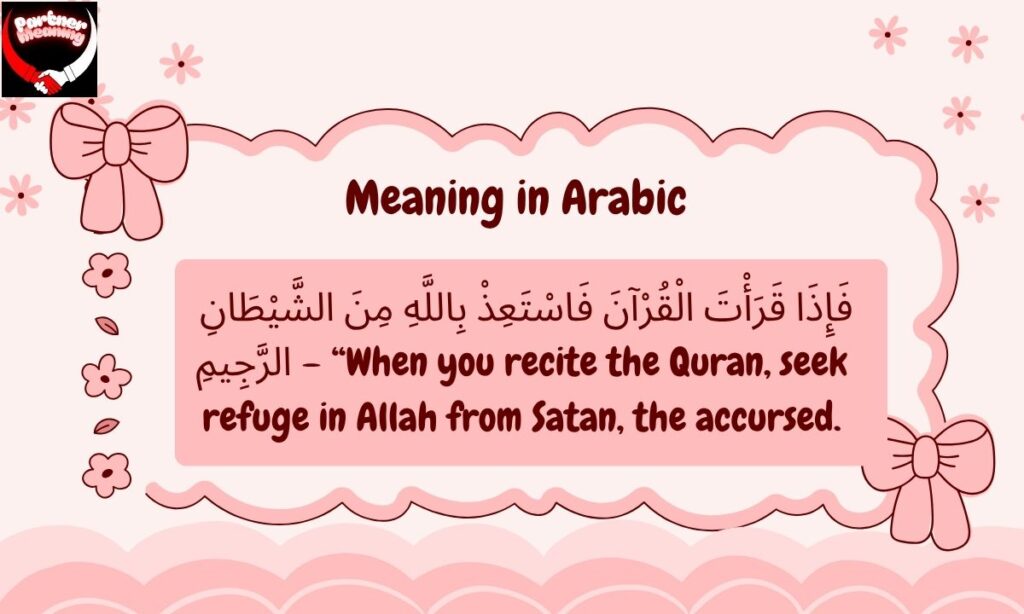
The phrase أعوذ بالله من الشيطان الرجيم (Auzubillah Minashaitan Nirajeem) comes directly from the Quran, highlighting its divine instruction. In Surah An-Nahl (16:98), Allah says:
فَإِذَا قَرَأْتَ الْقُرْآنَ فَاسْتَعِذْ بِاللَّهِ مِنَ الشَّيْطَانِ الرَّجِيمِ – “When you recite the Quran, seek refuge in Allah from Satan, the accursed.
This shows the spiritual command to begin Quran recitation with protection. It builds a spiritual barrier (حصن إيماني) that keeps the heart focused on Allah’s words and away from waswas (evil whispers).
Benefits of Saying Auzubillah Minashaitan Nirajeem
Reciting Auzubillah Minashaitan Nirajeem offers both spiritual and emotional benefits. It clears the mind, strengthens taqwa (piety), and protects from negative thoughts. It is not only a phrase but a spiritual weapon for every believer.
Main Benefits:
- Protection from Shaytan: Keeps the heart safe from temptation and whispers.
- Focus in Salah: Helps maintain concentration during prayer.
- Purifies Intentions: Ensures actions are done sincerely for Allah.
- Peace of Mind: Brings calmness and inner strength during hardship.
By saying it with ikhlas (sincerity), a person feels immediate relief and connection with Ar-Rahman (The Most Merciful).
Difference Between Auzubillah and Bismillah
Though both phrases begin with Allah’s name, they serve different spiritual roles.
Auzubillah (أعوذ بالله) means “I seek refuge in Allah”, used before reciting Quran or avoiding evil.
Bismillah (بِسْمِ اللَّهِ) means “In the name of Allah”, said before starting any good action.
| Phrase | Arabic | Meaning | Purpose |
| Auzubillah | أَعُوذُ بِاللَّهِ | I seek refuge in Allah | To seek protection from evil |
| Bismillah | بِسْمِ اللَّهِ | In the name of Allah | To begin something with Allah’s blessings |
In short, Auzubillah is for protection, and Bismillah is for initiation — both complement each other in Muslim daily life.
How to Write Auzubillah Minashaitan Nirajeem in Arabic
The correct Arabic form is: أَعُوذُ بِاللَّهِ مِنَ الشَّيْطَانِ الرَّجِيمِ
Each word carries deep meaning and is written in Quranic script with tashkeel (vowel marks) for proper pronunciation.
| Word | Arabic | Meaning |
| Auzu | أَعُوذُ | I seek refuge |
| Billah | بِاللَّهِ | In Allah |
| Min | مِنَ | From |
| Ash-Shaitan | الشَّيْطَانِ | Satan |
| Ar-Rajeem | الرَّجِيمِ | The accursed |
Learning to write and pronounce it correctly helps connect better with Quranic Arabic and improves tajweed (proper recitation).
Examples in Daily Life
Muslims say Auzubillah Minashaitan Nirajeem in many situations to protect their faith and focus. It’s part of daily remembrance and a sign of strong belief.
Examples include:
- Before Quran recitation: To clear distractions and gain divine guidance.
- During anger or fear: To calm the heart and control emotions.
- Before entering a debate or argument: To avoid pride and ego.
- When facing doubts (وسوسة): To remove negativity from the mind.
Each time it is said, the believer strengthens their iman (faith) and remembers Allah’s mercy and power.
Auzu Basmala – The Spiritual Strength and Protection
Together, Auzubillah and Bismillah form a complete shield of iman. Muslims often say both before reciting the Quran:
أَعُوذُ بِاللَّهِ مِنَ الشَّيْطَانِ الرَّجِيمِ، بِسْمِ اللَّهِ الرَّحْمَنِ الرَّحِيمِ
This combination first repels evil (دفع الشر) and then invites blessing (جلب الخير).
The Auzu Basmala strengthens a believer’s connection with Allah (الله) and reminds them that every act should begin with protection and purity. It is a spiritual habit that brings barakah (blessing) into every part of life.
Common Mistakes and Misunderstandings
Many people recite أعوذ بالله من الشيطان الرجيم (Auzubillah Minashaitan Nirajeem) daily but may not realize the common mistakes made in pronunciation, usage, or meaning. Understanding these helps preserve the correct form (الصيغة الصحيحة) and spiritual value of the phrase.
1. Pronunciation Errors
Some mispronounce “Nirajeem” as “Rajim” or drop the “Ar-” sound from الرَّجِيمِ. The correct form is Ar-Rajeem, with the “رَّ” sound emphasized.
- ❌ Wrong: Auzubillah Minashaitan Rajim
- ✅ Correct: Auzubillah Minashaitan Nirajeem
Pronouncing it correctly shows respect for Quranic Arabic and helps maintain the beauty of Tajweed (تجويد).
2. Confusing “Auzubillah” with “Bismillah”
Another mistake is using “Auzubillah” and “Bismillah” interchangeably.
- Auzubillah (أعوذ بالله): Said when seeking protection from evil or temptation.
- Bismillah (بسم الله): Said when starting an action with Allah’s name.
| Phrase | Arabic | Meaning | When to Use |
| Auzubillah | أَعُوذُ بِاللَّهِ | I seek refuge in Allah | Before Quran recitation or avoiding evil |
| Bismillah | بِسْمِ اللَّهِ | In the name of Allah | Before starting any good deed |
Using the right phrase at the right time shows awareness (وعي ديني) and strengthens one’s iman (faith).
3. Forgetting Its Purpose
Some people say it out of habit, not reflection. The true purpose of Auzubillah Minashaitan Nirajeem is to seek refuge (الاستعاذة) with sincerity and heart. It should remind the believer of Allah’s protection (حماية الله) and the reality of Shaytan’s whisper (وسوسة الشيطان).
Reciting it consciously brings peace (سكون) and focus in worship.
4. Using It Only in Limited Situations
Many think it’s only for Quran recitation, but the phrase can be said in several moments:
- When angry or anxious
- Before praying or sleeping
- During temptation or argument
- When feeling fear or doubt
By using it regularly, one stays under Allah’s mercy (رحمة الله) and away from Shaytan’s traps (مكائد الشيطان).
In short, avoiding these mistakes helps preserve the purity, meaning, and power of this blessed phrase, keeping the believer’s heart connected with Allah (الله) always.
Conclusion
The phrase Auzubillah Minashaitan Nirajeem is more than words; it’s a shield of faith and protection. It reminds us to seek Allah’s refuge (حماية الله) in every moment of weakness or fear. By reciting it with sincerity, we strengthen our hearts, intentions, and connection with Allah. This simple yet powerful prayer guides us toward peace and away from the whispers of Shaytan (الشيطان).
Frequently Asked Questions
What does Auzubillah Minashaitan Nirajeem mean in English?
It means “I seek refuge in Allah from the accursed Satan.”
Is Auzubillah mentioned in the Quran?
Yes, in Surah An-Nahl (16:98), before reciting the Quran.
When should you say Auzubillah Minashaitan Nirajeem?
Before reading Quran, praying, or whenever seeking protection.
Can non-Arabs say Auzubillah Minashaitan Nirajeem?
Yes, anyone can recite it with respect and correct pronunciation.
What is the difference between Auzubillah and Ta’awwudh?
They mean the same; Ta’awwudh refers to the act of seeking refuge.
How do you pronounce Auzubillah Minashaitan Nirajeem correctly?
It’s pronounced: A‘ūdhu billāhi mina ash-shayṭāni ar-rajīm.

Hayyat is a passionate writer and researcher who loves exploring the beauty and depth of Arabic language and culture. With a special interest in Arabic names, Qur’anic words, and Islamic heritage, Hayyat aims to share meaningful insights with readers who appreciate names with purpose and history.