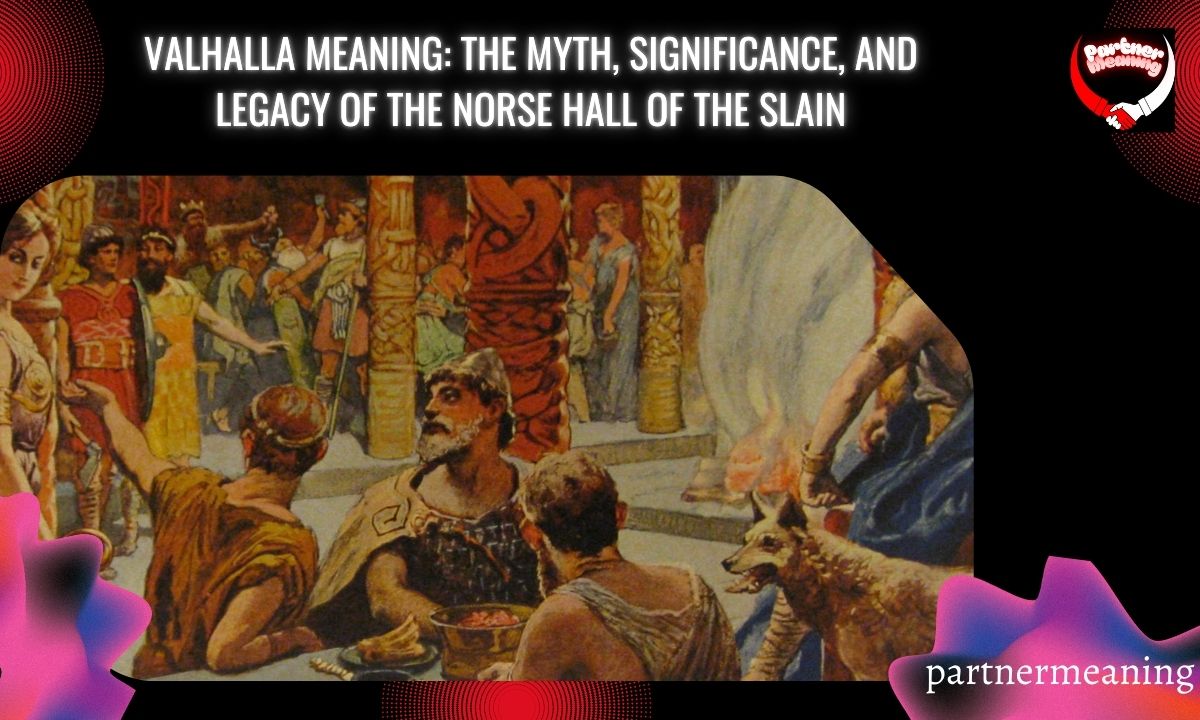
Valhalla is the legendary hall of the slain in Norse mythology. It is where the bravest warriors go after death. The hall symbolizes honor, courage, and eternal glory.
Ruled by Odin, Valhalla is not just a place to rest. Warriors, known as Einherjar, train and feast daily. This mythical concept reveals the values and beliefs of the Viking world.
What is Valhalla in Norse Mythology?
Definition of Valhalla
Valhalla is the legendary hall of slain warriors in Norse mythology. It is located in Asgard, the realm of gods, where only the bravest warriors are welcomed. It symbolizes honor, glory, and eternal preparation for the ultimate cosmic battle. Death in battle is not the end but a passage to eternal heroism.
Einherjar are the chosen warriors, handpicked for their valor and skill. They prepare daily for Ragnarök, the final cataclysmic battle. The hall represents the values of courage and loyalty deeply embedded in Norse culture.
The existence of Valhalla gave Vikings a framework to live and fight bravely. Life was harsh, and death was inevitable, but Valhalla promised eternal reward for those who honored their martial code. It was a core belief shaping both culture and warfare.
Importance in Norse Cosmology
Valhalla is central to the Norse view of life, death, and the cosmos. It is more than a resting place; it is a realm of preparation. Warriors’ afterlife was tied to their earthly conduct and bravery. Those who died cowardly had no place here.
The hall serves as a bridge between mortals and gods, showing the influence of divine power in daily life. Odin, as the overseer, selects warriors to ensure the balance of power in the cosmic order. It shows how mythology reinforced societal norms.
By promising glory to the brave, Valhalla instilled a culture of courage, perseverance, and honor. This concept was a moral compass for Vikings, linking heroic action with spiritual reward and eternal legacy.
The Origins and Etymology of Valhalla
Meaning of the Name
Valhalla derives from the Old Norse term “Valhöll”, which means “hall of the slain.” It reflects a space reserved for warriors who die heroically in battle. The name highlights the hall’s martial and spiritual significance.
This concept encouraged valor in combat and loyalty to kin and community. Dying in battle was considered honorable and an essential path to reaching Valhalla. The etymology also conveys the reverence Vikings had for brave warriors.
Norse poetry, sagas, and oral traditions emphasize this meaning. Valhalla is a beacon of cultural values, representing bravery, loyalty, and the eternal warrior spirit of Viking society.
Cultural Context
The concept of Valhalla developed during the Viking Age. Northern European tribes embraced polytheistic beliefs centered on gods, spirits, and heroic ideals.
Warriors aspired to die in battle, motivated by the promise of Valhalla. This shaped how society valued courage, loyalty, and skill in combat.
Valhalla influenced rituals, celebrations, and even legal codes, embedding mythology into daily life. It reinforced a worldview where honor in life ensured a place in the afterlife.
Odin’s Role in Valhalla
Odin as the Allfather
Odin is the supreme god and ruler of Valhalla. He is wise, one-eyed, and constantly seeking knowledge. Odin gathers the Einherjar to prepare for Ragnarök, ensuring the survival of the cosmic order.
He represents war, death, and wisdom, overseeing the preparation of warriors for the final battle. His role signifies the divine coordination in mortal affairs. Odin ensures that Valhalla is more than a resting place.
Odin’s guidance emphasizes the Norse values of bravery and intelligence. His presence connects mortal warriors to divine purpose, showing that heroism is both personal and cosmic.
Selection of the Einherjar
Odin, with the help of Valkyries, chooses the warriors who die bravely in battle. Selection is based on valor, loyalty, and honor. Only those worthy are admitted to Valhalla.
The selection ensures that Valhalla contains elite fighters capable of aiding the gods in Ragnarök. This maintains a balance between mortal action and divine destiny.
Odin’s choices shape the fate of warriors, highlighting the importance of courage and honor in Norse ideology. It reflects the intertwining of death, heroism, and eternal reward.
The Structure and Appearance of Valhalla
The Golden Hall and Its Symbolism
Valhalla’s hall is immense with a roof that shines like gold. This symbolizes eternal glory and the honor of the fallen. The walls are covered with weapons, highlighting the warrior culture.
Benches line the halls for warriors to feast after battle. The hall itself embodies strength, preparation, and sacredness. Every architectural feature carries symbolic meaning.
Its grandeur shows the importance of heroic death and the reward that follows. Valhalla is designed to awe and inspire, reinforcing the values of Norse mythology.
The 540 Doors and Their Meaning
Valhalla has 540 doors, each wide enough for 800 warriors. This emphasizes the hall’s vast capacity and its role in preparing for Ragnarök.
The doors symbolize readiness, mass mobilization, and the immense scale of Odin’s army. Each entry signifies the warrior’s passage to eternal glory.
The architecture conveys Norse beliefs about destiny, bravery, and divine order, showing that every hero has a place.
Life of the Einherjar in Valhalla
Daily Battles and Training in Valhalla
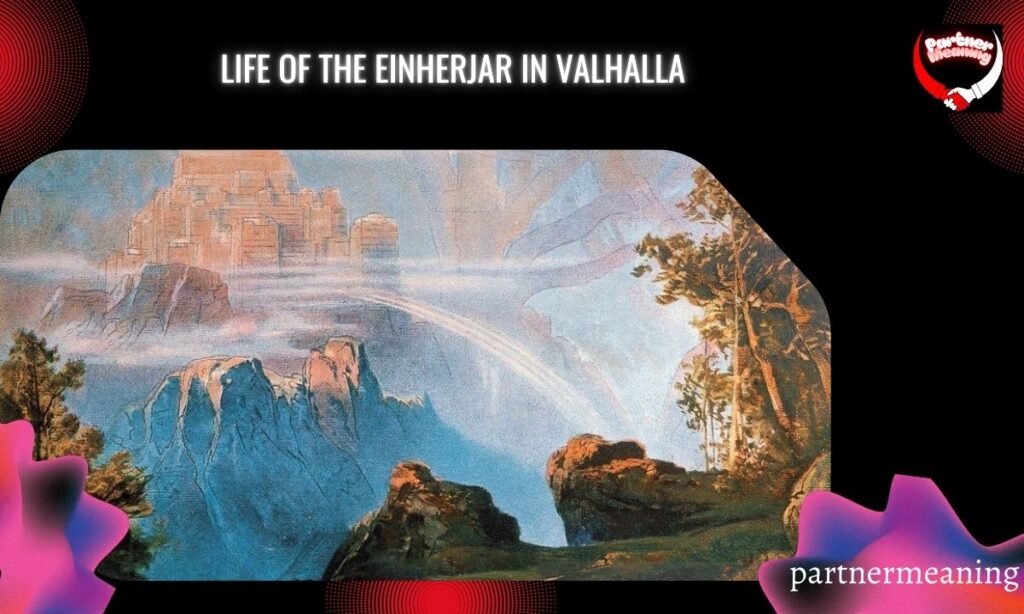
Einherjar train daily on the battlefield of Idavoll. Combat is intense but wounds heal magically, allowing warriors to fight again. This cycle refines skill and courage.
Daily battles prepare warriors for Ragnarök, reinforcing a culture of eternal readiness. Even in death, warriors live the martial life they valued in life.
Training emphasizes honor, resilience, and mastery, reflecting the Norse ideal of continuous self-improvement in combat.
The Nightly Feasts: Sæhrímnir and Mead of Heiðrún
At night, Einherjar feast on Sæhrímnir, a magical boar that regenerates daily. Heiðrún, the goat, provides endless mead for drinking.
These feasts celebrate camaraderie, honor, and joy after battle. They reinforce the eternal cycle of battle and reward.
Feasts strengthen bonds and remind warriors that life and death are intertwined with glory and sustenance. It is a key ritual of Valhalla.
Valkyries: Choosers of the Slain
Role of Valkyries in Norse Mythology
Valkyries are Odin’s scouts and handmaidens. They choose the bravest warriors and escort them to Valhalla. Their role connects mortals to gods.
Valkyries ride over battlefields, assessing courage and skill. They serve as divine guides to honor, reward, and preparation.
They also serve in Valhalla, providing mead, food, and care for warriors. Their presence reinforces the sacred nature of the hall.
Famous Valkyries and Their Stories
Brynhildr and Sigrún are famous Valkyries. Their stories involve love, betrayal, and heroism.
These figures are complex, influencing mortal and divine actions. Their legends highlight bravery and moral choices.
Valkyries demonstrate the integration of myth and culture, showing that even divine beings navigate honor, duty, and emotion.
Valhalla in Norse Literature
Depictions in the Poetic Edda
The Poetic Edda contains vivid depictions of Valhalla. Poems like Grímnismál describe its doors, warriors, and feasts.
These texts illustrate Valhalla’s scale and importance. The hall houses Odin’s army and reflects the values of courage and honor.
The Edda serves as a cultural record, showing how mythology shaped Viking beliefs and ethics.
Insights from the Prose Edda
The Prose Edda, written by Snorri Sturluson, provides detailed accounts of life in Valhalla. Feasts, battles, and Valkyrie duties are explained.
The text organizes myth into structured narratives. It shows how mythology was used to teach values and cosmology.
It preserves Norse traditions and explains how divine and mortal realms interact. Valhalla emerges as a central element in spiritual and cultural life.
The Cultural Significance of Valhalla
Warrior Ethos and Viking Society
Valhalla reflects the Viking warrior ethos. Bravery, loyalty, and honor were central to social and religious life.
Belief in Valhalla motivated warriors to embrace danger with courage. Death in battle became a pathway to eternal glory.
This ethos influenced leadership, community cohesion, and daily Viking life, embedding mythology into reality.
Valhalla and Motivation for Bravery
The promise of Valhalla inspired fearlessness. Warriors faced enemies knowing eternal reward awaited.
Valor became a cultural expectation. Brave actions in life ensured recognition in death.
Valhalla instilled resilience, preparation, and loyalty, shaping Norse identity and societal norms.
Valhalla and Ragnarök: Preparing for the Final Battle
The Final Battle of the Gods
Ragnarök is the prophesied end of the world. Einherjar fight alongside gods against chaos.
Valhalla prepares warriors for this destiny. Training and feasting sharpen skills and morale.
The final battle demonstrates that heroism transcends life, linking mortal courage with cosmic fate.
Fate of the Einherjar
Einherjar are destined to fall in Ragnarök. Their eternal preparation is both honor and doom.
This highlights Norse acceptance of fate. Even glorious warriors face mortality.
Heroism is defined by courage in the face of inevitable end, reflecting the core of Norse belief.
Modern Interpretations and Popular Culture of Valhalla
Valhalla in Literature and Opera
Valhalla inspired works like Wagner’s Ring Cycle. It is central in fantasy literature.
These adaptations explore heroism, battle, and afterlife. They bring Norse myths to global audiences.
Valhalla continues to influence art, music, and cultural storytelling, keeping Viking ideals alive.
Valhalla in Movies, Games, and TV
Modern media depict Valhalla in films, series, and games. Assassin’s Creed: Valhalla popularized its imagery.
It is often portrayed as a warrior paradise of endless battle and feasting.
These adaptations keep Norse mythology relevant, showing the enduring power of courage, honor, and glory.
Frequently Asked Questions
Who Gets to Go to Valhalla?
Only warriors who die bravely in battle are chosen by the Valkyries to enter Valhalla.
What Happens in Valhalla Every Day?
The Einherjar fight in battles during the day and feast at night, preparing for Ragnarök.
Is Valhalla Only for Vikings?
Valhalla is for any warrior who dies honorably in battle, not exclusively for Vikings.
What’s the Difference Between Valhalla and Heaven?
Unlike Heaven, Valhalla is a warrior’s paradise of endless battle and feasting, not eternal peace.
Does Everyone in Norse Mythology Go to Valhalla?
No, other afterlife realms exist, like Hel for the deceased from sickness or old age, and Fólkvangr for Freyja’s chosen warriors.
Conclusion
Valhalla reflects the Norse view of life and death, where courage and combat define honor. It was a motivation for warriors and a cultural symbol of bravery. Its legends continue to inspire literature, art, and modern media today. The hall of the slain remains a timeless emblem of valor and the eternal warrior spirit.

Hayyat is a passionate writer and researcher who loves exploring the beauty and depth of Arabic language and culture. With a special interest in Arabic names, Qur’anic words, and Islamic heritage, Hayyat aims to share meaningful insights with readers who appreciate names with purpose and history.