The Arabic word “Hayat” (حياة) beautifully captures the essence of living, purpose, and vitality. It appears in daily speech, poetry, and faith, reflecting how deeply life is valued in Arabic culture. From love to spirituality, Hayat symbolizes the heartbeat of human existence.
What Does “Hayat” (حياة) Mean in Arabic?
The word “Hayat” (حياة) holds a deep emotional and cultural presence in the Arabic language. It goes beyond the literal sense of life, symbolizing vitality, faith, and the rhythm of existence itself. Arabs often use it to describe both physical life and the essence of the soul.
In everyday Arabic conversations, “Hayat” appears in expressions of affection, motivation, and even spirituality. You might hear someone say “Anta hayati” (أنت حياتي) meaning “You are my life,” showing love and attachment. This word carries warmth and energy that connect language and emotion.
The beauty of Hayat lies in its universality. It’s a word that unites people of different regions and beliefs, all finding meaning in the shared experience of life. Whether used in poetry, religion, or music, Hayat remains timeless and full of heart.
Origin and Linguistic Root of the Word “Hayat”
The Arabic word “Hayat” originates from the triliteral root ح-ي-و (H–Y–W), which refers to living, breathing, and being alive. This linguistic root forms many words tied to life and existence, like Ahya (to revive) and Hayy (alive).
Grammatically, “Hayat” is a feminine noun used across classical and modern Arabic. The word represents not only the act of living but the spiritual idea of life as divine creation. Its usage extends from literature to sacred texts, linking language with faith.
The root concept of Hayat connects to the eternal cycle of life and renewal. In Arabic thought, everything that lives carries a spark of divine vitality — a reflection of the Creator’s will. That’s why “Hayat” often appears in prayers, poetry, and names across the Islamic world.
Grammatical Forms and Pronunciation of “Hayat”
The pronunciation of Hayat is Ha-yaat, with stress on the first syllable. It’s clear, soft, and flowing — much like the meaning it conveys. The word’s structure makes it easy to use in various grammatical forms that change its nuance.
Common forms include:
- Al-Hayat (الحياة): The life
- Hayati (حياتي): My life – often used as an affectionate expression
- Hayawaat (حيوات): Lives – a plural form, though rarely used in daily speech
In speech and writing, Arabs use Hayat to express connection, gratitude, and spiritual awareness. For example:
“الحياة جميلة – Al-Hayat Jameela” means Life is beautiful.
“هذه حياتي – Hathihi Hayati” means This is my life.
The Cultural and Quranic Significance of “Hayat”
In Islamic teachings, Hayat represents more than earthly existence. It also describes the afterlife and the eternal journey of the soul. The Quran frequently mentions “Hayat al-Dunya” (worldly life) and “Hayat al-Akhira” (life after death).
Examples from the Quran include:
“وَمَا هَٰذِهِ الْحَيَاةُ الدُّنْيَا إِلَّا لَهْوٌ وَلَعِبٌ”
“This worldly life is only amusement and play.” (Surah Al-Ankabut 29:64)
Another verse says:
“كَيْفَ تَكْفُرُونَ بِاللَّهِ وَكُنتُمْ أَمْوَاتًا فَأَحْيَاكُمْ”
“How can you disbelieve in Allah when you were dead, and He gave you life?” (Surah Al-Baqarah 2:28)
Through these verses, Hayat teaches that worldly life is temporary while spiritual life is eternal. It encourages believers to live with awareness, purpose, and faith.
Different Expressions and Meanings of “Hayat” in Arabic
The word Hayat appears in many rich expressions that describe different aspects of human living. Each phrase gives a glimpse into Arabic culture and philosophy.
Common expressions include:
- Mustawa al-Hayat (مستوى الحياة): Standard of living
- Hayat Ijtimaiyya (حياة اجتماعية): Social life
- Hayat Aailiyya (حياة عائلية): Family life
- Hayat Asriyya (حياة عصرية): Modern life
- Al-Hayat Ghaliya (الحياة غالية): Life is precious
You’ll also find poetic uses like “Bayn al-hayat wal-mawt” (between life and death) or “Hayat tasharrod” (a life of hardship). Each form gives depth to how Arabs view resilience, love, and destiny.
Common Misunderstandings About the Word “Hayat”
Many learners of Arabic confuse “Hayat” (حياة) with other similar-sounding words, which can change the meaning completely. It’s important to recognize these differences.
Common confusions include:
| Arabic Word | Meaning | English Equivalent |
|---|---|---|
| Hayat (حياة) | Life | Existence |
| Haya (حياء) | Modesty / Shyness | Virtue |
| Hayawan (حيوان) | Animal | Living being |
For example, saying “Ana hayat” (I am life) differs entirely from “Ana haya” (I am shy). Such distinctions highlight the beauty and precision of Arabic pronunciation.
To master Hayat, learners should practice speaking and listening carefully. The word’s tone and rhythm reflect its meaning — full of motion, energy, and grace.
Use of “Hayat” in Daily Arabic Conversations
In daily Arabic speech, “Hayat” (حياة) appears in many heartfelt and emotional expressions. People use it to describe love, gratitude, or deep appreciation for someone or something. For instance, a parent might call their child “Hayati” (my life) to express affection and closeness.
The word also adds beauty to common phrases used in promises and emotions. For example:
“وَحَيَاةِ اللّٰه” (Wahyat Allah) – I swear by God’s life
“وَحَيَاتِي” (Wahyati) – I swear by my life
“أَنْتَ حَيَاتِي” (Anta Hayati) – You are my life
These phrases show that Hayat is not only about living but also about what gives meaning to life — faith, relationships, and honesty. It connects language with emotion in a way few words can.
“Hayat” in Poetry, Music, and Literature
Writers and poets across generations have used “Hayat” to explore the beauty and fragility of existence. It’s a word that captures both the joy and sorrow of living, often appearing in Arabic poems about love, time, and destiny.
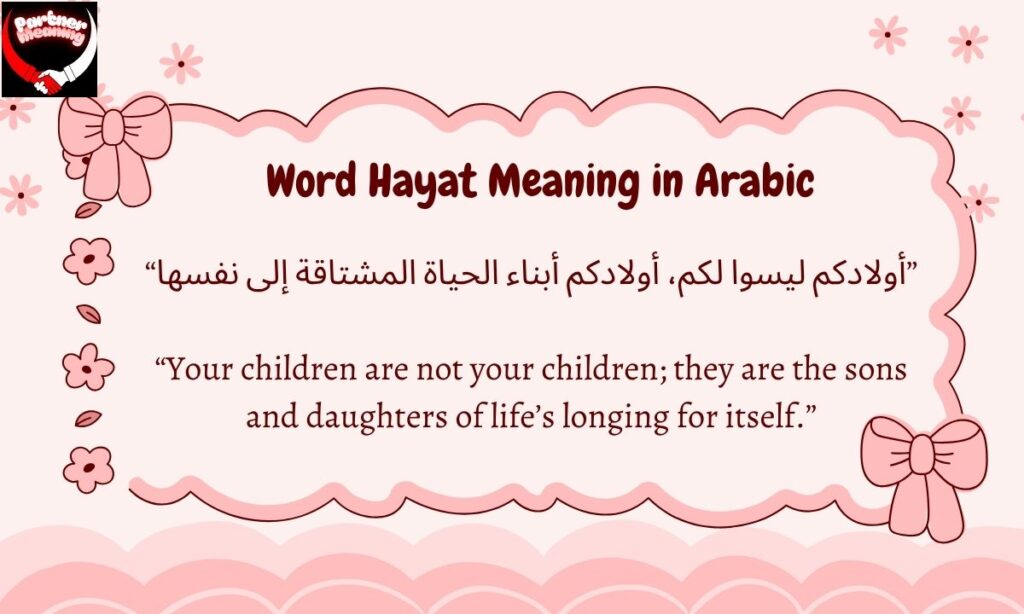
Famous poet Gibran Khalil Gibran wrote:
“أولادكم ليسوا لكم، أولادكم أبناء الحياة المشتاقة إلى نفسها.”
“Your children are not your children; they are the sons and daughters of life’s longing for itself.”
In music, the Egyptian legend Abdel Halim Hafiz popularized the word in his song “Wahyat Albi” (By My Heart), a song that celebrates passion and resilience. Through art and verse, Hayat becomes a symbol of creation, love, and renewal — a word full of rhythm and soul.
Popularity and Modern Usage of the Name “Hayat”
The name Hayat is widely loved across Arabic-speaking and Muslim communities. It represents vitality, faith, and inner strength. The name is feminine in Arabic and Persian traditions but can also be masculine in Urdu usage.
Quick Facts About the Name Hayat:
| Feature | Detail |
|---|---|
| Meaning | Life, vitality, existence |
| Origin | Arabic (حياة) |
| Gender | Unisex – feminine in Arabic, masculine in Urdu |
| Famous Person | Dr. Hayat Sindi, Saudi scientist and innovator |
| Nicknames | Haya, Yati, Atya, Hattie |
The name’s charm lies in its simplicity and power. Parents choose Hayat because it feels timeless — a reminder that life itself is the greatest blessing. It has also appeared in TV shows, novels, and songs, keeping its beauty alive in modern culture.
Why Learning the Word “Hayat” Matters
Understanding Hayat helps learners grasp more than just vocabulary — it opens the door to Arabic philosophy and emotion. The word appears in countless Quranic verses, idioms, and expressions about faith, hope, and endurance.
For Arabic learners, mastering Hayat enriches both spoken and written communication. It allows them to connect deeply with the language’s poetic and spiritual essence. The more one uses it, the more its layers of meaning reveal themselves.
Learning Hayat also encourages reflection on life’s purpose. In Arabic culture, to speak of Hayat is to speak of gratitude, growth, and divine connection — values that make the language truly alive.
Conclusion
The word “Hayat” (حياة) captures the essence of existence, faith, and love. It reflects how deeply life is valued in Arabic thought — not just as living, but as a divine gift filled with meaning. Whether spoken in prayer, poetry, or affection, Hayat reminds us that every moment of life is precious and sacred.
Frequently Asked Questions
What does “Hayat” mean in Arabic?
It means life, representing existence, vitality, and being alive.
What is the difference between “Hayat al-Dunya” and “Hayat al-Akhira”?
Hayat al-Dunya means worldly life, while Hayat al-Akhira means eternal life in the hereafter.
Is “Hayat” a male or female name?
It’s a unisex name—feminine in Arabic and Persian, masculine in Urdu.
What is the meaning of “Hayati”?
Hayati (حياتي) means my life and is used as a loving expression.
Where is the name “Hayat” popular?
It’s common in Middle Eastern, North African, and Muslim communities worldwide.

Hayyat is a passionate writer and researcher who loves exploring the beauty and depth of Arabic language and culture. With a special interest in Arabic names, Qur’anic words, and Islamic heritage, Hayyat aims to share meaningful insights with readers who appreciate names with purpose and history.