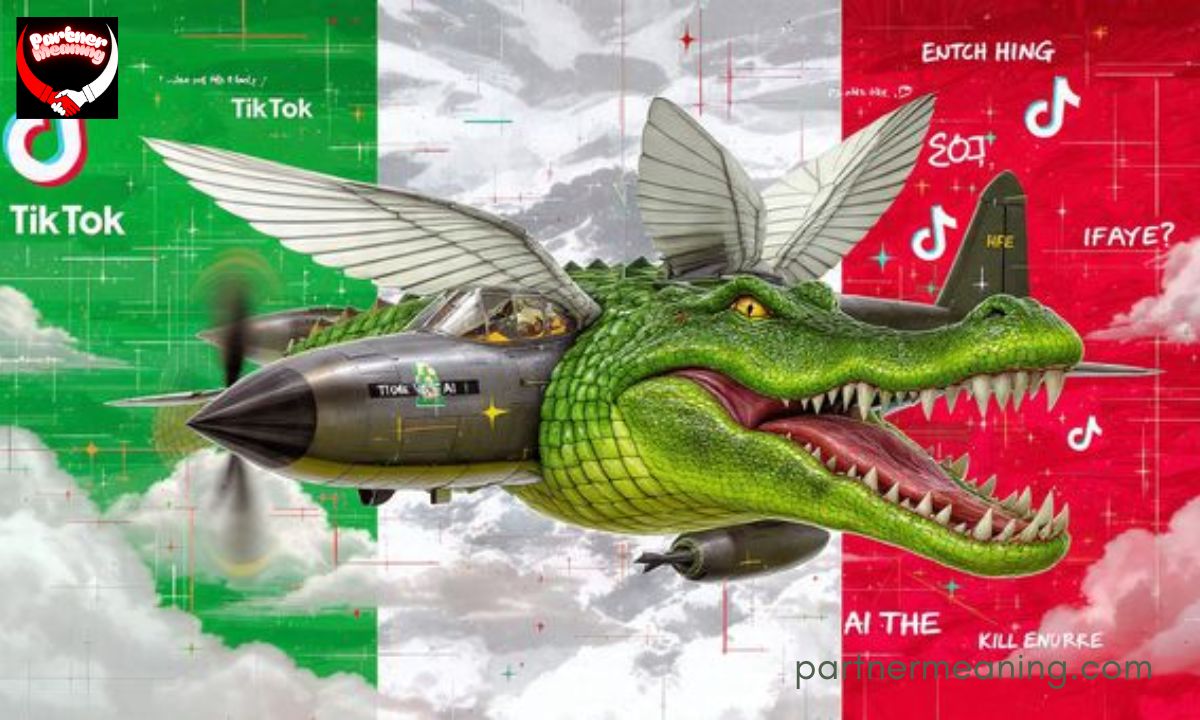
The internet’s latest AI-fueled chaos comes in the form of Bombardino Crocodilo, a bizarre meme featuring a crocodile turned bomber plane. What started as absurd humor on TikTok and YouTube quickly spiraled into one of the most talked-about viral trends of 2025.
Behind the laughter, though, lies a wave of controversy and outrage. The meme’s distorted audio and dark themes have raised concerns about hate speech, satire, and AI-generated extremism spreading unchecked across social media.
What Is “Bombardino Crocodilo”?
The term “Bombardino Crocodilo” refers to a strange and surreal AI-generated meme character that exploded in popularity in early 2025. It features a crocodile merged with a bomber aircraft, flying through chaotic digital landscapes while shouting dramatic nonsense in a fake Italian accent.
Unlike typical animal memes, this one mixes absurd humor, AI voice generation, and military themes, creating something intentionally nonsensical yet visually striking. It’s both funny and unsettling—an example of how far internet absurdity can go.
The meme became part of a broader genre called “Italian Brainrot,” where creators intentionally craft chaotic, meaningless, and AI-driven videos for comedic effect. These memes parody cinematic drama but are built entirely from artificial intelligence tools.
“Bombardino Crocodilo isn’t just a meme—it’s internet chaos wrapped in machine creativity.”
Origin and Background of the Meme “Bombardino Crocodilo”
The meme was first shared on TikTok by @armenjiharhanyan on February 20, 2025. In the original video, viewers saw a flying crocodile-bomber hybrid yelling distorted phrases in a robotic Italian voice. The combination of glitchy animation and over-the-top sound design made it instantly stand out.
At first, people thought it was just another funny AI experiment. But soon, users began noticing disturbing phrases hidden in the audio. Some translations revealed offensive lines referencing religion and violence. That’s when the conversation around it changed from humor to controversy.
Creators began remixing the original clip, adding new visuals, subtitles, and spinoff characters like Bombombini Gusini and Tralalero Tralala. The chaotic tone of these remixes made the meme part of a larger parody “universe.”
- First Appearance: TikTok, February 2025
- Creator: @armenjiharhanyan
- Visual Style: Glitchy AI animation
- Audio Type: AI-generated, exaggerated accent
The Viral Spread on TikTok, YouTube, and Social Media
Within weeks, Bombardino Crocodilo spread across TikTok, YouTube Shorts, and Instagram Reels, racking up millions of views. Its absurd visuals made it perfect for short-form platforms that reward quick, shocking entertainment.
Users began remixing the sound and visuals, creating thousands of different versions—some harmlessly funny, others intentionally offensive. The trend caught fire because it was so random that it demanded attention.
The meme’s algorithmic success came from the way people interacted with it—duets, remixes, and parody edits pushed it into every For You page. Even users who didn’t understand the words shared it simply for the chaos.
“It’s not about what it means—it’s about how insane it looks and sounds.”
However, as the meme gained traction, serious concerns arose about how easily offensive content was slipping through moderation systems. Some versions contained explicit hate speech, but algorithms continued to promote them.
The AI-Generated Trend Behind Bombardino Crocodilo
The meme is a product of the AI creativity boom that dominated 2024–2025. With free AI voice generators, image tools, and animation apps, anyone could create surreal content in minutes.
“Bombardino Crocodilo” shows how AI removes creative barriers, allowing absurd and disturbing ideas to coexist. It’s the perfect example of “brainrot content”—a style that thrives on chaos, randomness, and machine-made exaggeration.
AI tools were used to generate everything from voice lines to visuals. The exaggerated accent and bizarre phrases were likely created with text-to-speech software, while the visuals came from AI video or 3D render platforms.
Examples of popular AI brainrot creations include:
- Bombombini Gusini – a “classy warlord” version of Bombardino
- Tung Tung Sahur – a glitchy, incoherent sound-based meme
- Tralalero Tralala – a dancing shark with EDM beats
- Ballerina Cappuccina – a ballerina wielding weapons mid-explosion
These characters form a chaotic meme universe built entirely by AI creativity and internet humor.
Translation and Real Meaning of “Bombardino Crocodilo”
While the phrase sounds funny, its literal translation gives it a darker tone. “Bombardino” comes from Italian and Spanish roots, meaning “small bomb” or referencing the euphonium, a musical instrument. “Crocodilo” means crocodile in Portuguese and Spanish.
Together, the phrase roughly means “Bombing Crocodile” or “Little Bomber Crocodile.” The absurdity comes from mixing these unrelated concepts into a single identity.
But the problem arises from the context in which the phrase is used. Some meme versions attach it to offensive AI-generated lyrics that make light of real-world violence and religion. That’s what turned the once harmless nonsense into a source of backlash.
“The humor stops being funny when the words carry real-world pain.”
Literal Translation and Cultural References
In Italian, “bombardino” literally means a small bomber or a euphonium, depending on context. It’s also the name of a sweet winter liqueur in Italy. The dual meaning makes it ripe for humorous reinterpretation in memes.
“Crocodilo,” on the other hand, comes from Portuguese or Spanish, meaning “crocodile.” The combination of these words doesn’t make grammatical sense in any language—it’s purely a meme construct.
Some online users joke that the phrase sounds like something out of a bad video game translation or a fake military slogan, which adds to its surreal charm. Others see it as a parody of how AI often misuses language.
Examples of user interpretations:
- “Bombardino Crocodilo is what happens when ChatGPT dreams in chaos.”
- “It’s like if Mario joined the Air Force and turned into a reptile.”
Why the Meme’s Language Sounds Italian or Portuguese
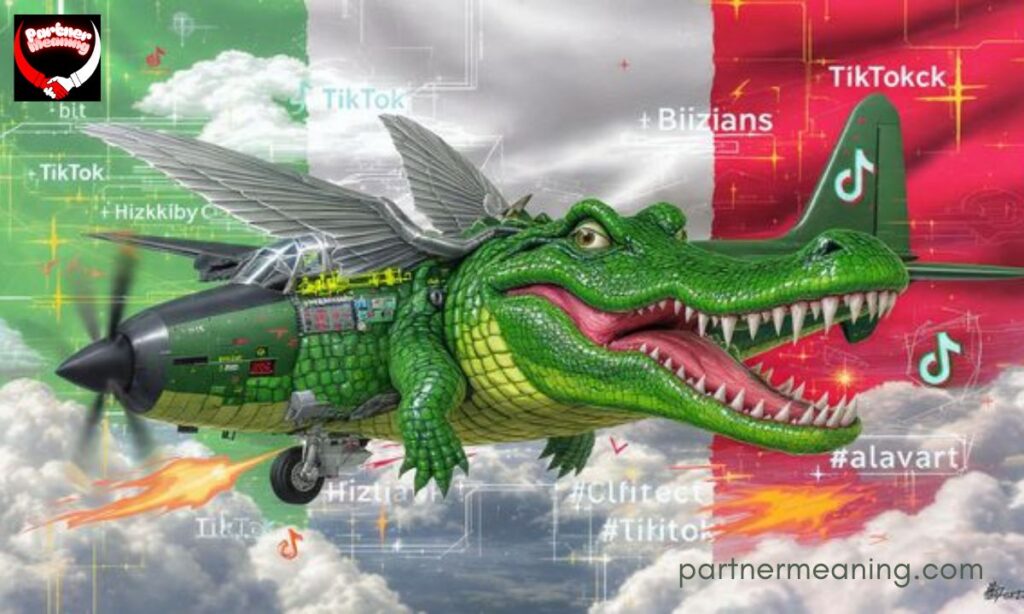
The meme’s exaggerated, cartoonish voice sounds Italian, but it’s actually a distorted, AI-generated accent designed for comedic effect. This fake accent became one of the meme’s most recognizable features.
Creators deliberately used broken, fake Italian speech patterns because it amplified the humor and made the chaos more international. It wasn’t meant to make sense—it was meant to sound dramatic.
However, because the meme uses words from real languages, it often confuses viewers. Some believe it’s actually Italian or Portuguese, while others think it’s just nonsense gibberish meant to sound foreign.
“It’s the sound of a language AI thinks is Italian—but isn’t.”
This linguistic parody became a signature of Italian brainrot memes, where creators mix random languages, dramatic tones, and absurd characters to exaggerate global humor.
Offensive and Controversial Elements in the Audio
While many versions of Bombardino Crocodilo are lighthearted, others feature AI-generated lyrics that are deeply offensive. Translated clips have revealed violent and religiously insensitive lines that cross ethical boundaries.
The issue isn’t just the words—it’s how they’re presented as satire or dark humor, allowing harmful ideas to spread under the guise of absurdity. Critics say this blurs the line between irony and hate speech.
The most disturbing element is how AI tools are being used to create, remix, and amplify this kind of content faster than moderators can respond. What starts as a joke can easily turn into targeted harassment or cultural mockery.
Key concerns raised by digital experts:
- Use of offensive language about religion and war
- Desensitization of young audiences to violence
- Algorithmic amplification of harmful memes
- Difficulty of moderating AI-generated content
References to Gaza and Islam in the Meme Lyrics
Several translations of Bombardino Crocodilo’s audio show explicit references to bombing Gaza and mocking Islamic faith, which sparked major outrage online. These lines have been condemned for promoting hate and trivializing real human suffering.
Some versions include phrases like, “He bombs the children in Gaza”—a line many viewers found unacceptable. Despite clear violations of platform policies, many videos remained live for days or weeks before being removed.
The controversy revealed serious moderation failures across major social media platforms. Inconsistent enforcement, especially in non-English markets, allowed the meme to spread unchecked.
“When hate hides behind humor, it travels faster—and hits harder.”
Experts warn that this trend shows how AI-driven satire can easily slip into propaganda, blurring the line between absurd content and dangerous messaging.
How “Bombardino Crocodilo” Became a Symbol of Brainrot Memes
Bombardino Crocodilo quickly became the face of the Italian brainrot meme trend, representing everything chaotic, nonsensical, and absurd about AI-driven humor. It blended surreal visuals, fake accents, and digital anarchy in a way that instantly caught attention.
Brainrot memes thrive on randomness and overload—there’s no plot, no logic, just constant noise and exaggerated action. Bombardino fit perfectly, turning a crocodile bomber into an internet icon of deliberate nonsense.
Fans began creating remix videos, spinoffs, and parody edits, turning Bombardino into a recurring character across countless short-form clips. Every new version was stranger than the last, which made it even more shareable.
“Bombardino Crocodilo isn’t just a meme—it’s a movement of digital absurdity.”
The meme now symbolizes how AI, irony, and chaos combine to create viral content that entertains millions while confusing everyone else.
Connection to Other Brainrot Characters and AI Memes
The brainrot universe has expanded rapidly, filled with characters that share the same unhinged tone as Bombardino Crocodilo. Each one plays a part in the growing parody ecosystem of AI-generated chaos.
Creators constantly introduce new characters with strange names, over-the-top designs, and wild voiceovers. The characters often appear together in mashups, forming what fans jokingly call the “Brainrot Multiverse.”
Popular examples include:
- Bombombini Gusini – a stylish rival to Bombardino, often portrayed as an elegant warlord.
- Tralalero Tralala – a dancing shark that drops beats during explosions.
- Tung Tung Sahur – an audio-focused character known for glitchy, nonsense dialogue.
- Ballerina Cappuccina – a ballerina fighting mid-battle while holding a cappuccino.
Each of these characters represents AI’s unpredictable creativity, where humor and absurdity mix freely. Together, they make up a digital world that mocks seriousness while embracing chaos.
Why the Meme Is Considered Harmful and Problematic

While many saw Bombardino Crocodilo as harmless absurdity, others recognized its darker undertones. Some versions of the meme include AI-generated lyrics mocking religion and real-world conflict, turning humor into offense.
The problem isn’t just the words—it’s the tone. The meme uses satire and irony to hide messages that can be interpreted as hateful or demeaning. This makes it difficult for viewers, especially younger ones, to tell where the joke ends and the harm begins.
Because the meme spread so widely, offensive edits began circulating without context. Some clips contained phrases referencing Gaza, Palestine, and Islam, while others mocked victims of war or tragedy.
Main concerns include:
- Normalization of violent humor
- Mockery of religion and conflict
- Desensitization to hate speech
- Misuse of AI-generated voices for propaganda
“What starts as a joke can quickly become a message of harm—especially when millions are laughing.”
The Role of AI in Creating Viral and Offensive Content
Artificial intelligence has made it easier than ever to produce viral media—but it also blurs the line between creativity and accountability. Memes like Bombardino Crocodilo are powered by text-to-speech engines, deepfake visuals, and AI animation tools.
AI allows anyone to create professional-looking content without effort. This democratizes creativity but also enables rapid spread of harmful or misleading material. The speed of creation outpaces the speed of moderation.
Many AI tools are built to entertain, not filter morality. When used irresponsibly, they generate content with offensive subtext, often masked as humor. This creates plausible deniability—creators can say, “It’s just AI,” even if the message is toxic.
Examples of misuse in meme creation:
- Generating offensive voice lines with AI text-to-speech
- Using AI video tools to create violent imagery
- Remixing satirical content into hateful messages
AI has become both the tool and the problem in the rise of disturbing meme culture.
Platform Moderation Failure and Algorithmic Amplification
The rise of Bombardino Crocodilo highlights a major flaw in online moderation systems. Despite obvious violations of content guidelines, these videos often remained on platforms for days or weeks, gaining millions of views.
Algorithms are built to promote engagement, not ethics. When users react—through likes, comments, or duets—the system assumes the content is valuable and pushes it further. As a result, harmful memes get algorithmic amplification instead of removal.
Human moderators struggle to keep up with the speed of viral AI content, especially when satire and irony make context hard to judge. Many harmful memes avoid detection simply because they’re disguised as jokes.
Core moderation issues include:
- AI tools failing to detect context and satire
- Lack of multilingual moderation teams
- Slow response times to viral trends
- Overreliance on automated detection systems
“The internet’s biggest threat isn’t hate—it’s how algorithms turn it into entertainment.”
Impact on Youth and Online Culture
Teenagers and young adults are the primary consumers of brainrot memes, which means Bombardino Crocodilo directly influences online youth culture. The problem is that repeated exposure to violent or hateful humor normalizes it as entertainment.
Many younger users view these videos as harmless chaos, unaware of the deeper context behind the audio. This desensitization makes harmful ideas spread faster, wrapped in humor and visual absurdity.
Brainrot content thrives because it matches the short attention span and surreal humor of Gen Z. It’s fast, noisy, and endlessly remixable. Unfortunately, that same formula allows offensive ideas to hide in plain sight.
Effects on youth behavior:
- Reduced sensitivity to hate speech and violence
- Increased tolerance for offensive jokes
- Spread of misinformation disguised as humor
- Confusion between irony and actual belief
Online culture now celebrates chaos, but the line between parody and propaganda is fading fast.
Global Reactions and Criticism of “Bombardino Crocodilo”
The global response to Bombardino Crocodilo has been divided and intense. Some audiences treat it as harmless absurdist comedy, while others condemn it for promoting hate under the guise of humor.
News outlets and digital ethics groups have published reports linking the meme to offensive content targeting Gaza and Islam. These investigations sparked discussions about whether platforms should ban AI-generated satire altogether.
Countries with stricter digital laws have begun monitoring how AI memes spread hate speech in subtle ways. Some creators have even issued apologies after realizing their remixes contained harmful implications.
Public reactions include:
- Supporters defending it as satire and artistic freedom
- Critics labeling it digital hate wrapped in humor
- Experts urging for AI content accountability
- Platforms facing backlash for slow moderation
“Bombardino Crocodilo isn’t just a meme—it’s a moral test for the digital age.”
How to Report or Block Offensive Meme Content
If you encounter offensive versions of Bombardino Crocodilo, it’s important to act responsibly. Social platforms provide several ways to report harmful content without engaging directly with it.
Start by reporting the video or account through the platform’s built-in safety tools. Avoid commenting or sharing, since engagement—even negative—can push the video further into algorithms.
Steps to report or block content:
- Tap “Report” and select “Hate speech,” “Violence,” or “Religious discrimination”
- Block the creator to stop future recommendations
- Avoid duetting or remixing offensive clips
- Educate others by sharing verified information, not outrage
Platforms like TikTok, YouTube, and Instagram encourage users to help keep spaces safe—but effectiveness depends on consistent reporting.
“Every view and comment is a vote. Don’t fuel hate by engaging with it.”
Lessons from the Bombardino Crocodilo Meme Trend
The Bombardino Crocodilo saga is a warning about what happens when AI creativity meets unfiltered internet culture. It shows how absurd humor can mutate into something harmful when left unchecked.
This meme proved that virality doesn’t require meaning—it only needs chaos. But when that chaos carries traces of hate or real-world pain, creators and platforms both share responsibility.
The lesson is clear: AI tools need ethical boundaries, and audiences need digital awareness. What’s funny today can become offensive tomorrow if context is ignored.
Key takeaways:
- Understand the power of irony and context in digital humor
- Push for smarter AI moderation systems
- Remember that satire is not immunity from accountability
- Always verify before sharing viral content
“Memes are the new language of the internet—and like any language, they can heal or harm depending on who speaks.”
Final Thoughts
The Bombardino Crocodilo meme shows how AI creativity and human humor can blur the line between fun and offense. What began as absurd entertainment quickly turned into a controversial digital phenomenon. As AI keeps shaping meme culture, platforms and users must learn to balance expression with responsibility. The future of memes might depend on how wisely we handle that balance.
Frequently Asked Questions
What does “Bombardino Crocodilo” mean?
It refers to an AI-generated crocodile bomber plane used in absurd Italian brainrot memes.
Who created the Bombardino Crocodilo meme?
It first went viral on TikTok, posted by @armenjiharhanyan in February 2025.
Why is the meme considered offensive?
Because it references violence and religion, especially in its audio lines.
Is “Bombardino Crocodilo” part of the brainrot trend?
Yes, it’s a major part of the Italian brainrot meme genre.
Where did the meme first go viral?
It gained traction on TikTok before spreading to YouTube and Reddit.
What languages are used in the meme audio?
The meme mixes Italian, English, and Arabic references through text-to-speech voices.
How can users report harmful or violent meme content?
By using TikTok’s report tools or flagging content that violates community guidelines.
What is the message behind the meme according to viewers?
Most see it as satirical nonsense, though some find it disrespectful and extreme.
Are other similar memes also controversial?
Yes, other AI brainrot memes like Tralalero Tralala have faced similar criticism.
Is “Bombardino Crocodilo” banned on social media platforms?
Not officially, but some versions get removed for violence or hate-related content.

Hayyat is a passionate writer and researcher who loves exploring the beauty and depth of Arabic language and culture. With a special interest in Arabic names, Qur’anic words, and Islamic heritage, Hayyat aims to share meaningful insights with readers who appreciate names with purpose and history.