The name “Abdullah” carries deep spiritual and historical weight in Arabic and Islamic culture. It has been cherished for centuries by Muslims and others who value its connection to faith, devotion, and heritage. From ancient Arabia to modern times, “Abdullah” stands as a timeless reminder of one’s bond with God and humility before Him.
Meaning of “Abdullah” in Arabic
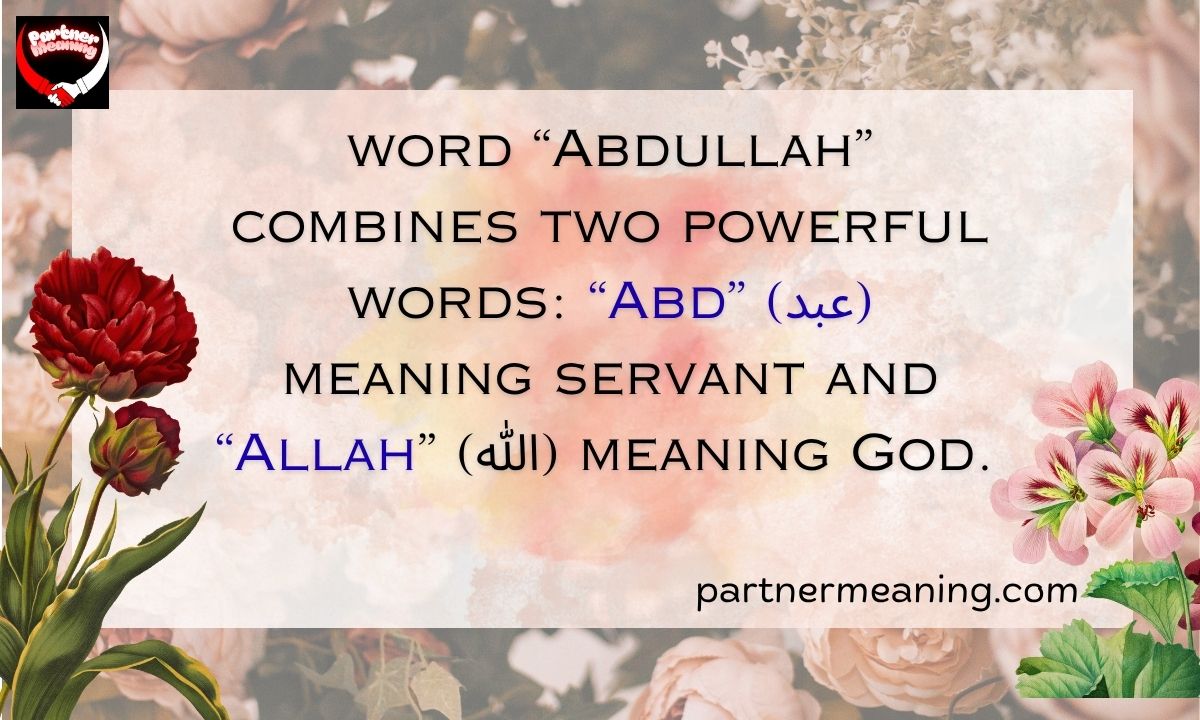
The word “Abdullah” (عبد الله) is one of the most honored names in the Arabic language. It combines two powerful words: “Abd” (عبد) meaning servant and “Allah” (الله) meaning God. Together, they express a deep devotion and humility before the Creator. In Islam, being a true “abd “(servant) of Allah is the highest honor one can achieve.
In Arabic culture, names that start with “Abd” are considered noble because they reflect submission to Allah’s will. This idea comes from the concept that every believer is a worshipper and servant of God. The beauty of the name lies in its simplicity and depth—it reminds Muslims of their purpose in life.
Arabic Quote:
إِنَّ أَكْرَمَكُمْ عِندَ اللَّهِ أَتْقَاكُمْ
“Indeed, the most honored of you in the sight of Allah is the most righteous of you.” (Qur’an 49:13)
The name “Abdullah” continues to be one of the most used names among Muslims because it captures the essence of faith, respect, and servitude.
Linguistic Roots and Structure
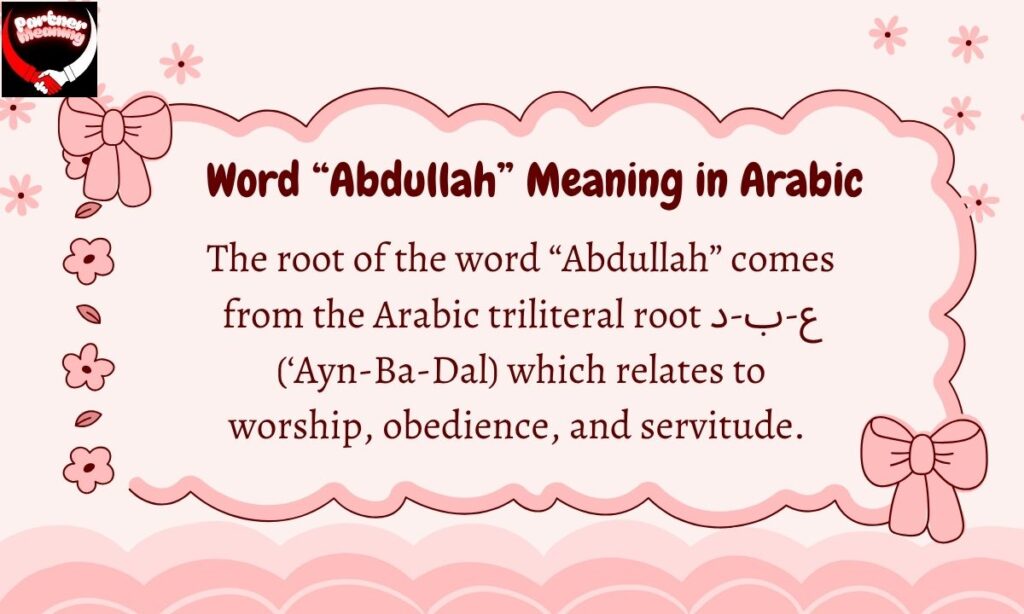
The root of the word “Abdullah” comes from the Arabic triliteral root ع-ب-د (‘Ayn-Ba-Dal) which relates to worship, obedience, and servitude. From this root, many Arabic words are derived, such as ‘ibadah (عبادة) meaning worship and ‘abd (عبد) meaning servant.
The grammatical structure of the name is known as “Idafa” (الإضافة) in Arabic grammar. It links two nouns in a possessive relationship — in this case, ‘Abd (servant) and Allah (God). This construction shows belonging and respect, implying “the servant of Allah.”
Examples of similar names:
- Abdurrahman (عبد الرحمن) – Servant of the Most Merciful
- Abdulaziz (عبد العزيز) – Servant of the Almighty
- Abdulkarim (عبد الكريم) – Servant of the Generous
Arabic Expression:
عبد الله اسم يعبر عن الخضوع لله وحده
“Abdullah is a name that expresses submission to Allah alone.”
This linguistic pattern makes the name both grammatically elegant and spiritually meaningful.
Use of “Abdullah” in the Quran
The name “Abdullah” appears multiple times in the Qur’an through references to noble individuals. Among the most famous is ‘Abdullah ibn Salam (عبد الله بن سلام), a Jewish scholar who embraced Islam upon recognizing the truth in the Prophet Muhammad’s message ﷺ. His faith is highlighted in verses such as Surah Al-Ahqaf (46:10) and Surah Al-Ma’idah (5:66).
In another context, the Qur’an mentions ‘Abdullah ibn Umm-Maktum, a blind companion of the Prophet ﷺ, in Surah Abasa (80:1–2). His sincerity and eagerness to learn earned him great respect in Islam.
Notable Mentions in Quran:
- Surah Al-Ma’idah (5:66): Reference to ‘Abdullah ibn Salam as a righteous believer.
- Surah Al-Ahqaf (46:10): His testimony confirming the Qur’an’s truth.
- Surah Abasa (80:1–2): Mention of ‘Abdullah ibn Umm-Maktum, the blind man who came to seek guidance.
Arabic Verse:
قَالَ إِنِّي عَبْدُ اللَّهِ آتَانِيَ الْكِتَابَ
“He said, ‘Indeed, I am the servant of Allah; He has given me the Scripture.’” (Qur’an 19:30)
These verses highlight that the title “Abdullah” is not just a name, but a symbol of faith and submission.
Famous Figures Named “Abdullah”
Throughout Islamic history, many great men carried the name “Abdullah.” The most well-known is ‘Abdullah ibn Abd al-Muttalib, the father of Prophet Muhammad ﷺ. His name reflects a legacy of purity and devotion even before Islam’s revelation.
Another respected figure was ‘Abdullah ibn Abbas, a cousin of the Prophet ﷺ, known as the “Interpreter of the Qur’an” for his deep knowledge and understanding of the scripture. His teachings shaped early Islamic scholarship.
Other notable figures include:
- ‘Abdullah ibn Umar (عبد الله بن عمر) – a prominent companion known for his piety.
- ‘Abdullah ibn Zubair (عبد الله بن الزبير) – the first child born in Medina after the Hijrah.
- ‘Abdullah ibn Salam (عبد الله بن سلام) – a Jewish scholar who accepted Islam after recognizing the Qur’an’s truth.
Arabic Saying:
الاسم عبد الله يحمل شرف الطاعة والعبودية لله
“The name Abdullah carries the honor of obedience and servitude to Allah.”
These figures made the name synonymous with knowledge, sincerity, and faithfulness.
Cultural and Religious Importance
In Islamic culture, the name “Abdullah” symbolizes humility and closeness to Allah. Parents often choose it for their sons to inspire devotion and obedience. It reminds Muslims that life’s purpose is to serve the Creator, not worldly desires.
The Prophet ﷺ said, “The most beloved names to Allah are Abdullah and Abdurrahman.” This Hadith highlights the name’s deep spiritual value and its place of honor among Muslims worldwide.
Arabic Hadith:
أَحَبُّ الأَسْمَاءِ إِلَى اللَّهِ عَبْدُ اللَّهِ وَعَبْدُ الرَّحْمَنِ
“The most beloved names to Allah are Abdullah and Abdurrahman.” (Sahih Muslim)
In many Muslim societies, the name represents not only a religious identity but also a moral character, reflecting respect, humility, and dedication to God.
Variants and Spellings of “Abdullah”
Due to the spread of Islam across regions, the name “Abdullah” appears in many languages and cultures with different spellings but the same meaning.
Common Variants:
- Abdallah – Common in North Africa and the Levant.
- Abdellah – Used in Morocco and Algeria.
- Abdollah – Persian (Farsi) variant.
- Abdalla / Abdula / Abdulaa – African and South Asian variations.
- Abdala – Spanish and Latin version.
- Ğabdulla (Габдулла) – Tatar and Russian form.
Arabic Phrase:
الأسماء تختلف في اللفظ ولكن المعنى واحد
“The names differ in pronunciation, but the meaning is one.”
No matter the spelling, the message behind “Abdullah” remains constant — servitude, faith, and devotion to Allah.
“Abdullah” in Different Languages
The name “Abdullah” (عبد الله) has traveled across nations and adapted into many languages while keeping its sacred meaning. In Arabic, it remains pure and deeply tied to faith, but as Islam spread, cultures shaped their own spellings and pronunciations. Despite these changes, the message of servitude to Allah stayed the same.
Regional Variations of “Abdullah”:
- Abdallah (عبد الله) – Common in Egypt, Jordan, and Lebanon.
- Abdellah (عبد الإله) – Found mostly in Morocco and North Africa.
- Abdollah (عبدالله) – Persian spelling used in Iran.
- Abdala / Abdalao – Spanish and Latin adaptation.
- Abdulla / Abdalla – Used in Pakistan, India, and East Africa.
- Ğabdulla (Габдулла) – The Tatar and Russian form of the name.
Arabic Saying:
الأسماء قد تختلف باللفظ ولكنها تتحد بالمعنى
“Names may differ in sound, but they unite in meaning.”
No matter how it is written—Abdullah, Abdallah, or Abdala—the heart of the name reflects faith, humility, and devotion across all cultures.
Common Misunderstandings About “Abdullah”
Many people mistakenly believe that “Abdullah” and “Abdul” mean the same thing. In truth, “Abdul” (عبد ال) is incomplete; it must be followed by one of Allah’s names. For example, “Abdul Rahman” (عبد الرحمن) means servant of the Most Merciful, while “Abdullah” already includes Allah’s name and stands complete.
Common Confusions Explained:
- “Abdul” alone – grammatically incorrect; needs a following Divine Name.
- “Ubaidullah” (عبيد الله) – means little servant of Allah; a respectful diminutive form.
- “Abdillah” (عبد الإله) – means servant of God, used more among Arabic Christians.
عبد الله اسم كامل في ذاته لأنه يضم اسم الجلالة
“Abdullah is a complete name in itself because it includes the Name of Majesty.”
Another misconception is that the name is limited to Muslims. However, Arabic-speaking Christians and Jews have also used it historically, showing the name’s broad spiritual respect and linguistic beauty.
Examples of “Abdullah” in Arabic Sentences
The name “Abdullah” fits naturally into Arabic speech and writing. It’s often used in both formal and casual contexts to refer to a respected person. Using it correctly helps learners understand how Arabic grammar connects faith with daily language.
Arabic Sentences and Translations:
- عبد الله يصلي في المسجد كل يوم
Abdullah prays in the mosque every day. - قابلت عبد الله في السوق.
I met Abdullah in the market. - عبد الله طالب مجتهد ويحب العلم
Abdullah is a hardworking student who loves knowledge. - كتب عبد الله رسالة إلى صديقه
Abdullah wrote a letter to his friend.
Arabic Proverb:
من تواضع لله رفعه الله
“Whoever humbles himself before Allah, Allah elevates him.”
These examples show that “Abdullah” is not only a name but also a living expression of humility and spiritual dignity in the Arabic language.
Why the Name “Abdullah” Is Popular Among Muslims
The name “Abdullah” is one of the most beloved names in Islam. The Prophet Muhammad ﷺ said,
أَحَبُّ الأَسْمَاءِ إِلَى اللَّهِ عَبْدُ اللَّهِ وَعَبْدُ الرَّحْمَنِ
“The most beloved names to Allah are Abdullah and Abdurrahman.” (Sahih Muslim)
This Hadith alone explains its popularity. Parents choose it because it carries blessing (barakah), honor, and a reminder of servitude. It represents faithfulness to Allah and aligns perfectly with the teachings of Islam.
Reasons for Its Popularity:
- Religious Value: It honors the idea of being a servant of Allah.
- Historical Legacy: It was the name of the Prophet’s father, ‘Abdullah ibn Abd al-Muttalib.
- Universal Use: Found in every Muslim culture—Arab, Asian, African, and Western.
- Positive Meaning: Reflects humility, faith, and obedience to the Creator.
Arabic Reflection:
الاسم عبد الله يربط الإنسان بعبوديته لخالقه في كل زمان ومكان
“The name Abdullah connects a person to his servitude before the Creator in every time and place.”
For Muslims around the world, naming a child “Abdullah” is more than tradition—it’s a statement of faith, love, and identity that bridges generations.
Frequently Asked Questions
What does “Abdullah” mean in Arabic?
It means “Servant of Allah” (عبد الله), showing devotion to God.
Is “Abdullah” mentioned in the Quran?
Yes, it appears in several verses referring to true worshippers of Allah.
Who was ‘Abdullah ibn Salam?
He was a Jewish scholar who embraced Islam during the Prophet’s time.
Was the Prophet’s father named Abdullah?
Yes, his father was ‘Abdullah ibn ‘Abd al-Muttalib.
Is “Abdul” the same as “Abdullah”?
No, “Abdul” is incomplete; it must be followed by one of Allah’s names.
How do you write “Abdullah” in Arabic?
It is written as عبد الله.
Conclusion
The name “Abdullah” (عبد الله) continues to shine as a symbol of faith, devotion, and humility. It connects every believer to the timeless truth of being a servant of Allah, reminding us of our purpose and submission to the Creator. Through history, scripture, and daily life, “Abdullah” remains a name of honor and spiritual depth across generations.

Hayyat is a passionate writer and researcher who loves exploring the beauty and depth of Arabic language and culture. With a special interest in Arabic names, Qur’anic words, and Islamic heritage, Hayyat aims to share meaningful insights with readers who appreciate names with purpose and history.