The name Khalifa is powerful and meaningful in Arabic. It represents leadership and succession. Many use it as a boys’ name with deep cultural and religious significance.
Meaning of Khalifa
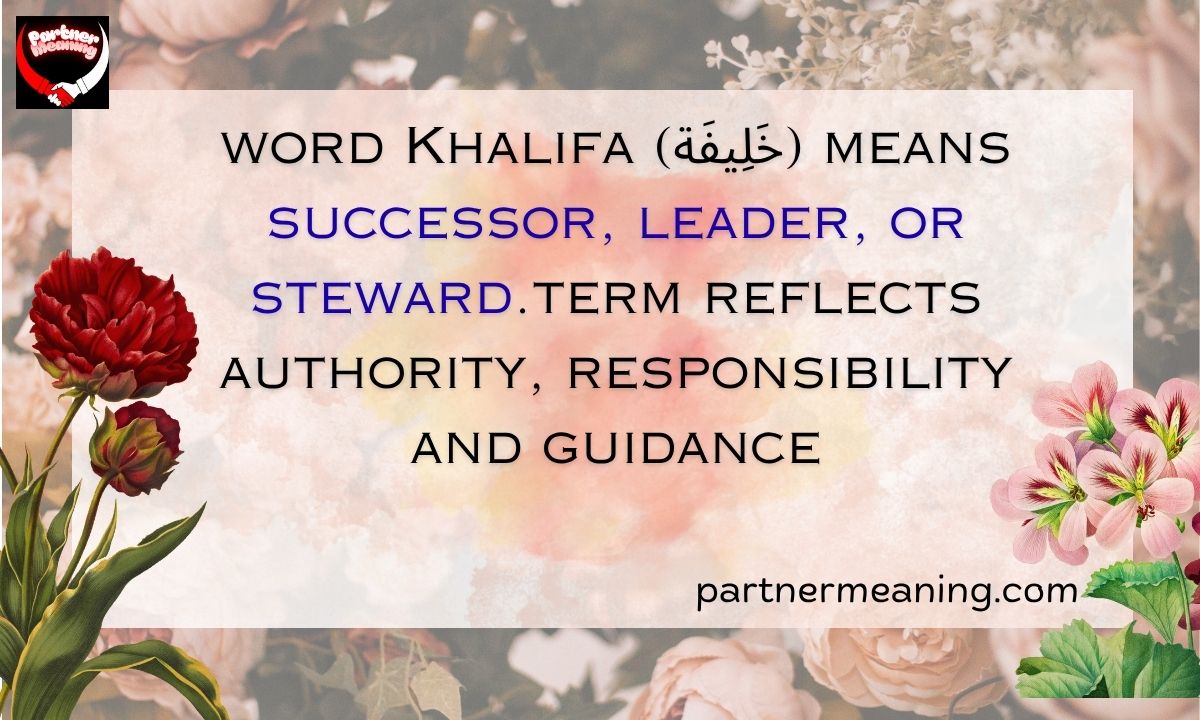
The word Khalifa (خَلِيفَة) means successor, leader, or steward. It is commonly used as a boys’ name in Arabic-speaking countries. The term reflects authority, responsibility, and guidance, and it has a deep religious and cultural significance. In Islam, a Khalifa refers to the leader of the Muslim community, especially the first four Rashidun Caliphs, who are highly respected for their justice and leadership.
Being a Khalifa implies both spiritual and worldly responsibility, representing honor, trust, and guidance. The Quran mentions humans as Khalifa on Earth, emphasizing stewardship and care for creation. This shows that the word is not only political but also moral and ethical. The concept balances power with responsibility and is used in historical and modern contexts.
Understanding this word provides insight into Islamic history and Arabic culture. It connects religion, leadership, and everyday life. Many Arabic families choose it as a name to reflect strength, responsibility, and honor. Learning the meaning enriches one’s understanding of Arabic language and traditions.
Arabic Pronunciation
The correct pronunciation is “Kha-lee-fah” (خَلِيفَة). Emphasize the “Kh” sound, which is strong and throaty, and the stress falls on the first syllable: KHA-lee-fah. Mispronouncing it as “Kalifa” is a common mistake. The plural form is Khulafa’ (خُلَفَاء), and the singular masculine is Khalifa (خَلِيفَة). Feminine forms are rarely used.
In daily conversation, people say:
هُوَ خَلِيفَةُ المُدِيرِ فِي العَمَلِ
“He is the successor of the manager at work.”
Correct pronunciation shows respect for Arabic tradition and understanding of phonetics. It is also important in formal and religious contexts, especially in reading Quranic verses or historical texts.
Pronunciation reflects the importance of meaning. Using the correct sound preserves clarity and respect. It helps learners connect language with culture. Proper pronunciation strengthens both spoken Arabic and comprehension.
Linguistic Roots
Khalifa comes from the Arabic root خ-ل-ف (Kh-L-F), which relates to succession, following, and replacing someone. This root appears in many verbs and nouns in Arabic, emphasizing continuity, leadership, and responsibility. It is the foundation of the word’s spiritual, moral, and political significance.
Common verbs from this root include:
- Khalafa (خَلَفَ) – to succeed or replace
- Yakhlufu (يَخْلُفُ) – he succeeds
- Istakhlafa (اِسْتَخْلَفَ) – to appoint a successor
- Khaluf (خَلُوف) – succession over time
The root is used in the Quran when Allah appoints humans as Khalifa on Earth:
اللَّهُ جَعَلَ الإِنسَانَ خَلِيفَةً فِي الأَرْضِ
“Allah made humans His Khalifa on Earth.”
It conveys moral, spiritual, and political responsibility, showing the word’s depth in Arabic culture.
Grammatical Forms
Khalifa is a noun that changes with gender and number. Singular masculine: Khalifa (خَلِيفَة). Plural masculine: Khulafa’ (خُلَفَاء). The feminine form is rarely used but possible in context.
It follows standard Arabic grammar rules, where articles, adjectives, and verbs must agree in gender and number. Example:
الخُلَفَاءُ الرَّاشِدُونَ حَكَمُوا بِالعَدْلِ
“The Rightly Guided Caliphs ruled with justice.”
Learning these forms helps in Quranic studies, historical texts, and everyday Arabic communication.
Understanding grammar ensures clarity and respect for the word. It preserves the meaning across contexts. Mastery of these forms strengthens Arabic reading, writing, and speaking skills. Using proper grammar shows knowledge of culture and tradition.
Examples in Arabic Sentences
- هُوَ خَلِيفَةُ المُدِيرِ فِي العَمَلِ
“He is the successor of the manager at work.” - سَيَكُونُ خَلِيفَتِي بَعْدِي
“He will be my successor after me.” - الخُلَفَاءُ الرَّاشِدُونَ حَكَمُوا بِالعَدْلِ
“The Rightly Guided Caliphs ruled with justice.” - اللَّهُ جَعَلَ الإِنسَانَ خَلِيفَةً فِي الأَرْضِ
“Allah made humans His Khalifa on Earth.” - عَلَيْكَ أَنْ تَكُونَ خَلِيفَةً صَالِحًا فِي كُلِّ مَجَالٍ
“You must be a righteous Khalifa in every field.”
These examples show religious, historical, and daily usage. They highlight leadership, responsibility, and stewardship. Learning them improves Arabic comprehension and cultural knowledge. They connect modern and classical Arabic contexts.
Religious Significance
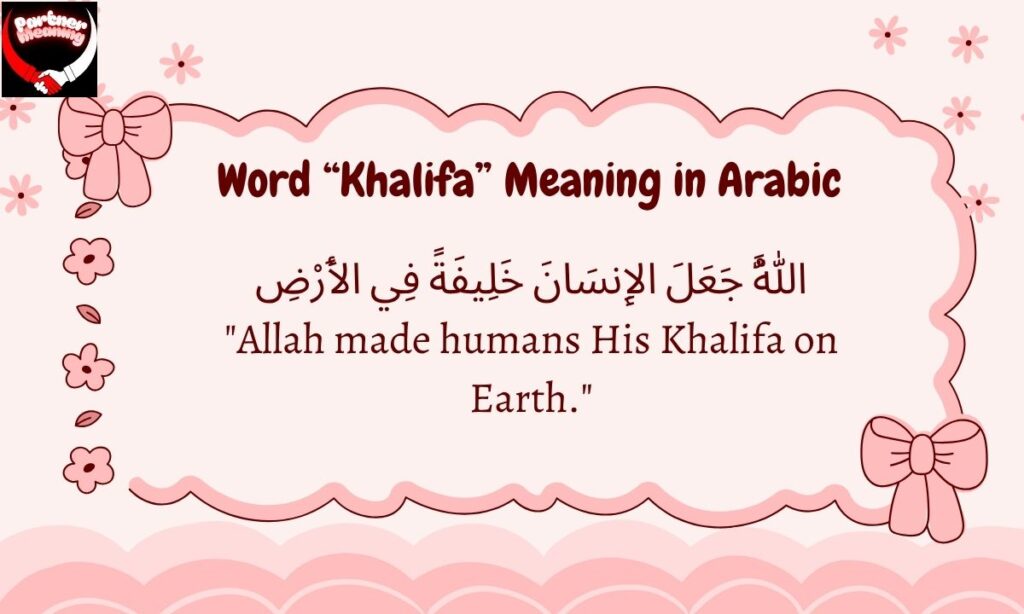
The word Khalifa (خَلِيفَة) holds deep religious meaning in Islam. It refers to the leaders who succeeded Prophet Muhammad (PBUH), known as Al-Khulafa’ Al-Rashidun, who are revered for their justice and wisdom. Being a Khalifa is both a spiritual and worldly responsibility, emphasizing guidance, fairness, and ethical leadership. This term links language, religion, and culture in a meaningful way.
The Quran mentions humans as Khalifa on Earth, showing their role as caretakers and stewards of creation.
اللَّهُ جَعَلَ الإِنسَانَ خَلِيفَةً فِي الأَرْضِ
“Allah made humans His Khalifa on Earth.”
It emphasizes moral and ethical duties in addition to authority. It teaches the balance between power and accountability in daily life and guides behavior in social, political, and spiritual matters.
Muslims view Khalifa as a symbol of divine guidance. The first four Caliphs established justice, fairness, and law in the early Islamic state. Learning this word connects language, religion, and ethics. It also shows how leadership in Islam combines spiritual and practical responsibilities.
Historical Importance
Historically, Khalifa signifies leadership, succession, and governance. After Prophet Muhammad (PBUH) passed, the Rashidun Caliphs led the Muslim community with justice and consultation. They set examples of ethical governance, legal systems, and fairness, which are studied in Islamic history and law. The concept shaped social structures and political norms in Muslim societies for centuries.
The term also appears in ancient Islamic governance. The Caliphate system influenced laws, culture, and global politics, with rulers adopting the title Khalifa to show legitimacy and authority. This usage spread across multiple dynasties and regions, making the word historically significant in administration and leadership.
It is used in modern historical studies to examine Islamic empires, succession systems, and leadership principles. The word reflects both political power and moral duty, showing the interconnectedness of governance and ethics. Understanding it helps in cultural, historical, and religious education, linking past practices to contemporary knowledge.
Modern Usage
Today, Khalifa is widely used as a boys’ name in Arabic-speaking communities. It symbolizes leadership, success, and responsibility, carrying both traditional and modern significance. Celebrities like Wiz Khalifa have made the name recognized globally, giving it a contemporary influence beyond Arabic and Islamic contexts.
In daily life, parents choose it to reflect honor, guidance, and respect for heritage. The plural form Khulafa’ (خُلَفَاء) still refers to historical leaders, especially in religious education. Modern usage connects the name to identity, culture, and history, and it is common in literature, media, and conversations within Arabic communities.
The term is also used in educational contexts to teach children the Quranic meaning and historical examples of Khalifa. It emphasizes morality, responsibility, and leadership qualities. This shows the lasting relevance of the word in both personal names and cultural understanding, linking modern life with tradition.
Common Mistakes
Many learners confuse Khalifa with Khalif (خَالِف), which means opposing or different. Another common mistake is mispronouncing it as “Kalifa”, missing the strong “Kh” sound. Plural and singular forms are often mixed up in writing and speech, leading to errors in context.
Other mistakes include misunderstanding the religious and historical background. Some think Khalifa is only a political title, ignoring its moral and spiritual significance. Correct use requires attention to context, pronunciation, and grammar, distinguishing between Khalifa as a name and as a leadership position.
Using examples helps learners avoid mistakes and understand proper usage. Proper knowledge ensures that the meaning remains accurate in Quranic verses, historical texts, and daily conversation. Studying history and language together strengthens cultural literacy and comprehension.
Why Learn Khalifa
Learning the word Khalifa improves Arabic language mastery and cultural understanding. It connects vocabulary with religion, history, and ethics, helping learners understand leadership, stewardship, and responsibility in Islamic contexts. It enhances both reading comprehension and speaking skills in Arabic.
Knowledge of Khalifa is vital for Quranic studies, as it appears in important verses emphasizing humans as caretakers of the Earth. It also aids in understanding historical texts, governance systems, and social organization in Muslim societies. This study bridges language, culture, and moral education.
The word teaches responsibility, leadership, and morality, making it valuable in daily life, literature, and academic study. Learning Khalifa helps connect past and present, linking religious teachings with modern personal and societal contexts. Understanding this word enriches Arabic heritage, ethical knowledge, and cultural awareness.
Conclusion
The word Khalifa represents leadership, responsibility, and stewardship. It carries deep religious, historical, and cultural significance in Arabic and Islamic contexts. From the Quranic meaning to its use in names today, it reflects honor and guidance. Learning about Khalifa enriches understanding of language, ethics, and heritage.
Frequently Asked Questions
What does Khalifa mean in Arabic?
It means successor, leader, or steward.
How is Khalifa pronounced?
It is pronounced “Kha-lee-fah” (خَلِيفَة).
What is the plural of Khalifa?
The plural is Khulafa’ (خُلَفَاء).
Is Khalifa mentioned in the Quran?
Yes, it appears in Surah Al-Baqarah 2:30.
Who were the Rightly Guided Caliphs?
They were the first four leaders after Prophet Muhammad (PBUH).
Hayyat is a passionate writer and researcher who loves exploring the beauty and depth of Arabic language and culture. With a special interest in Arabic names, Qur’anic words, and Islamic heritage, Hayyat aims to share meaningful insights with readers who appreciate names with purpose and history.