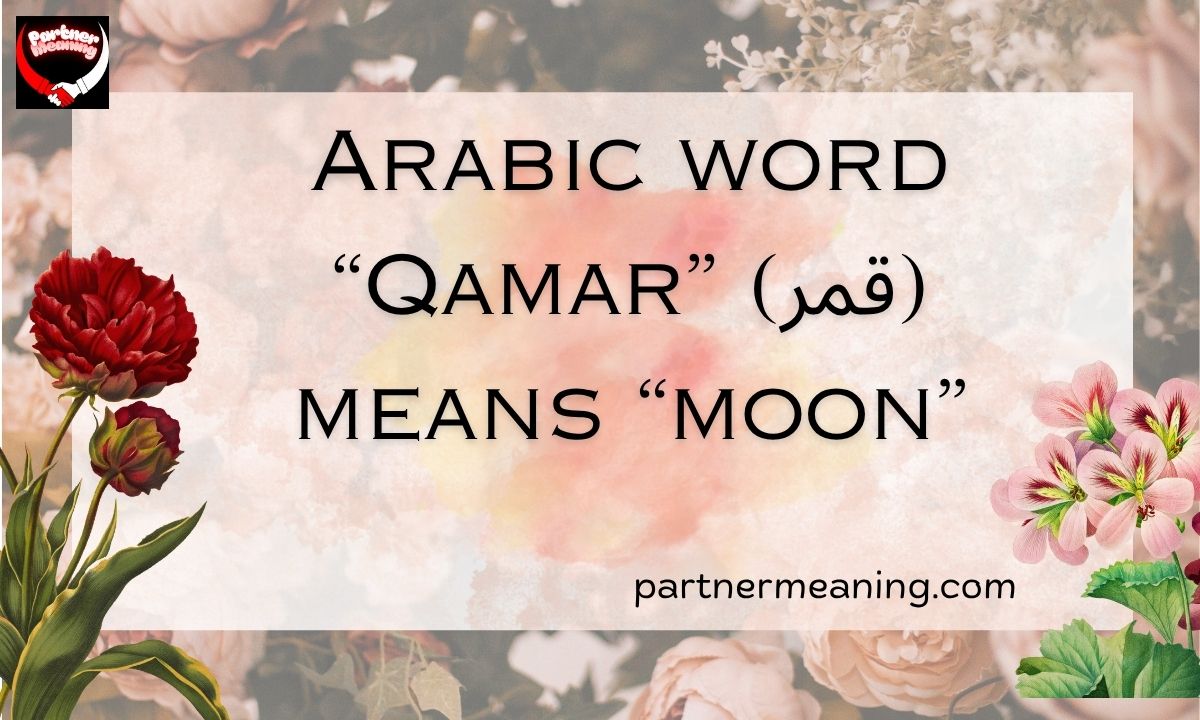
The Arabic word Qamar (قمر) shines with beauty, emotion, and cultural depth. It appears in poetry, the Quran, and everyday speech, symbolizing grace and light. From art to language, Qamar continues to inspire hearts across generations.
What Does Qamar (قمر) Mean in Arabic?
The word Qamar (قمر) in Arabic means the moon, a symbol of beauty and brightness. It’s one of the most admired words in Arabic culture, often used in poetry, songs, and names. When Arabs say “anta mithl al-qamar” (أنت مثل القمر), they mean “you are as beautiful as the moon.” The moon’s glowing presence represents purity, calmness, and divine creation.
In Arab traditions, the moon has always carried emotional and spiritual depth. People often use Qamar to express affection and admiration for someone they love. In daily speech, calling someone “ya qamar” (يا قمر) is a gentle compliment. It reflects the connection between language, feeling, and nature in Arabic expression.
The moon’s phases are also described with specific Arabic words:
- Hilal (هلال) – Crescent moon
- Badr (بدر) – Full moon
- Tarbea al awwal (التربيع الأول) – First quarter
- Ahduub al mutazayid (الأحدب المتزايد) – Waxing gibbous
These terms show how deeply the Arabic language observes the moon’s beauty in detail.
| Arabic Term | English Meaning | Description |
| قمر (Qamar) | Moon | General word for the moon |
| بدر (Badr) | Full moon | Symbol of beauty and completeness |
| هلال (Hilal) | Crescent | Seen at the start of each lunar month |
| قمران (Qamarān) | Two moons | Refers to the Sun and Moon together |
Linguistic Root and Pronunciation of Qamar
The root of Qamar comes from the Arabic letters ق-م-ر (Q–M–R), which relate to light and lunar movement. It’s a noun that stays the same in masculine and feminine use, though it changes form with grammatical cases. The definite form is Al-Qamar (القمر), and the accusative form is Qamaran (قمراً).
Pronunciation is important: the “qaf” (ق) sound is deep and comes from the throat. Many learners mistakenly pronounce it as “k,” but the correct sound has a firm, rich tone. Saying Qa-mar, with stress on the first syllable, captures the proper rhythm of the word.
The structure of Arabic allows “Qamar” to take on beauty even in its form. Its balance of consonants gives it a soft yet strong sound. This harmony between sound and meaning is a key feature of the Arabic language.
Learning its correct tajweed (تجويد) and articulation helps you appreciate how words in Arabic are both linguistic and spiritual. Pronouncing Qamar properly connects you to the way Arabs have spoken and recited this word for centuries.
How to Use Qamar in Arabic Sentences
The word Qamar appears in both everyday and poetic Arabic. It’s used to describe the moon in the sky and also to express admiration. When someone says “Ra’aytu al-qamar fi as-sama” (رأيت القمر في السماء), it means “I saw the moon in the sky.” The sentence structure is simple but elegant.
Arabic poetry often uses Qamar to describe a loved one’s beauty. For example, “Wajhuki mithl al-qamar” (وجهك مثل القمر) means “Your face is like the moon.” Here, the word doesn’t just describe appearance—it conveys love and admiration.
Here are some more examples in context:
- الْقَمَرُ مُنِيرٌ اللَّيْلَةَ. – The moon is bright tonight.
- يُحِبُّ الشُّعَرَاءُ الْقَمَرَ لِجَمَالِهِ. – Poets love the moon for its beauty.
- يَطْلُعُ الْقَمَرُ بَعْدَ الْغُرُوبِ. – The moon rises after sunset.
By learning these examples, students of Arabic can easily connect grammar with emotion, nature, and faith. “Qamar” shows how the Arabic language blends science and art into a single expression.
Qamar in the Quran and Islamic Context
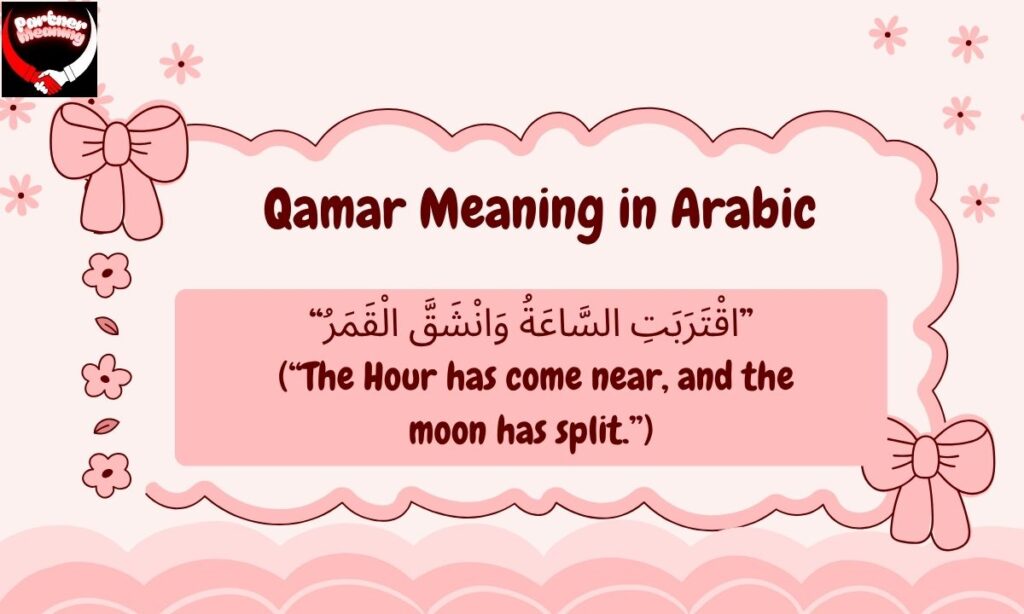
In Islam, the moon (Qamar) carries both symbolic and practical importance. It’s mentioned several times in the Quran, most famously in Surah Al-Qamar (سورة القمر), the 54th chapter. The verse says:
“اقْتَرَبَتِ السَّاعَةُ وَانْشَقَّ الْقَمَرُ”
(“The Hour has come near, and the moon has split.”)
This verse refers to a miracle performed by the Prophet Muhammad (ﷺ), when the moon was split as a sign to the people of Makkah. It highlights Allah’s power and the moon’s role as a witness to divine signs.
The Islamic calendar (التقويم القمري) is also based on the lunar cycle. Each month begins with the sighting of the hilal (crescent moon), such as during Ramadan (رمضان) or Eid (عيد). The moon thus regulates worship, fasting, and celebration.
In spiritual poetry and Sufi writings, Qamar often represents guidance, beauty, and the light of faith. It reflects how something so distant can still touch the heart and illuminate the path of believers. The moon, in Arabic and Islam alike, is not just seen—it is felt.
Cultural and Poetic Meaning of Qamar
In Arab culture, the moon (Qamar – قمر) is more than a part of the night sky. It symbolizes beauty, love, and longing. Poets often compare their beloved’s face to the full moon, calling them “Qamar arba‘atash” (قمر أربعة عشر) — meaning as radiant as the full moon on the 14th night. This phrase remains one of the most romantic compliments in Arabic.
The moon appears frequently in Arabic songs and poetry. Singers like Fairuz and Amr Diab used the word Qamar in their famous songs, such as “Ya Qamar” and “Amarein” (two moons). It often represents a person who brings light into others’ lives or someone distant yet deeply admired.
In literature, Qamar expresses both presence and absence. Poets like Mahmoud Darwish wrote that maybe the moon is not beautiful, but only distant — showing how love and beauty in Arabic thought are often tied to longing and distance. The moon becomes a metaphor for dreams and desires beyond reach.
| Arabic Phrase | Translation | Meaning in Context |
| يا قمر (Ya Qamar) | Oh Moon | Term of endearment or admiration |
| قمر أربعة عشر (Qamar Arba‘atash) | Full Moon | Describes perfect beauty |
| وجهك مثل القمر (Wajhuki mithl al-qamar) | Your face is like the moon | Romantic compliment |
| وعد بالقمر (Wa‘ada bil-qamar) | Promised the moon | Promised the impossible |
The Qamar has inspired generations of poets, lovers, and dreamers. Its light connects art, emotion, and faith — always reminding people that beauty, like the moon, shines even in darkness.
Common Mistakes When Using Qamar
Learners often make small but important mistakes when using Qamar (قمر). The most common one is pronunciation. The letter ق (qaf) should be deep and strong, not soft like “k.” Saying “Kamar” instead of “Qamar” changes the authenticity of the Arabic sound.
Another mistake is confusing words that sound related but mean different things.
- Shams (شمس) – means “Sun,” not moon
- Najm (نجم) – means “Star”
- Badr (بدر) – means “Full moon,” but is used as a separate noun or name
Arabic grammar also affects how Qamar appears in a sentence. Learners forget that when it becomes definite, it takes “Al” (ال) and becomes Al-Qamar (القمر). In certain grammatical cases, endings change, like Qamaran (قمراً) in the accusative form.
| Common Error | Correct Form | Explanation |
| Kamar | Qamar | Use deep “qaf” sound |
| Al Kamar | Al-Qamar (القمر) | Add hyphen for proper Arabic flow |
| Badr = Qamar | Incorrect | Badr means “full moon,” not the general moon |
Lastly, many forget that in Arabic expressions like “Aam titlob al-qamar” (عام تطلب القمر) — “asking for the moon” — means asking for the impossible. Using the word Qamar correctly brings both precision and beauty to speech.
Why Learning the Word Qamar Matters
Learning Qamar (قمر) helps you understand how the Arabic language blends emotion, faith, and nature. It’s not just a word but a bridge to cultural depth. By studying it, you gain insight into how Arabs describe beauty, light, and divine order.
The word connects with many parts of daily and spiritual life.
- It appears in Quranic verses like Surah Al-Qamar.
- It shapes Islamic months through the lunar calendar.
- It enriches Arabic poetry and songs.
Understanding Qamar improves your appreciation of Arabic rhythm, pronunciation, and symbolic meaning. You’ll start noticing how often the moon appears in conversations, from “Hilal Ramadan” (crescent of Ramadan) to compliments like “Ya Qamar.”
Learning this one word opens the door to Arabic beauty. It shows how every letter in Arabic carries sound, soul, and story. The moon reminds us that language, like light, connects us even from afar — calm, glowing, and eternal.
Conclusion
The word Qamar (قمر) beautifully captures the Arabic world’s connection to light, love, and faith. It represents more than the moon—it reflects purity, guidance, and timeless beauty. From the Quran to Arabic poetry, Qamar continues to inspire hearts, reminding us that even in darkness, there is always light.
Frequently Asked Questions
What does Qamar mean in Arabic?
It means “moon,” symbolizing beauty and brightness.
Is Qamar mentioned in the Quran?
Yes, in Surah Al-Qamar (54:1) — “The moon has split.”
What is the difference between Qamar and Shams?
Qamar means “moon,” while Shams (شمس) means “sun.”
Can Qamar be used as a name?
Yes, it’s used for both males and females in Arabic culture.
How do you pronounce Qamar correctly?
Say it as “Qa-mar” with a deep “qaf” (ق) sound from the throat.

Hayyat is a passionate writer and researcher who loves exploring the beauty and depth of Arabic language and culture. With a special interest in Arabic names, Qur’anic words, and Islamic heritage, Hayyat aims to share meaningful insights with readers who appreciate names with purpose and history.