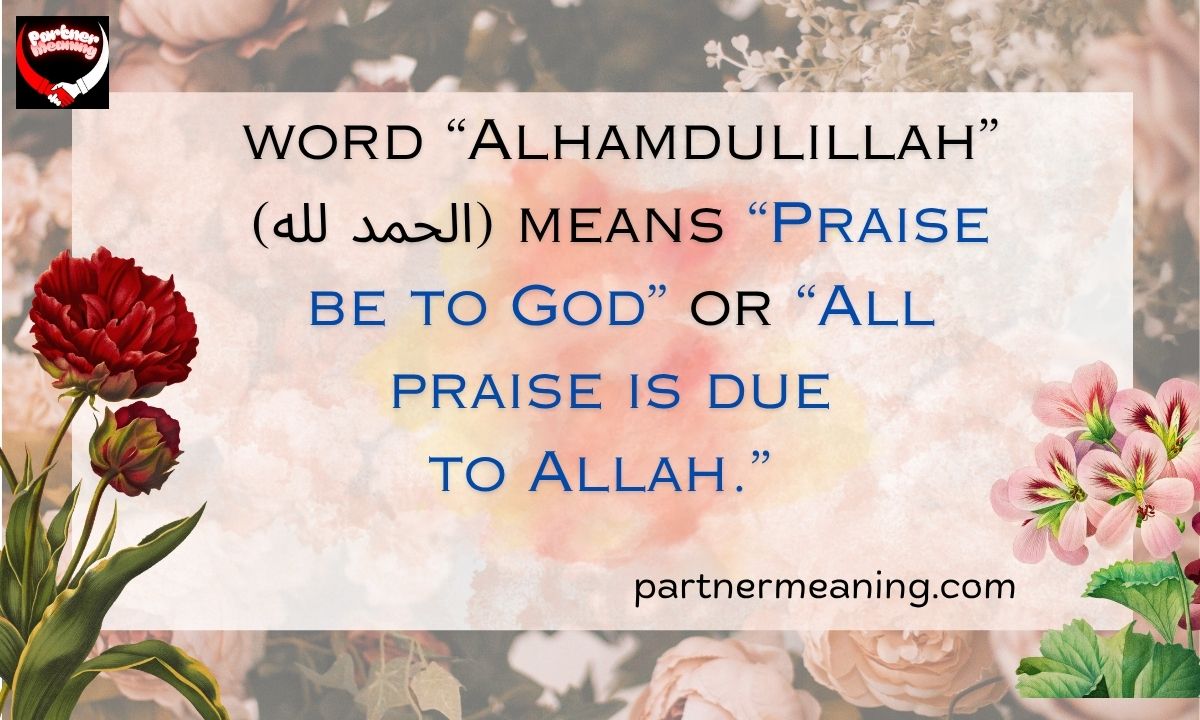
The word Alhamdulillah is one of the most beautiful expressions in Islam, often spoken with a heart full of gratitude and faith. It’s used by millions of Muslims every day to thank Allah in both joy and hardship. Understanding when and how to say it connects us deeply to the spirit of thankfulness in Arabic and Islamic life.
What Does Alhamdulillah Mean?
The phrase Alhamdulillah (الحمد لله) is a powerful expression of gratitude and praise in Islam. Muslims use it to thank Allah (الله) for every blessing, whether small or great. It reflects a believer’s contentment and recognition that everything comes from Allah’s will. Saying Alhamdulillah shows iman (faith) and a peaceful heart that accepts destiny with thankfulness.
| Arabic Word | Transliteration | Meaning |
| الحمد | Al-Hamd | Praise or thanks |
| لله | Lillah | To Allah |
| الحمد لله | Alhamdulillah | All praise is due to Allah |
Alhamdulillah in Arabic Script and Pronunciation
In Arabic, Alhamdulillah is written as ٱلْحَمْدُ لِلَّٰهِ. The phrase is pronounced as Al-ham-du-li-llah, with emphasis on “hamd,” meaning praise. It flows smoothly in Arabic speech and carries a spiritual rhythm. Muslims often say Alhamdulillah softly after prayer or strongly when expressing joy, both showing ikhlas (sincerity).
- Arabic: ٱلْحَمْدُ لِلَّٰهِ
- Transliteration: Al-ḥamdu lillāh
- Phonetic: /ʔal.ħam.du lil.laː.hi/
- Common translation: “Praise be to Allah”
This phrase is short yet deeply spiritual, used worldwide by Arabic and non-Arabic speakers alike.
Linguistic Root and Arabic Origin
The word Alhamdulillah comes from the root ح م د (Ḥ-M-D), meaning to praise, to commend, or to thank. This root is also found in names like Muhammad (محمد), Ahmad (أحمد), and Mahmood (محمود) — all connected to the idea of praise. It shows how central hamd (praise) is in Islamic thought.
- حمد (Hamd): Praise or gratitude
- أحمد (Ahmad): One who praises
- محمد (Muhammad): The praised one
- محمود (Mahmood): Worthy of praise
This linguistic beauty reminds Muslims that life itself is built around thanking Allah for His blessings.
Alhamdulillah in the Quran and Hadith
The phrase Alhamdulillah appears many times in the Quran and Hadith, showing its importance in worship. The first verse of Surah Al-Fatiha (سورة الفاتحة) begins with “ٱلْحَمْدُ لِلَّٰهِ رَبِّ ٱلْعَالَمِينَ” — “Praise be to Allah, Lord of the worlds.” It sets the tone for every Muslim prayer, starting with gratitude.
- Prophet Muhammad ﷺ said: “The best remembrance (dhikr) is Alhamdulillah.”
- It’s recommended after eating, sneezing, and during prayer (salah).
- Each time a Muslim says it, angels record it as an act of worship.
Alhamdulillah in the Quran is not only praise—it’s a way of life that keeps the heart connected to Allah.
When to Say Alhamdulillah in Daily Life
Muslims say Alhamdulillah in countless moments. It’s a natural expression that fits joy, relief, success, and even pain. The Prophet ﷺ taught believers to be grateful in all circumstances, saying Alhamdulillah ‘ala kulli haal (الحمد لله على كل حال) — “Praise be to Allah in every situation.”
You can say Alhamdulillah:
- After finishing prayer (ṣalāh)
- When hearing good news
- After recovering from illness
- When sneezing or eating
- During hard times, to show patience and faith
This habit turns daily life into continuous worship, reminding us that gratitude is the soul of faith.
Spiritual and Cultural Significance
Saying Alhamdulillah shapes a Muslim’s outlook on life. Spiritually, it’s a reminder of tawakkul (trust in Allah) and a way to maintain inner peace. Culturally, it’s part of Arabic greetings and daily conversations, showing humility and thankfulness.
Across the Muslim world, you’ll hear Alhamdulillah as a response to:
- “How are you?” → Alhamdulillah, I’m fine.
- “Did you succeed?” → Yes, Alhamdulillah.
- “You’ve been through a lot.” → Still, Alhamdulillah.
It’s more than words—it’s a spiritual mindset that fills the heart with peace, patience, and hope in every situation.
Common Variants and Related Phrases
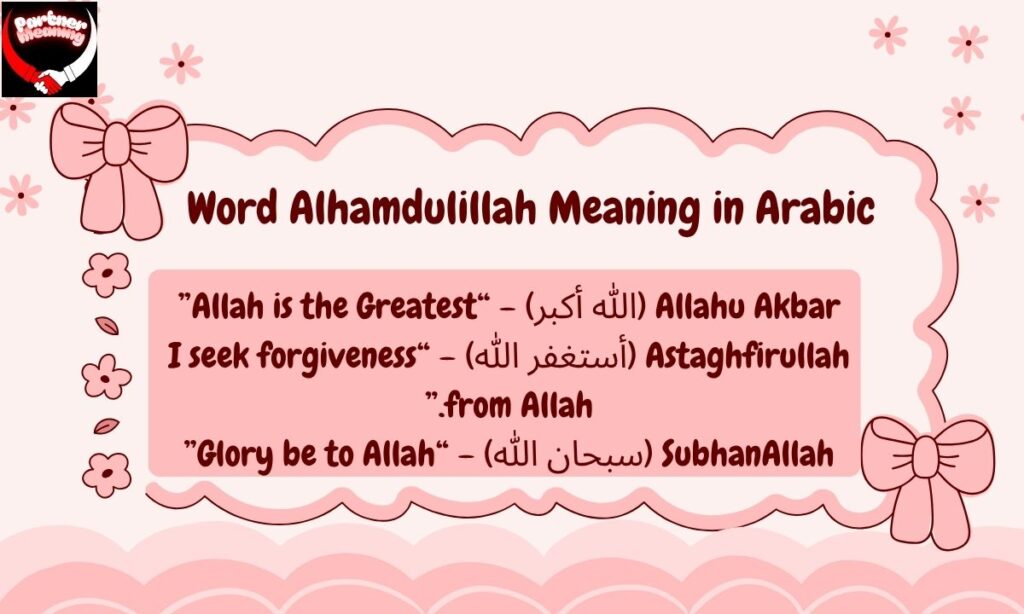
The Arabic phrase Alhamdulillah (الحمد لله) has several related expressions that carry similar tones of praise and remembrance. Each phrase reflects a different form of dhikr (remembrance of Allah) and is used in daily life by Muslims. These words create a rhythm of gratitude, glorification, and trust in Allah.
Here are some common related phrases:
- SubhanAllah (سبحان الله) – “Glory be to Allah” (used to express amazement or wonder).
- Allahu Akbar (الله أكبر) – “Allah is the Greatest” (said to show reverence and awe).
- Astaghfirullah (أستغفر الله) – “I seek forgiveness from Allah.”
- La ilaha illallah (لا إله إلا الله) – “There is no god but Allah.”
Each of these phrases, like Alhamdulillah, keeps the heart alive with zikr (ذكر) and strengthens the believer’s connection with Allah.
Difference Between Alhamdulillah and MashaAllah
Many people mix Alhamdulillah (الحمد لله) and MashaAllah (ما شاء الله), but their meanings and usage are very different. Alhamdulillah expresses thanks and praise, while MashaAllah expresses admiration for something Allah has willed.
| Phrase | Arabic | Meaning | Used When |
| Alhamdulillah | الحمد لله | Praise be to Allah | To thank or show gratitude |
| MashaAllah | ما شاء الله | What Allah has willed | To admire or appreciate something |
For example:
- You get good news → say Alhamdulillah.
- You see someone’s success → say MashaAllah.
Using each phrase correctly reflects adab (good manners) and understanding of Islamic expressions.
Alhamdulillah Meaning in English and Urdu
In English, Alhamdulillah means “All praise and thanks be to Allah.” It captures both gratitude and submission to Allah’s will. In Urdu, it’s written as الحمد للّٰہ and used just as commonly in speech and writing.
- English meaning: All praise is due to Allah.
- Urdu meaning: تمام تعریفیں اللہ کے لیے ہیں۔
- Roman Urdu: Tamam tareefain Allah ke liye hain.
This phrase bridges language and faith, uniting Muslims across cultures. Whether said in Arabic, English, or Urdu, Alhamdulillah carries the same spiritual depth and message of thankfulness.
Examples of Alhamdulillah in Sentences
Muslims use Alhamdulillah in everyday conversations, prayers, and reflections. It fits naturally in different situations, expressing both joy and patience. Here are a few examples:
الحمد لله على السلامة (Alhamdulillah ‘ala as-salamah): Praise be to Allah for safety.
الحمد لله على كل حال (Alhamdulillah ‘ala kulli haal): Praise be to Allah in every situation.
الحمد لله، نجحت في الامتحان (Alhamdulillah, najah-tu fil imtihan): Praise be to Allah, I passed the exam.
الحمد لله على النعمة (Alhamdulillah ‘ala an-ni‘mah): Praise be to Allah for the blessing.
These examples show how Alhamdulillah becomes a part of daily speech, reminding Muslims to stay grateful in every circumstance.
Deeper Meaning of “Alhamdulillah for Everything”
The phrase “Alhamdulillah for everything” (الحمد لله على كل شيء) goes beyond simple thanks. It reflects complete trust in Allah’s plan, whether life brings ease or hardship. This mindset teaches sabr (patience), shukr (gratitude), and tawakkul (reliance on Allah).
When someone says Alhamdulillah for everything, they are:
- Accepting both joy and pain as Allah’s wisdom.
- Finding peace in every test or blessing.
- Showing maturity in faith through gratitude.
- Turning hardship into a chance for spiritual growth.
It’s a reminder that true contentment comes when the heart praises Allah without condition.
Why Learning Alhamdulillah Matters
Understanding and saying Alhamdulillah shapes both language and faith. It reminds us to stay thankful, humble, and aware of Allah’s presence in every moment. Teaching this phrase, especially to children, builds a strong habit of gratitude and reflection.
- It nurtures a positive mindset through thankfulness.
- Strengthens spiritual awareness and peace of heart.
- Connects believers to the Quranic teachings of gratitude.
- Encourages daily remembrance (dhikr) of Allah.
Learning Alhamdulillah isn’t just about words—it’s about living with a thankful heart and recognizing Allah’s blessings in everything, big or small.
Conclusion
The phrase Alhamdulillah (الحمد لله) reminds us that true peace comes from a heart filled with gratitude and faith. It teaches us to thank Allah (سبحانه وتعالى) in both ease and difficulty, recognizing His wisdom in every moment. By saying Alhamdulillah, we strengthen our connection to the Creator and cultivate a mindset of contentment and humility.
Frequently Asked Questions
What does Alhamdulillah mean in Arabic?
It means “All praise and thanks be to Allah.”
Is Alhamdulillah mentioned in the Quran?
Yes, it appears in the first verse of Surah Al-Fatiha.
When should you say Alhamdulillah?
In moments of joy, relief, or hardship to express gratitude.
Can non-Muslims say Alhamdulillah?
Yes, anyone can say it to express thanks to God.
What is the difference between Alhamdulillah and SubhanAllah?
Alhamdulillah means praise and thanks, while SubhanAllah means glory be to Allah.
How do you pronounce Alhamdulillah correctly?
It’s pronounced Al-ham-du-li-llah, with stress on “hamd.”

Hayyat is a passionate writer and researcher who loves exploring the beauty and depth of Arabic language and culture. With a special interest in Arabic names, Qur’anic words, and Islamic heritage, Hayyat aims to share meaningful insights with readers who appreciate names with purpose and history.