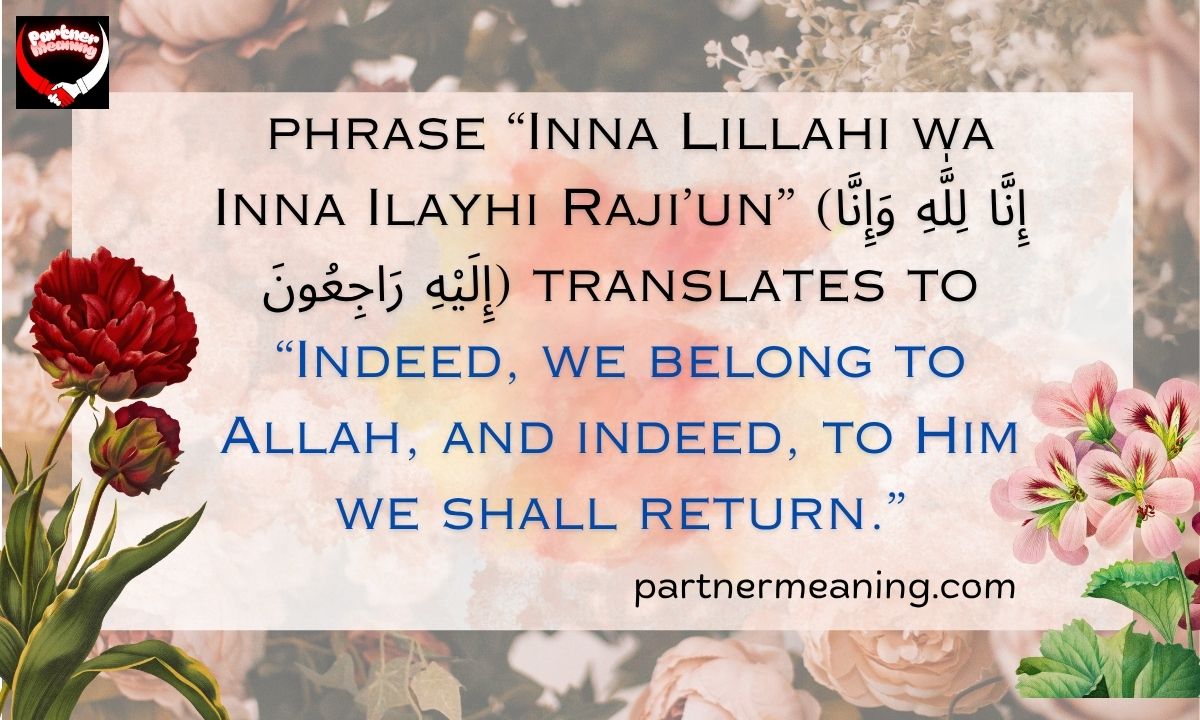
The phrase Innalillahiwainnailaihirojiun holds deep emotional and spiritual value in Islamic culture. Often recited in moments of loss or hardship, it reminds believers of faith, patience, and acceptance. This article explores its Arabic form, Quranic origin, and real-life examples of how it’s used across Muslim communities.
What Does Innalillahiwainnailaihirojiun Mean?
The phrase Innalillahiwainnailaihirojiun (إِنَّا لِلَّٰهِ وَإِنَّا إِلَيْهِ رَاجِعُونَ) is a deeply spiritual expression used by Muslims worldwide. It is said when one hears of death, tragedy, or loss, as a reminder that everything belongs to Allah (الله). The words bring comfort, patience, and acceptance during life’s hardest moments. It also reflects a believer’s imaan (faith) and trust in Allah’s divine will.
Muslims say this not only for others but also for themselves in times of pain. It reminds us that life is temporary (حياة فانية) and everything returns to the Creator. It encourages peace within the heart and submission to Qadr Allah (the decree of God). This small phrase holds powerful lessons about faith, humility, and gratitude.
Through this expression, Islam teaches balance between emotion and belief. It allows believers to grieve yet remain hopeful. By reciting Inna Lillahi wa Inna Ilayhi Raji’un, one acknowledges that every loss is part of a greater divine plan.
Innalillahiwainnailaihirojiun in Arabic Text
In Arabic, the phrase is beautifully written as:
إِنَّا لِلَّٰهِ وَإِنَّا إِلَيْهِ رَاجِعُونَ
Each word flows softly, reflecting the elegance of the Qur’anic Arabic language. Muslims recite it in this original form to preserve its sacred sound and meaning.
This verse appears in Surah Al-Baqarah (2:156), a chapter that discusses patience during trials. Its Arabic rhythm strengthens one’s heart and calms the mind during loss. When said sincerely, it becomes a dhikr (remembrance) that connects a believer directly to Allah.
Below is a simple table showing its Arabic form with pronunciation:
| Arabic Text | Pronunciation |
| إِنَّا لِلَّٰهِ وَإِنَّا إِلَيْهِ رَاجِعُونَ | Inna Lillahi wa Inna Ilayhi Raji’un |
Learning the Arabic form allows every Muslim to understand and feel the beauty of the original revelation (الوحي).
Innalillahiwainnailaihirojiun in English Translation
In English, the phrase is translated as: “Indeed, we belong to Allah, and indeed, to Him we shall return.” It expresses the same message found in the Arabic, focusing on faith and surrender. This translation helps non-Arabic speakers grasp the essence of submission (Islam) to Allah’s will.
The English form is often used in books, condolence messages, and Islamic writings. Still, many prefer the Arabic version because it carries a spiritual weight that translation cannot fully capture. The message remains universal — everything begins with Allah and returns to Him.
It is not only a sentence but a reflection of a Muslim’s belief in the afterlife (آخرة). When said in English or Arabic, it serves the same purpose — comfort, acceptance, and hope in Allah’s mercy.
Innalillahiwainnailaihirojiun in Urdu Meaning
In Urdu, the phrase is written as:
بے شک ہم اللہ کے لئے ہیں اور ہمیں اسی کی طرف لوٹنا ہے۔
This translation carries the same tenderness as the Arabic, reminding believers in Pakistan, India, and beyond of Allah’s presence. Urdu-speaking Muslims often recite it upon hearing about death or misfortune.
The Urdu form beautifully combines emotional expression with religious depth. It is easy to understand, deeply touching, and widely used in dua (supplication). Whether written or spoken, it brings comfort to the heart and helps people face pain with sabr (patience).
- Used in condolence cards, funeral announcements, and prayers
- Common in daily life when hearing about a loss or difficulty
- Promotes calmness and remembrance of Allah’s mercy (رحمت الله)
This shows how language unites faith and emotion within Muslim culture.
Word-by-Word Meaning of Innalillahiwainnailaihirojiun
Each word in this Qur’anic verse carries a powerful message:
| Word | Arabic | Meaning |
| Inna | إِنَّا | Indeed, surely, truly we |
| Lillahi | لِلَّٰهِ | Belong to Allah |
| Wa Inna | وَإِنَّا | And indeed, we |
| Ilayhi | إِلَيْهِ | To Him |
| Raji’un | رَاجِعُونَ | Will return |
Together, these words express total submission to Allah (تسلیم اللہ) and belief in life after death (حیات بعد الموت). They remind us that all souls will one day return to Him for judgment and mercy.
Understanding this word-by-word meaning helps believers feel the spiritual depth behind this short yet profound phrase.
Linguistic Root and Origin of Istirja
The phrase Innalillahiwainnailaihirojiun is also known as Istirja (إِسْتِرْجَاع). The term comes from the Arabic root ر-ج-ع (ra-ja-‘a), which means “to return.” It represents the act of turning back to Allah both in words and in faith.
Istirja is more than a phrase—it is an attitude of acceptance and trust in Allah’s decree. Muslims are encouraged to say it not just during grief, but whenever faced with hardship. It transforms sorrow into tawakkul (trust) and fear into sabr (patience).
Linguistically, it belongs to the Classical Arabic structure used in the Qur’an to express certainty and divine order. The same root appears in other Islamic expressions that emphasize returning, movement, and submission.
In essence, Istirja connects language, faith, and life itself. Through it, believers reaffirm their identity as servants of Allah, always returning to Him in every state of being.
When to Say Innalillahi Wa Innailaihi Rojiun
Muslims say Inna Lillahi wa Inna Ilayhi Raji’un (إِنَّا لِلّٰهِ وَإِنَّا إِلَيْهِ رَاجِعُونَ) when they face death, tragedy, or personal loss. It is an act of Istirja (seeking return to Allah), showing patience and faith in Allah’s decree. This phrase is not only for funerals but also during any hardship or calamity.
You can recite it when hearing news of someone’s death, losing something valuable, or experiencing pain. Saying it reminds believers that everything in life is temporary. It calms the heart and strengthens sabr (صبر), one of the greatest virtues in Islam.
Here are common situations when Muslims say this phrase:
- Upon hearing of a death or accident
- When facing financial loss or failure
- During natural disasters or illness
- After losing something precious or dear
In every case, the phrase teaches acceptance and submission to Qadr Allah (the divine will).
Hadiths About Inna Lillahi wa Inna Ilayhi Raji’un
Several Hadiths mention the virtue of saying this phrase during distress. The Prophet Muhammad ﷺ encouraged believers to say Istirja whenever something unpleasant happens. It’s not just a phrase—it’s a dua (supplication) that brings reward and peace.
In Sahih Muslim, the Prophet (ﷺ) said:
“When a calamity befalls a believer and he says, Inna Lillahi wa Inna Ilayhi Raji’un, Allahumma’jurni fi musibati wakhluf li khayran minha (O Allah, reward me in my affliction and replace it with something better), Allah will grant him something better.”
This shows that saying these words brings ajr (reward) and strengthens faith. It turns sadness into hope (رجاء).
Another Hadith in Sunan Ibn Majah teaches that remembering Allah during hardship brings relief. The Prophet ﷺ always reminded his companions that true peace lies in returning to Allah.
Quranic Verse About Innalillahiwainnailaihirojiun (Surah Al-Baqarah 2:156)
This sacred phrase comes directly from the Qur’an, in Surah Al-Baqarah (2:156). The full verse says:
“Who, when disaster strikes them, say, Indeed we belong to Allah, and indeed to Him we will return.”
This verse is part of a passage praising the patient ones (الصابرين) who remain steadfast during tests. Allah promises mercy, blessings, and guidance for those who respond with patience and Istirja.
Below is a simple table to understand the verse:
| Arabic Verse | Transliteration | Meaning |
| الَّذِينَ إِذَا أَصَابَتْهُم مُّصِيبَةٌ قَالُوا إِنَّا لِلّٰهِ وَإِنَّا إِلَيْهِ رَاجِعُونَ | Alladhina idha asabat’hum musibatun qalu inna lillahi wa inna ilayhi raji’un | Those who, when a calamity strikes, say: “Indeed, we belong to Allah and to Him we return.” |
This verse teaches tawakkul (trust in Allah) and reminds believers that every soul and moment belongs to Him.
Spiritual Message Behind Innalillahiwainnailaihirojiun
The spiritual message of Inna Lillahi wa Inna Ilayhi Raji’un is about acceptance, faith, and connection with Allah. It reminds us that all things—life, death, joy, and sorrow—come from Allah (الله). Saying it helps a believer face trials with calmness and faith.
This phrase transforms grief into dhikr (remembrance). It encourages believers to find peace in the certainty that everything returns to Allah. It’s a lesson in tawheed (oneness of God) and reliance on His mercy.
The words are short but hold deep spiritual healing. When recited sincerely, they strengthen the heart and reduce anxiety. It’s not just said in pain—it’s a spiritual response showing strength, hope, and imaan (faith).
It teaches us that life is a journey back to our Creator, and every loss is a step closer to Him.
Examples of Using Innalillahiwainnailaihirojiun in Sentences
Muslims use this phrase in many daily situations, especially when they hear about loss or difficulty. It is both a statement of truth and a form of prayer.
Examples of how it’s used:
- “Inna Lillahi wa Inna Ilayhi Raji’un, my friend’s father passed away.”
- “We lost the house in the flood. Innalillahiwainnailaihirojiun.”
- “Inna Lillahi wa Inna Ilayhi Raji’un, I missed my flight, but Allah knows best.”
- “Innalillahiwainnailaihirojiun, may Allah replace this loss with something better.”
Each example shows how Muslims connect real-life struggles with faith and remembrance of Allah. It turns emotional pain into spiritual calm.
By saying it, believers affirm that everything they have is a trust (أمانة) from Allah and will one day return to Him.
Common Mistakes in Pronouncing or Using the Phrase
Many people make small mistakes while reciting or writing Innalillahiwainnailaihirojiun. These errors can change the meaning or reduce the beauty of the phrase.
Common pronunciation mistakes:
- Saying “Inna Lillahi wa Inna Ilahi Raji’un” (missing Ilayhi)
- Mispronouncing “Raji’un” as Rajeoon or Rajuun
- Forgetting the “wa” between Lillahi and Inna
Correct pronunciation:
In-na Lil-la-hi wa In-na I-lay-hi Ra-ji-‘oon (إِنَّا لِلّٰهِ وَإِنَّا إِلَيْهِ رَاجِعُونَ)
Usage mistakes:
- Using it casually or jokingly
- Saying it for minor things like dropping an object
- Forgetting its spiritual depth
It should always be said with respect and sincerity, remembering its Qur’anic origin and sacred meaning.
Importance of Understanding Innalillahiwainnailaihirojiun
Understanding this phrase helps Muslims strengthen their connection with Allah and accept life’s trials. It is not just for mourning—it’s a reminder of submission (Islam) and faith (imaan).
The more a believer understands its meaning, the deeper their spiritual peace (سكينة) becomes. It teaches patience, humility, and awareness of Allah’s control over all things.
Importance of understanding:
- Builds inner peace and patience
- Deepens Qur’anic reflection
- Encourages gratitude even in loss
- Promotes trust in Allah’s wisdom
In the end, Inna Lillahi wa Inna Ilayhi Raji’un is more than a phrase. It’s a reflection of faith, surrender, and hope, guiding Muslims through every hardship with strength and remembrance of Allah.
Frequently Asked Questions
What does Innalillahiwainnailaihirojiun mean in Arabic?
It means “Indeed, we belong to Allah, and indeed, to Him we will return.”
Is Innalillahiwainnailaihirojiun mentioned in the Quran?
Yes, it appears in Surah Al-Baqarah (2:156) as a verse about patience during hardship.
When should you say Innalillahi Wa Innailaihi Rojiun?
You should say it when facing loss, death, or any form of calamity to show faith and acceptance.
Can non-Arabs say Innalillahiwainnailaihirojiun?
Yes, anyone can say it. It’s a universal phrase of remembrance and submission to Allah’s will.
What is the difference between Istirja and Innalillahiwainnailaihirojiun?
Istirja (إِسْتِرْجَاع) refers to the act of saying “Inna Lillahi wa Inna Ilayhi Raji’un,” while the phrase itself is the recitation.
Conclusion
Inna Lillahi wa Inna Ilayhi Raji’un is more than a phrase—it’s a reminder of life’s true purpose. It teaches believers patience, humility, and faith in Allah’s plan. In every loss, it brings peace and hope, reminding us that everything begins and ends with Allah (الله). This timeless expression turns grief into trust and spiritual strength.

Hayyat is a passionate writer and researcher who loves exploring the beauty and depth of Arabic language and culture. With a special interest in Arabic names, Qur’anic words, and Islamic heritage, Hayyat aims to share meaningful insights with readers who appreciate names with purpose and history.