Muhammad is not just a name; it’s a symbol of honor, reverence, and devotion across cultures. Deeply rooted in Arabic and Islamic history, this name carries a legacy that unites millions. Its beauty lies not only in meaning but in the timeless respect it commands.
The Meaning of the Name “Muhammad” in Arabic
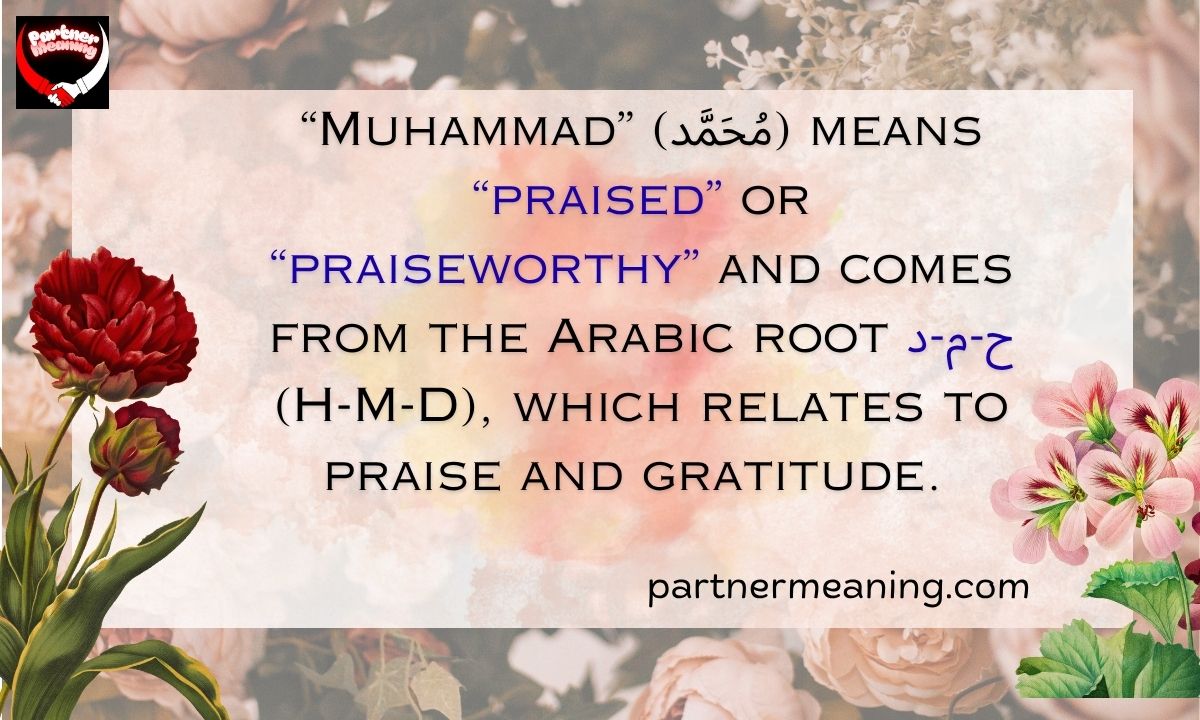
The name “Muhammad” (مُحَمَّد) represents one who is worthy of praise and admiration. It reflects noble character and appreciation in both spiritual and social contexts. Across Muslim societies, this name holds an emotional and sacred presence.
Used in conversation and religious expression, it signifies respect and love. Many families choose it as a first name to connect their children to a blessed heritage. In daily life, it’s often paired with other names like Muhammad Ali or Muhammad Hassan, showing reverence while keeping individuality.
In literature, “Muhammad” symbolizes purity and faith. The sound of the name itself evokes dignity and serenity, making it one of the most beloved in human history.
“The name Muhammad carries both divine respect and human love.”
Linguistic Root and Etymology of “Muhammad”
The name comes from the Arabic root Ḥ-M-D (ح-م-د), which means praise or gratitude. This root forms many related words in Arabic that express appreciation and reverence toward goodness and virtue.
From this root, we get names like:
- Ahmed (أحمد) – meaning “more praiseworthy.”
- Mahmud (محمود) – meaning “praised.”
- Hamid (حامد) – meaning “one who praises.”
Each of these variations shares the same linguistic foundation, expressing deep appreciation and spiritual beauty. Together, they create a family of names tied to virtue and respect.
“Every name from the root Ḥ-M-D holds the essence of praise.”
The Arabic Grammar Behind the Name “Muhammad”
Grammatically, “Muhammad” comes from the verb ḥammada (حَمَّدَ), which means “to praise repeatedly.” It follows the form mufaʿʿal (مُفَعَّل), indicating intensity and repetition in the act of praise.
This means the name carries the sense of someone continuously praised — a person admired for their goodness and character. It reflects the idea of consistent excellence.
In Arabic grammar, “Muhammad” is also a passive participle, showing that the person receives praise rather than gives it. This subtle detail enriches its meaning within both language and spirituality.
“The structure of the name itself defines the perfection of its meaning.”
Different Spellings and Variations of the Name “Muhammad”
Due to language diversity, the name “Muhammad” has appeared in countless forms across the world. Each version reflects local pronunciation and cultural adaptation.
Common spellings include:
- Mohammed, Mohamed, Muhammed
- Mehmet, Mahammad, Mohamad
- Mahometus, Mamadou, Maxammed
This variety makes “Muhammad” one of the most transliterated names in history. Despite the spelling changes, the spiritual essence remains the same.
| Language / Region | Common Spelling |
|---|---|
| Arabic countries | Muhammad |
| Turkey | Mehmet |
| Africa | Mamadou |
| South Asia | Mohammed / Mohammad |
| Europe | Mohamed |
“The name changes in letters, but never in meaning.”
Global Popularity and Usage of “Muhammad”
“Muhammad” is believed to be the most popular name in the world, carried by more than 150 million men and boys. Its influence extends from the Middle East to Asia, Africa, and Europe.
In many Muslim-majority countries, naming a child Muhammad reflects love, faith, and respect for the Prophet. It’s often combined with other names to express family identity.
Recent statistics show its global reach:
- England & Wales (2023): Most popular baby boy name.
- France & Belgium: Top name in Muslim-populated cities.
- Canada (2022): Ranked among top 40 baby boy names.
“Across continents, the name Muhammad connects hearts with faith.”
Religious and Cultural Importance of the Name “Muhammad”
In Islam, “Muhammad” is the name of the final Prophet, peace be upon him. It represents mercy, justice, and faith — the foundation of Islamic belief. Every time Muslims hear it, they respond with reverence.
Many parents name their children Muhammad to honor the Prophet and seek spiritual blessings. It’s viewed as a source of protection and dignity within the family.
In Islamic art, calligraphy, and poetry, the name “Muhammad” is treated with profound respect, often written with beauty and care.
“The name Muhammad is not just spoken — it’s cherished.”
Common Misunderstandings About the Name “Muhammad”
A frequent mistake is confusing “Muhammad” with Mahmud (محمود). Though both share the same root, their grammatical forms differ. Muhammad means “the one who is praised,” while Mahmud means “praised.”
Non-Arabic speakers also vary in pronunciation. In Egypt, it’s pronounced Maḥammad, while in formal Islamic recitation it’s Muḥammad.
Spelling inconsistencies like Mohamed, Mohammed, or Muhammed often arise due to translation, but all refer to the same revered name.
“Different tongues may shape it differently, but its heart stays the same.”
Global Restrictions and Naming Laws Related to “Muhammad”
Despite its beauty, the name has faced restrictions in some regions. In 2017, China’s Xinjiang province banned parents from naming their children Muhammad, calling it “too religious.”
Similarly, in Pakistan, the Ahmadi community faces limits on using the name due to religious discrimination. These bans highlight cultural and political tensions around religious identity.
Even with such restrictions, the name’s spiritual importance continues to grow worldwide. It remains a symbol of faith and resilience.
“No law can erase a name that lives in the hearts of millions.”
Statistical Facts About the Name “Muhammad”

Modern data confirms the name’s unmatched global reach. Studies show that 60% of all Muhammads live in the Middle East, North Africa, and Pakistan.
By Region:
- England & Wales: #1 baby boy name (2023)
- France & Belgium: Leading name in Muslim-majority cities
- Finland: Over 15,000 men named Muhammad
- United States: Rising in top 500 baby names
This continued popularity shows that faith, culture, and tradition keep the name alive across generations.
“From East to West, the name Muhammad stands for respect and legacy.”
Examples of “Muhammad” in Arabic Sentences
Here are a few examples showing the name in daily Arabic use:
| Arabic Sentence | English Translation |
|---|---|
| مُحَمَّدٌ رَسُولُ اللَّهِ | Muhammad is the Messenger of Allah. |
| سَمَّيْتُ ابْنِي مُحَمَّدًا | I named my son Muhammad. |
| مُحَمَّدٌ طَالِبٌ مُجْتَهِدٌ | Muhammad is a hardworking student. |
These examples show how the name blends naturally into language, faith, and everyday life.
“Every time the name Muhammad is spoken, it echoes respect.”
Frequently Asked Questions
What does “Muhammad” mean in Arabic?
“Muhammad” means “praiseworthy” or “the one who is praised.”
What is the root of the word “Muhammad”?
It comes from the Arabic root Ḥ-M-D (ح-م-د), which means “to praise.”
Is “Muhammad” the most common name in the world?
Yes. Over 150 million men and boys are estimated to have this name globally.
Are “Muhammad” and “Ahmed” related?
Yes. Both come from the same root Ḥ-M-D, meaning “praise,” but differ in grammatical form.
Why is the name “Muhammad” banned in some regions?
It has been banned in Xinjiang, China (since 2017) and restricted for Ahmadis in Pakistan due to religious and political reasons.
Conclusion
The name Muhammad stands as a symbol of praise, honor, and devotion that transcends language and culture. Rooted in Arabic and cherished in Islam, it reflects values of goodness and humility. Across centuries, it has united millions through faith and respect. Its legacy continues to inspire hearts around the world.
Hayyat is a passionate writer and researcher who loves exploring the beauty and depth of Arabic language and culture. With a special interest in Arabic names, Qur’anic words, and Islamic heritage, Hayyat aims to share meaningful insights with readers who appreciate names with purpose and history.